
SALE


Discount Code
Add
Cancel
$0
Freight Shipping Included • Warranty Applies Per Policy

25 mins read | July 10, 2026
Choosing between a traditional vs infrared sauna is one of the most important decisions you'll make before investing in a home wellness space. While both are designed to promote relaxation, recovery, and long-term well-being, they achieve those goals through fundamentally different experiences. Understanding how each sauna works—and what ownership actually feels like over time—can make it much easier to choose the option that best fits your lifestyle, wellness goals, and outdoor living plans.
At first glance, the comparison seems straightforward. Both traditional and infrared saunas expose the body to heat, both are associated with relaxation and recovery, and both have become increasingly popular among homeowners looking to create private wellness retreats. However, once you move beyond the marketing claims, the similarities begin to fade. The way each sauna produces heat, how every session feels, how they're typically installed, and how owners use them throughout the year are remarkably different.
Traditional outdoor saunas create an immersive environment where the entire room becomes part of the experience. High temperatures, heated sauna stones, adjustable steam, and the surrounding atmosphere all work together to create what many enthusiasts consider the authentic sauna ritual. Infrared saunas, on the other hand, rely on radiant heating panels that warm the body directly while keeping the surrounding air at considerably lower temperatures. The result is a gentler experience that many owners incorporate into daily wellness routines.
Neither sauna is objectively better for everyone. The right choice depends on how you enjoy heat, how often you expect to use the sauna, where you plan to install it, and what type of ownership experience you're hoping to create. Some buyers want to build a complete backyard wellness retreat centered around traditional sauna culture. Others simply want a convenient way to relax after work or recover following exercise.
This guide compares traditional vs infrared sauna ownership in detail, covering heat performance, wellness benefits, installation, energy consumption, maintenance, long-term ownership, and overall value. By the end, you'll understand not only how each sauna works but also which type is most likely to become a meaningful part of your everyday lifestyle.
Although traditional and infrared saunas are often discussed together, they represent two very different approaches to wellness. Traditional saunas focus on creating an immersive heat environment where the entire cabin becomes warm, while infrared saunas concentrate on delivering radiant heat directly to the body. That distinction influences nearly every aspect of ownership, from session length and comfort to installation planning and long-term satisfaction.
Many buyers initially compare specifications such as temperature or heater output, but experienced owners often evaluate something much more important: how the sauna fits into everyday life. Traditional sauna owners frequently describe each session as a ritual built around atmosphere and relaxation. Infrared owners often appreciate the simplicity of shorter, lower-temperature sessions that integrate easily into existing routines. Both approaches offer meaningful advantages, but they appeal to different lifestyles and wellness priorities.
| Feature | Traditional Sauna | Infrared Sauna |
|---|---|---|
| Heat Source | Electric or wood-burning heater with sauna stones | Infrared heating panels |
| Heat Method | Heats the surrounding air | Radiant heat warms the body directly |
| Temperature | Higher heat range | Lower heat range |
| Steam Capability | Yes | No |
| Humidity | Adjustable | Dry heat only |
| Heat Experience | Full-room immersive heat | Gentle radiant warmth |
| Heat-Up Time | Moderate | Generally faster |
| Outdoor Installation | Excellent | Available, but less common |
| Indoor Installation | Excellent | Excellent |
| Best For | Traditional sauna enthusiasts and outdoor wellness spaces | Buyers seeking convenient recovery sessions |
The comparison between a traditional vs infrared sauna has become increasingly common because homeowners are investing in wellness differently than they did just a decade ago. Rather than purchasing a sauna simply as a luxury feature, many buyers now view it as a long-term lifestyle investment that supports healthier routines, improves outdoor living, and creates dedicated spaces for relaxation and recovery.
The challenge is that both sauna types advertise many of the same benefits. Traditional and infrared saunas are commonly associated with stress reduction, muscle recovery, relaxation, improved circulation, and overall wellness. Because these claims overlap, many first-time buyers assume the ownership experience must also be similar. In reality, owning a traditional sauna often feels completely different from owning an infrared sauna.
Before comparing specific brands or models, it's helpful to understand why this decision matters so much.
Several factors consistently lead homeowners to compare a traditional vs infrared sauna:
For most homeowners, the decision ultimately comes down to one simple question: Which sauna will I genuinely enjoy using for the next ten or twenty years? Answering that question requires looking beyond specifications and understanding how each ownership experience feels in real life.
The most important distinction in the traditional vs infrared sauna comparison has nothing to do with appearance, seating capacity, or even price.
It comes down to how each sauna produces heat.
That single difference influences nearly every aspect of ownership, from how the sessions feel and how long they last to how the sauna is installed and how homeowners incorporate it into everyday life. Understanding this concept first makes every other comparison much easier to understand.
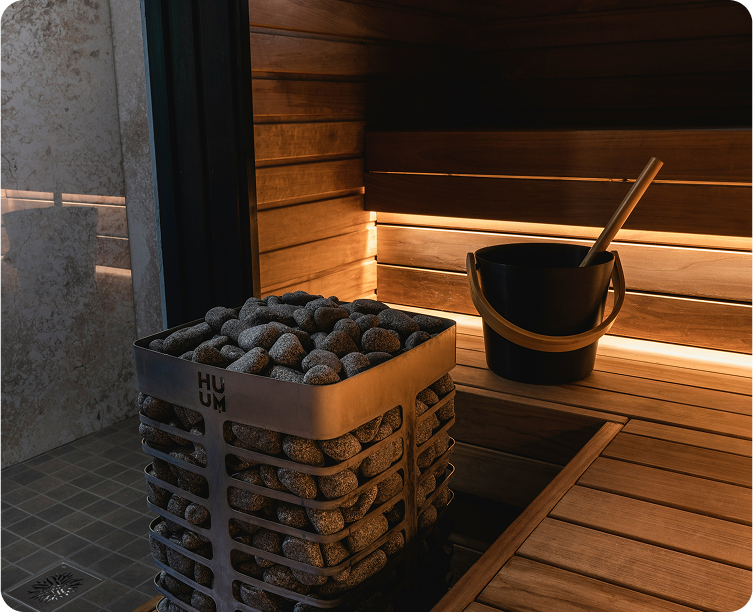
Traditional saunas heat the surrounding air using an electric or wood-burning heater along with a collection of sauna stones. As the heater operates, the entire cabin gradually reaches a high temperature, allowing every surface—including the air itself—to become part of the experience. Owners can pour water over the heated stones to create steam, increasing humidity and customizing each session according to personal preference. Many enthusiasts consider this ritual to be one of the defining characteristics of authentic sauna ownership.
Infrared saunas take a completely different approach. Rather than heating the room itself, infrared panels emit radiant energy that warms the body directly. The surrounding air remains noticeably cooler, creating an experience that feels less intense even while encouraging perspiration. Because there are no heated stones, there is also no opportunity to create steam or adjust humidity, resulting in a consistently dry environment.
Several characteristics consistently distinguish traditional sauna ownership:
Infrared saunas distinguish themselves in different ways:
For many buyers, this comparison alone provides the clarity they need. Those who imagine themselves enjoying steam, high temperatures, and authentic outdoor sauna rituals typically gravitate toward traditional ownership. Buyers seeking a gentler, convenience-focused wellness routine often find infrared technology better aligned with their expectations.
The most noticeable difference when comparing a traditional vs infrared sauna becomes apparent within the first few minutes of every session. While both environments are designed to warm the body, the sensation of heat is remarkably different. This difference extends beyond comfort alone and influences how owners use the sauna, how long they stay inside, and ultimately how satisfying the ownership experience becomes over time.
Traditional saunas create what many enthusiasts describe as a full-body thermal environment. As the heater warms the room, the air, benches, walls, and ceiling gradually reach a consistent temperature, surrounding the body with heat from every direction. When water is poured over the sauna stones, steam instantly changes both the humidity and the intensity of the session. The atmosphere constantly evolves, allowing owners to customize each experience according to personal preference. For many homeowners, these small rituals become just as enjoyable as the heat itself.
Infrared saunas create a noticeably different experience. Rather than heating the surrounding air to the same degree, infrared panels emit radiant heat that is absorbed directly by the body. The room itself remains significantly cooler, making the environment feel gentler and less overwhelming. Because there are no sauna stones or steam, each session remains consistently dry and predictable. Many owners appreciate this simplicity because it allows them to enjoy regular sessions without the intensity commonly associated with traditional sauna ownership.
Several characteristics consistently distinguish the traditional sauna experience:
Infrared saunas offer a different set of advantages:
Neither experience is objectively superior. Homeowners who enjoy high temperatures, adjustable steam, and authentic sauna rituals usually find traditional ownership more rewarding. Buyers looking for straightforward, lower-temperature sessions that support daily wellness routines often prefer infrared. The better sauna is ultimately the one that encourages you to use it consistently.
Temperature is one of the first specifications buyers compare when researching a traditional vs infrared sauna, but it rarely tells the complete story. Higher temperatures do not automatically create a better sauna experience, just as lower temperatures do not necessarily reduce the potential wellness benefits. Understanding how each sauna uses heat is far more important than comparing thermostat readings alone.
Traditional saunas operate at substantially higher temperatures because the heater is designed to warm the entire cabin rather than the body alone. As the room gradually heats, every surface contributes to creating the immersive environment that has defined traditional sauna culture for generations. The ability to introduce steam also changes how those temperatures feel, allowing owners to create sessions ranging from comfortably dry to intensely humid depending on personal preference.
Infrared saunas generally operate at lower temperatures because radiant heat targets the body directly instead of heating the surrounding air. Even though the room feels cooler, many users still perspire heavily because the heat penetrates the skin rather than relying on extremely hot air. This approach appeals to buyers who enjoy warmth but prefer avoiding the intensity associated with traditional sauna environments.
Several differences become apparent when comparing operating temperatures:
Rather than asking which sauna becomes hotter, homeowners should consider which type of heat they are more likely to enjoy repeatedly. For many buyers, long-term ownership satisfaction depends far more on comfort than on maximum temperature.
Few differences in the traditional vs infrared sauna comparison influence the ownership experience as much as steam. For many sauna enthusiasts, steam is not simply another feature—it is one of the defining characteristics of authentic sauna culture and one of the primary reasons traditional saunas continue to remain popular around the world.
Traditional saunas allow homeowners to control humidity throughout every session. After the sauna reaches operating temperature, water can be poured over the heated stones to produce steam that immediately changes the atmosphere inside the cabin. Some owners prefer gentle bursts of steam every few minutes, while others enjoy maintaining a drier environment throughout the session. This flexibility allows every experience to feel unique while giving owners complete control over how intense the heat becomes.
Infrared saunas provide a completely dry environment because there are no heated stones or steam generation. The experience remains remarkably consistent from one session to the next, which many owners appreciate because it removes guesswork and preparation. For buyers seeking convenience and predictability, this consistency is often viewed as a significant advantage.
Several characteristics distinguish steam from dry heat:
For buyers who dream of creating a classic outdoor sauna experience, adjustable steam often becomes one of the strongest reasons to choose a traditional sauna. Infrared ownership appeals more to those who value consistency, simplicity, and routine over ceremony and atmosphere.
One of the biggest reasons homeowners research a traditional vs infrared sauna is because both are widely associated with improved wellness. Whether the goal is reducing stress, recovering after exercise, or creating healthier daily habits, both sauna types have become valuable additions to modern home wellness spaces. While their heating methods differ considerably, they often support many of the same long-term wellness objectives.
The difference is less about which sauna provides more benefits and more about how those benefits are experienced. Traditional sauna ownership encourages homeowners to slow down, disconnect, and immerse themselves in an environment built entirely around heat and relaxation. Infrared sauna ownership often revolves around consistency and accessibility, making it easier for some people to incorporate regular sessions into their weekly schedules. Because long-term wellness depends heavily on consistency, the best sauna is usually the one you'll genuinely enjoy using several times each week.
Several characteristics make traditional saunas particularly attractive for long-term wellness:
Infrared saunas offer a different approach to supporting wellness:
For many homeowners, the decision comes down to lifestyle rather than health claims. Traditional sauna owners often value the complete experience, while infrared owners typically appreciate the convenience of fitting wellness into an already busy schedule.
Although many buyers initially focus on physical recovery, stress management often becomes one of the most appreciated benefits of long-term sauna ownership. Regardless of which technology is chosen, having a dedicated space where daily responsibilities temporarily disappear can become an important part of maintaining overall well-being.
Traditional saunas excel at creating an environment that naturally encourages relaxation. Preparing the heater, waiting for the sauna to reach temperature, listening to the gentle sound of water hitting hot stones, and sitting quietly inside a warm cabin all contribute to an experience that feels intentional. Many homeowners describe traditional sauna sessions as one of the few opportunities they have each week to completely disconnect from phones, work, and everyday responsibilities. The ritual itself often becomes just as therapeutic as the heat.
Infrared saunas approach relaxation differently. Because they generally require less preparation and operate at lower temperatures, many owners use them more spontaneously. A quick session after work or before bed can become part of a consistent wellness routine without requiring significant planning. Rather than creating a dedicated ritual, infrared ownership often focuses on making relaxation easier to incorporate into daily life.
Several characteristics distinguish how each sauna supports mental wellness:
Traditional Sauna
Infrared Sauna
For homeowners seeking a true escape from everyday life, traditional outdoor saunas often provide the more immersive mental wellness experience. Buyers looking for an accessible way to relax several times each week may appreciate the convenience of infrared ownership.
Athletes, active families, and fitness enthusiasts frequently compare a traditional vs infrared sauna because recovery has become one of the fastest-growing reasons people invest in home wellness spaces. Whether recovering from strength training, endurance sports, hiking, cycling, or physically demanding work, many homeowners view sauna ownership as an important complement to stretching, hydration, nutrition, and sleep.
Traditional saunas have supported post-exercise recovery for generations. Many owners enjoy ending workouts with a period of uninterrupted relaxation inside a fully heated environment where both the body and mind have an opportunity to recover. The combination of heat, adjustable humidity, and quiet surroundings creates a recovery experience that feels intentional rather than rushed. For many homeowners, this dedicated transition between exercise and the rest of the day becomes one of the most valuable aspects of ownership.
Infrared saunas are also popular among active individuals because their lower operating temperatures often make shorter, more frequent sessions practical. Many users step into the sauna immediately after exercising without needing to prepare for a higher-temperature environment. This convenience encourages consistency, particularly for people with demanding schedules who want recovery to become part of their everyday routine.
Several factors often influence recovery-focused buyers:
Rather than asking which sauna is better for recovery, buyers should consider which ownership experience they are most likely to maintain over many years. Consistent use almost always provides greater long-term value than choosing a sauna based solely on marketing claims.
One of the biggest reasons homeowners research a traditional vs infrared sauna is because both are widely associated with improved wellness. Whether the goal is reducing stress, recovering after exercise, or creating healthier daily habits, both sauna types have become valuable additions to modern home wellness spaces. While their heating methods differ considerably, they often support many of the same long-term wellness objectives.
The difference is less about which sauna provides more benefits and more about how those benefits are experienced. Traditional sauna ownership encourages homeowners to slow down, disconnect, and immerse themselves in an environment built entirely around heat and relaxation. Infrared sauna ownership often revolves around consistency and accessibility, making it easier for some people to incorporate regular sessions into their weekly schedules. Because long-term wellness depends heavily on consistency, the best sauna is usually the one you'll genuinely enjoy using several times each week.
Several characteristics make traditional saunas particularly attractive for long-term wellness:
Infrared saunas offer a different approach to supporting wellness:
For many homeowners, the decision comes down to lifestyle rather than health claims. Traditional sauna owners often value the complete experience, while infrared owners typically appreciate the convenience of fitting wellness into an already busy schedule.
Although many buyers initially focus on physical recovery, stress management often becomes one of the most appreciated benefits of long-term sauna ownership. Regardless of which technology is chosen, having a dedicated space where daily responsibilities temporarily disappear can become an important part of maintaining overall well-being.
Traditional saunas excel at creating an environment that naturally encourages relaxation. Preparing the heater, waiting for the sauna to reach temperature, listening to the gentle sound of water hitting hot stones, and sitting quietly inside a warm cabin all contribute to an experience that feels intentional. Many homeowners describe traditional sauna sessions as one of the few opportunities they have each week to completely disconnect from phones, work, and everyday responsibilities. The ritual itself often becomes just as therapeutic as the heat.
Infrared saunas approach relaxation differently. Because they generally require less preparation and operate at lower temperatures, many owners use them more spontaneously. A quick session after work or before bed can become part of a consistent wellness routine without requiring significant planning. Rather than creating a dedicated ritual, infrared ownership often focuses on making relaxation easier to incorporate into daily life.
Several characteristics distinguish how each sauna supports mental wellness:
Traditional Sauna
Infrared Sauna
For homeowners seeking a true escape from everyday life, traditional outdoor saunas often provide the more immersive mental wellness experience. Buyers looking for an accessible way to relax several times each week may appreciate the convenience of infrared ownership.
Athletes, active families, and fitness enthusiasts frequently compare a traditional vs infrared sauna because recovery has become one of the fastest-growing reasons people invest in home wellness spaces. Whether recovering from strength training, endurance sports, hiking, cycling, or physically demanding work, many homeowners view sauna ownership as an important complement to stretching, hydration, nutrition, and sleep.
Traditional saunas have supported post-exercise recovery for generations. Many owners enjoy ending workouts with a period of uninterrupted relaxation inside a fully heated environment where both the body and mind have an opportunity to recover. The combination of heat, adjustable humidity, and quiet surroundings creates a recovery experience that feels intentional rather than rushed. For many homeowners, this dedicated transition between exercise and the rest of the day becomes one of the most valuable aspects of ownership.
Infrared saunas are also popular among active individuals because their lower operating temperatures often make shorter, more frequent sessions practical. Many users step into the sauna immediately after exercising without needing to prepare for a higher-temperature environment. This convenience encourages consistency, particularly for people with demanding schedules who want recovery to become part of their everyday routine.
Several factors often influence recovery-focused buyers:
Rather than asking which sauna is better for recovery, buyers should consider which ownership experience they are most likely to maintain over many years. Consistent use almost always provides greater long-term value than choosing a sauna based solely on marketing claims.
Energy consumption is another important consideration when comparing a traditional vs infrared sauna, particularly for homeowners planning to use their sauna several times each week. While operating costs vary depending on electricity rates, heater size, insulation quality, climate, and session frequency, understanding how each system consumes energy provides a more realistic picture of long-term ownership.
Traditional saunas generally require more energy during the initial heating process because the heater must warm the entire cabin as well as the sauna stones. Depending on the heater and the outdoor temperature, reaching the desired temperature may take anywhere from 30 to 60 minutes. Once fully heated, however, the sauna maintains a remarkably consistent environment that can comfortably accommodate longer sessions or multiple users without significant fluctuations in temperature.
Infrared saunas typically consume less electricity because they are designed to heat the body directly rather than raising the temperature of the entire room. They also tend to reach operating conditions more quickly, making them appealing to homeowners who value shorter preparation times and frequent use. While the difference in operating costs may appear meaningful on paper, it is often relatively modest when viewed over the lifespan of a premium sauna.
Several factors influence energy consumption regardless of sauna type:
Although infrared saunas usually consume slightly less energy per session, operating costs rarely become the deciding factor for premium buyers. Most homeowners find that overall ownership satisfaction depends far more on how frequently they use the sauna than on relatively small differences in monthly utility bills.
Installation requirements represent one of the biggest practical differences in the traditional vs infrared sauna comparison. While both systems can provide years of dependable performance, the planning involved before installation varies depending on the type of sauna, the property, and how the homeowner intends to use the space.
Traditional outdoor saunas are designed to function as permanent additions to the property. Because they become part of the outdoor living environment, installation often includes preparing a level foundation, running dedicated electrical service, planning drainage, and considering landscaping, privacy, and accessibility. Many homeowners intentionally position the sauna near patios, pools, outdoor showers, or cold plunges so that the surrounding environment becomes part of the overall wellness experience.
Infrared saunas are frequently installed indoors, although outdoor models have become more common in recent years. Indoor installations generally require less site preparation because they can often be placed inside home gyms, finished basements, wellness rooms, or spare bedrooms. Outdoor infrared units still require weather protection and proper electrical service, but they are less commonly integrated into complete backyard wellness environments.
Several planning considerations distinguish each installation approach:
Traditional Outdoor Sauna
Infrared Sauna
For homeowners envisioning a complete backyard wellness destination, traditional outdoor saunas continue to offer the greatest design flexibility and the strongest connection to outdoor living. Buyers focused primarily on convenience and available indoor space may find infrared installations easier to accommodate.
When researching a traditional vs infrared sauna, many buyers eventually realize they are making two separate decisions. The first involves choosing the heating technology, while the second involves deciding where the sauna will become part of everyday life. Although both traditional and infrared saunas can be installed indoors or outdoors, the environment surrounding the sauna has a significant influence on the ownership experience.
Outdoor traditional saunas create an experience that extends beyond the cabin itself. Walking through the backyard, enjoying fresh air between sessions, cooling down naturally after leaving the sauna, and incorporating outdoor showers or cold plunges all become part of the ritual. The sauna transforms into a destination rather than simply another room inside the house. Many long-term owners explain that this connection with nature is one of the reasons they continue using their sauna so consistently years after installation.
Indoor infrared saunas emphasize accessibility and convenience. Because the sauna is located inside the home, it is easy to use regardless of weather conditions or time of day. Many owners appreciate being able to complete a session before work, after the gym, or before bedtime without leaving the house. This convenience often encourages more frequent use, particularly for busy professionals or homeowners with limited outdoor space.
Several factors influence the decision between indoor and outdoor ownership:
Rather than asking whether indoor or outdoor is universally better, buyers should consider which environment will motivate them to use the sauna consistently. For many homeowners, creating a dedicated outdoor retreat provides a richer ownership experience, while others value the everyday convenience of an indoor wellness space.
Choosing between a traditional vs infrared sauna is ultimately about much more than comparing heater technology. While specifications and wellness claims often dominate the buying process, long-term ownership satisfaction is usually determined by how naturally the sauna becomes part of everyday life. The best sauna is rarely the one with the longest feature list. Instead, it's the one homeowners continue using consistently five, ten, or even twenty years after installation.
Many first-time buyers initially focus on heat-up times, operating temperatures, or electricity consumption. Experienced owners, however, tend to describe something entirely different. They talk about routines, atmosphere, family time, quiet evenings, and the feeling of stepping into a space that allows them to disconnect from the demands of everyday life. These emotional aspects of ownership often become far more valuable than the technical specifications that influenced the original purchase.
Traditional and infrared saunas both support long-term wellness, but they do so in different ways. Understanding how ownership evolves over time often provides the clearest picture of which sauna is likely to remain rewarding long after the excitement of installation has faded.
Several factors consistently influence long-term ownership satisfaction:
For most buyers, ownership experience ultimately outweighs technical specifications. A sauna that becomes part of daily life delivers far greater value than one that simply looks impressive during the buying process.
Cost is naturally one of the biggest considerations when comparing a traditional vs infrared sauna, but evaluating price alone rarely provides an accurate picture of overall value. A sauna should be viewed as a long-term investment rather than a short-term purchase, making ownership experience just as important as the initial purchase price.
Traditional outdoor saunas generally require a larger upfront investment, particularly when buyers choose premium materials, larger cabins, panoramic glass, or luxury architectural designs. Installation costs may also be higher because of foundation preparation, dedicated electrical service, and landscaping. However, many homeowners view these expenses as part of creating a permanent outdoor wellness space that enhances both their lifestyle and their property.
Infrared saunas often offer a lower entry point, especially for indoor models that require minimal installation work. Their simpler setup and generally lower operating temperatures can reduce both installation complexity and ongoing energy costs. For buyers focused primarily on adding a convenient wellness feature to the home, this can make infrared ownership an attractive option.
When evaluating value, homeowners should consider more than the purchase price:
The best investment is rarely the least expensive option. Instead, it is the sauna that continues providing enjoyment, supporting wellness, and becoming an integral part of everyday life for many years.
Families often approach the traditional vs infrared sauna decision differently than individual buyers because they must consider a wider variety of users, schedules, and comfort preferences. Rather than choosing a sauna that serves one person's needs, many households are looking for a solution that encourages shared wellness experiences while remaining flexible enough for everyday use.
Traditional outdoor saunas naturally lend themselves to family ownership because of their larger interiors, authentic atmosphere, and ability to become gathering places within the backyard. Many families enjoy using the sauna together after outdoor activities, relaxing during weekends, or entertaining friends and relatives. Over time, the sauna becomes less of an individual wellness tool and more of a shared lifestyle feature that brings people together.
Infrared saunas also work well for families, particularly those with busy schedules who value convenience. Because sessions generally require less preparation and operate at lower temperatures, individual family members may find it easier to incorporate the sauna into different parts of the day. Rather than gathering together, usage often becomes more individualized, with each person using the sauna according to their own schedule.
Several considerations often influence family buyers:
For households focused on creating memorable shared experiences, traditional outdoor saunas often provide the richer ownership experience. Families prioritizing convenience and individual wellness routines may appreciate the accessibility of infrared ownership.
Luxury homeowners frequently evaluate a traditional vs infrared sauna from a broader design perspective. While wellness remains the primary motivation, many buyers also want the sauna to complement the property's architecture, enhance outdoor living spaces, and contribute to the overall lifestyle the home provides.
Traditional outdoor saunas have become increasingly popular within luxury residential design because they function as both wellness amenities and architectural features. Modern cabin-style designs with expansive glass, premium wood construction, and thoughtful landscaping often become focal points within professionally designed outdoor environments. Combined with pools, outdoor kitchens, fire features, and cold plunges, they create complete wellness retreats that extend the living space beyond the walls of the home.
Infrared saunas tend to integrate more naturally into indoor wellness rooms, home gyms, and spa areas. Their compact designs and lower operating temperatures make them practical additions to existing interiors without requiring significant changes to the surrounding landscape. For homeowners who prioritize indoor convenience, this approach can be highly effective.
Luxury buyers often evaluate several factors beyond the sauna itself:
For homeowners building a complete luxury outdoor wellness retreat, traditional outdoor saunas often provide the strongest balance of architectural beauty, authentic sauna culture, and long-term ownership satisfaction.
After comparing every major difference between a traditional vs infrared sauna, one conclusion becomes clear: there is no universal winner. Both sauna types have earned loyal followings because they serve different lifestyles, wellness goals, and ownership preferences. The better investment is the one that naturally fits how you plan to use it—not simply the one with the longest list of features.
Many first-time buyers begin their research believing the decision comes down to heat or technology. By the end of the buying process, however, most realize they're choosing between two very different ownership experiences. Traditional saunas emphasize atmosphere, ritual, high temperatures, steam, and creating a dedicated place to disconnect from everyday life. Infrared saunas focus on convenience, accessibility, and making wellness easy to incorporate into an existing routine.
The questions below can help clarify which sauna aligns more closely with your long-term expectations.
Traditional saunas continue to appeal to homeowners who want the authentic sauna experience that has been enjoyed for generations. Rather than functioning as another wellness appliance, they become destinations where owners intentionally slow down, relax, and enjoy uninterrupted time surrounded by heat, steam, and nature.
Many buyers who choose traditional outdoor saunas explain that they were looking for something larger than simple recovery. They wanted to create a complete backyard wellness retreat that encouraged spending more time outdoors while providing a meaningful space for relaxation, family time, and entertaining.
A traditional sauna may be the better choice if you:
For homeowners who value atmosphere, craftsmanship, and long-term lifestyle enhancement, traditional outdoor saunas often provide the richest and most rewarding ownership experience.
Infrared saunas appeal to buyers who prioritize convenience and consistency above all else. Rather than creating a traditional sauna ritual, infrared ownership emphasizes making wellness accessible enough to become part of everyday life with minimal preparation.
Many infrared owners appreciate being able to complete shorter sessions before work, after exercise, or in the evening without waiting for an entire room to reach high temperatures. The lower operating temperatures also appeal to people who enjoy heat but prefer a gentler environment.
An infrared sauna may be the better choice if you:
For buyers seeking an approachable, routine-oriented wellness solution, infrared ownership often delivers exactly the level of simplicity they're looking for.
Neither sauna is universally better.
Traditional saunas excel at creating an authentic, immersive experience with higher temperatures and adjustable steam, while infrared saunas focus on lower-temperature radiant heat and everyday convenience. The best choice depends on your personal preferences, wellness goals, and how you expect to use the sauna over the long term.
Traditional saunas operate at significantly higher temperatures because they heat the entire room rather than the body alone. Infrared saunas rely on radiant heat and therefore maintain much lower ambient temperatures while still creating a warming effect.
No.
Infrared saunas do not use sauna stones, so they cannot produce steam or allow users to adjust humidity during a session.
No.
Infrared heaters are not designed for water. Unlike traditional sauna heaters with sauna stones, infrared panels should remain dry during operation.
Although both technologies are available for outdoor use, traditional saunas have historically been the preferred choice for outdoor wellness spaces because they provide the authentic sauna experience while integrating naturally into patios, gardens, pools, and backyard retreats.
Traditional outdoor saunas generally offer greater flexibility for families because they are available in larger capacities and naturally encourage shared experiences. Infrared saunas are often better suited for individual use throughout the day.
Traditional saunas typically consume more electricity during heat-up because they warm the entire cabin and sauna stones. Infrared saunas generally require less energy per session, although actual operating costs vary depending on usage patterns, insulation, heater size, and local utility rates.
Both sauna types require relatively modest maintenance when properly installed. Traditional saunas occasionally require replacing sauna stones and keeping the heater area clean, while infrared saunas primarily involve cleaning interior surfaces and ensuring the heating panels remain unobstructed.
Yes.
Many homeowners use both traditional and infrared saunas as part of regular wellness routines that encourage relaxation, stress management, and recovery. The primary difference is how the heat is delivered and how each ownership experience feels over time.
For homeowners seeking an immersive outdoor wellness lifestyle centered around authentic sauna traditions, traditional outdoor saunas often provide greater long-term satisfaction. Buyers prioritizing convenience, accessibility, and quick recovery sessions may find infrared ownership better suited to their daily routines.
The comparison between a traditional vs infrared sauna is not about determining which technology is objectively superior. Instead, it is about identifying which ownership experience aligns most closely with your lifestyle, wellness goals, and long-term expectations.
Infrared saunas offer an accessible and convenient approach to personal wellness. Their lower operating temperatures, straightforward operation, and routine-friendly design make them an excellent option for homeowners who want to incorporate regular heat therapy into busy schedules without extensive preparation.
Traditional outdoor saunas provide something fundamentally different. They create an immersive environment where high temperatures, adjustable steam, authentic craftsmanship, and outdoor living combine to deliver an experience that extends far beyond the heat itself. For many owners, the sauna becomes a place to disconnect, reconnect with family, entertain guests, and establish wellness rituals that continue providing value year after year.
If your vision involves building a complete backyard wellness retreat centered around authentic sauna culture, a traditional outdoor sauna will likely provide the more rewarding long-term ownership experience. If convenience, lower temperatures, and simplicity are your highest priorities, an infrared sauna may prove to be the better fit.
Ultimately, the best sauna is not the one with the highest temperature or the newest technology. It is the one that you'll genuinely look forward to using consistently because lasting wellness is built through regular habits, not occasional sessions.
 OUR BEST SELLERS
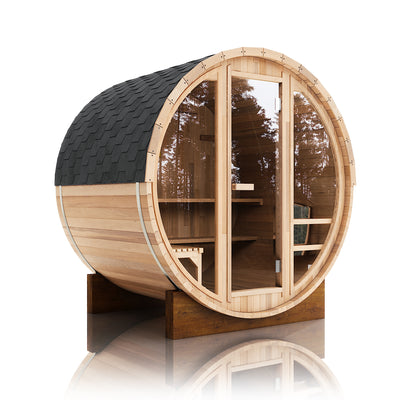
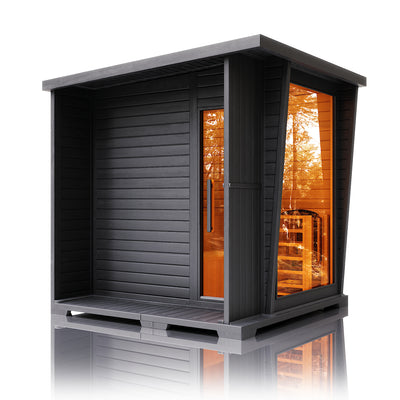
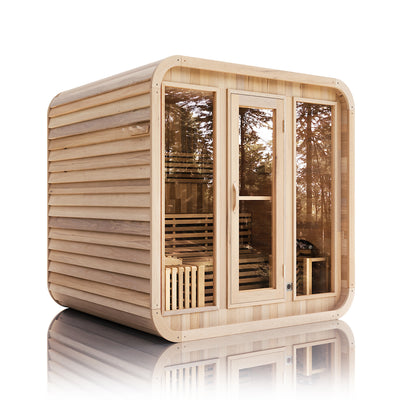
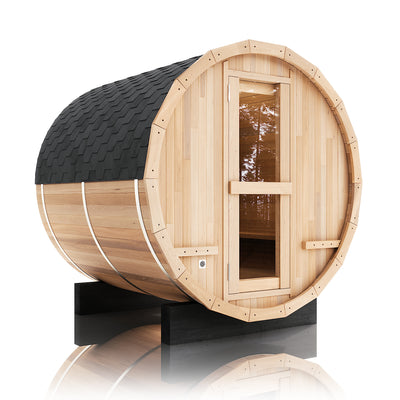
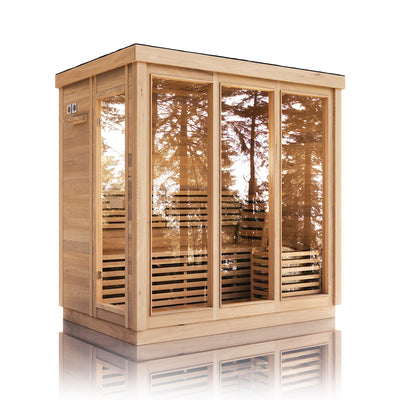
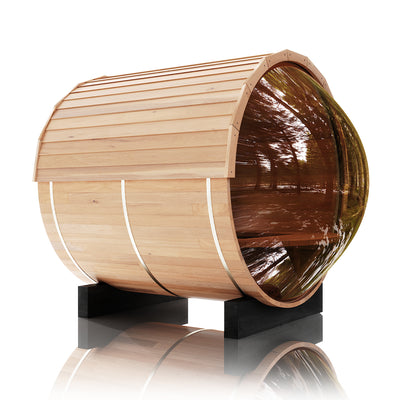

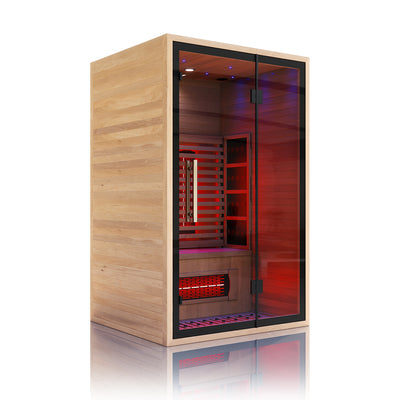
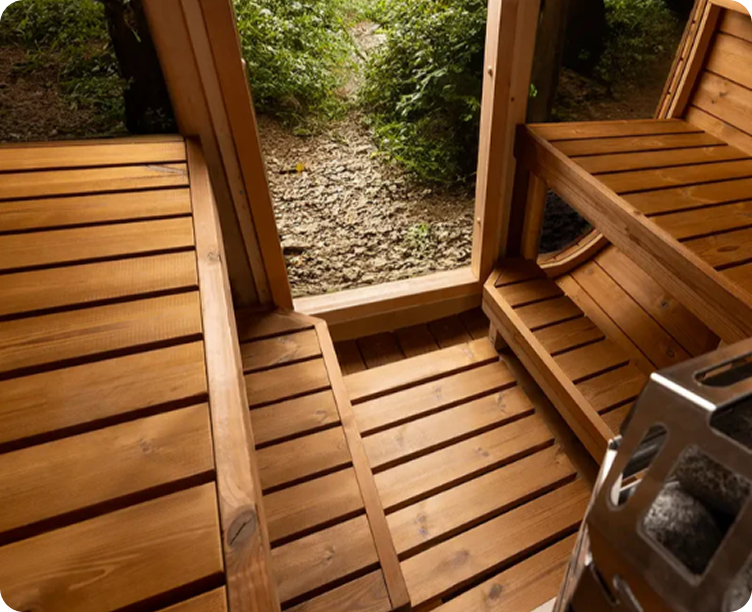
Crafted from rich Hemlock or Red Cedar, with tempered glass and stainless steel accents.
Thoughtfully designed layout ensures efficient heat flow, maximizing comfort, performance, and effortless daily use.

Delivers smooth, even heat throughout, creating a deeply relaxing, reliable sauna experience every session.

Subscribe to our newsletter and get access to exclusive promos & content
