Sauna and cold plunge benefits are best understood as the effects of two very different short-term physical stresses. Sauna raises skin temperature, sweating, skin blood flow, and heart rate. Cold-water immersion rapidly cools the skin, constricts peripheral blood vessels, changes breathing, and can temporarily increase blood pressure. Alternating them may feel restorative and can support a deliberate recovery ritual, but the combination has not been proven to deliver every detox, immunity, weight-loss, or longevity claim attached to contrast therapy.
Evidence supports clear acute physiological responses to heat and cold. Cold-water immersion can reduce perceived muscle soreness after some exercise, while observational sauna research has found associations with selected long-term health outcomes. Association is not causation, and research on the combined sequence is less mature than research on either exposure alone.
This guide separates established responses, promising findings, observational associations, and unsupported wellness claims. It also explains how to plan a home setup around safety, hygiene, drainage, electrical requirements, and realistic use. It is educational rather than medical advice; anyone with cardiovascular disease, blood-pressure concerns, fainting history, pregnancy, impaired sensation, or another relevant condition should seek individualized clinical guidance.
Sauna and Cold Plunge Benefits Quick Answer
Yes, sauna and cold plunge benefits are real, but the most defensible benefits are narrower than marketing often suggests. Sauna reliably produces heat stress and sweating. Cold immersion reliably creates a cold-shock response and rapid circulatory change. Many users value relaxation, alertness, ritual, and rapid cooling after heat.
For exercise recovery, cold immersion has better support for reducing perceived soreness than for accelerating every measure of tissue recovery. Contrast water therapy may help selected outcomes, but studies use inconsistent temperatures, timing, exercise types, and comparisons. Repeated immediate post-lifting cold exposure may also work against some muscle-building adaptations.
Long-term claims require restraint. Frequent sauna use has been associated with lower cardiovascular and all-cause mortality in Finnish cohort research, but controlled passive-heating trials show mixed cardiometabolic results. Cold exposure and combined sauna-to-plunge protocols do not yet justify guarantees about disease prevention, immunity, fat loss, or lifespan.
|
Claim
|
Evidence position
|
What it means
|
| Heat and cold change circulation |
Established acutely |
Expect temporary changes in heart rate, skin blood flow, blood pressure, breathing, and thermal sensation. |
| Cold immersion reduces soreness |
Supported with limits |
Useful when perceived recovery matters; not automatically ideal after every strength session. |
| Contrast improves recovery |
Promising, protocol-dependent |
Results vary with temperature, duration, training, and outcome. |
| Sauna prevents disease |
Not proven |
Cohort associations cannot show that sauna caused lower risk. |
| Cold boosts immunity |
Insufficient for a broad claim |
Biomarker changes do not prove fewer infections. |
| Sweating detoxifies |
Misleading generalization |
Sweat regulates temperature; liver and kidneys perform most detoxification. |
| Contrast causes fat loss |
Not established |
Water loss and acute energy use are not sustained fat loss. |
What Is Contrast Therapy?
Contrast therapy means alternating heat and cold. Rehabilitation studies often use warm and cold water, sometimes on a limb; home wellness routines commonly use a sauna followed by full-body cold immersion. Those practices are related but not interchangeable. A mild shower after moderate heat is not equivalent to immersion in very cold water, and results from one protocol should not be presented as proof for another.
Temperature, duration, depth, body area, transition speed, and participant health shape the response. The sequence also changes the experience. Finishing warm may favor comfort, while finishing cold may feel alerting. Research does not establish one ideal round count, ending, or temperature formula for everyone.
Heat and cold are stressors rather than shortcuts. A controlled dose may be enjoyable, but greater intensity is not automatically more effective. The defensible goal is a repeatable routine that users can exit while breathing, balance, and judgment remain reliable.
How Sauna Heat Affects the Body
Sauna raises skin temperature and widens vessels near the surface so the body can release heat. Heart rate commonly rises and sweating removes water and electrolytes. These are expected thermoregulatory responses, not proof that unspecified toxins are leaving the body.
A lower scale reading after sauna is mainly fluid loss, not body-fat reduction. Dehydration can amplify dizziness and cardiovascular strain, especially after exercise, alcohol, illness, or inadequate intake. Maximum sweating should never be the performance target.
Finnish cohort research has associated frequent sauna bathing with lower rates of fatal cardiovascular events and all-cause mortality. It is important evidence, yet observational design cannot prove causation or remove every lifestyle difference. A 2025 review of randomized passive-heating trials found that pooled effects across many vascular and cardiometabolic measures were often not significant, reinforcing the need for careful language.
Evidence note: The Finnish cohort reported associations, not proof of causation. View the Finnish sauna cohort.
How Cold Immersion Affects the Body
Cold water rapidly removes heat from the skin. Sudden immersion can provoke gasping, rapid breathing, peripheral vasoconstriction, and abrupt cardiovascular changes. The cold-shock response is a safety issue, not merely discomfort, which is why controlled entry, head-above-water use, and an easy exit matter.
Users may feel alert or less sore after immersion, but sensation is not identical to tissue repair. Numbing can reduce pain perception while an injury remains. A refreshed feeling is a valid experience without proving that every performance or health measure improved.
A 2025 systematic review found mixed, time-dependent findings for stress, sleep, quality of life, and inflammatory measures, with limited long-term evidence. A 2026 psychological review likewise reported uncertainty and risk of bias. Small temperature differences, movement, depth, and exposure time can materially change the dose.
Evidence note: The 2025 review included 11 studies and 3,177 adults; its authors emphasized limited trials, small samples, and limited population diversity. View the 2025 cold-water immersion review.
Benefits of Combining Sauna and Cold Plunge
Moving from sauna to cold water rapidly reverses thermal demands. Skin vessels that were dilated in heat constrict in cold, breathing changes, and circulation adjusts. Older research described substantial cardiac loading during repeated heat-and-cold cycles. A dramatic sensation therefore indicates intensity, not guaranteed therapeutic superiority.
Evidence note: A 2026 systematic review of contrast therapy found little evidence of improvement in resting heart rate, blood pressure, vascular health, glucose, or lipid outcomes and concluded that firm recommendations remain premature. View the 2026 contrast-therapy systematic review.
Combined evidence is thinner than popular advice implies. Studies include athletes, healthy volunteers, supervised patients, and traditional bathers, using different sauna temperatures, cold showers or immersion, and different round counts. A 2026 acute study of cold immersion during sauna breaks adds useful information but cannot define long-term benefit or a universal protocol.
A small 2026 crossover study in 16 healthy adults found that adding a 90-second, 20°C immersion to cooling breaks between two 15-minute sauna bouts lowered later core temperature and heart rate and improved thermal comfort compared with air cooling alone. This acute study informs cooling response, not disease prevention or long-term outcomes. View the sauna-and-cold-immersion study.
Each additional round adds heat load, fluid loss, cold stress, and another wet transition. More rounds are not inherently better. Short, moderate exposure that ends before symptoms emerge is more compatible with long-term ownership than an escalating endurance challenge.
Contrast Therapy for Muscle Recovery
Recovery can mean less soreness, restored power, better sleep, psychological readiness, or long-term adaptation. These are different outcomes. Meta-analyses suggest cold-water immersion can reduce delayed-onset soreness, and contrast water therapy may help selected recovery measures, but results depend on exercise, timing, temperature, and comparator.
Evidence note: A systematic review and meta-analysis of 28 studies found that cold-water immersion performed better than several comparison methods for muscle soreness but produced more mixed results for strength, power, and flexibility. View the exercise-recovery meta-analysis.
For an athlete competing again soon, lower perceived soreness may be valuable. For a recreational user, sleep, nutrition, hydration, appropriate loading, and time may matter more. Neither heat nor cold should be used to conceal an injury or repeatedly override pain that requires assessment.
Repeated cold immersion immediately after resistance training may attenuate aspects of strength or muscle hypertrophy. Occasional use is not the same as a rigid post-workout habit. People prioritizing muscle growth can separate cold sessions from key lifting workouts or consult a qualified sports professional.
Sauna and Cold Plunge for Stress and Sleep
A sauna-and-plunge ritual can create quiet, focused breathing, reduced screen exposure, social connection, and a sense of mastery. Those contextual effects may contribute to relaxation or alertness. They are worthwhile experiences even when no disease claim is made.
Evidence note: A 2026 psychological-outcomes review included 13 studies and 4,105 participants, but risk of bias and sensitivity analyses limited confidence in broad mental-health conclusions. View the 2026 psychological-outcomes review.
Cold-water mood research contains favorable signals but also wide uncertainty, inconsistent controls, and heterogeneous participants. Stronger controlled analyses can produce less impressive results than headlines suggest. Contrast therapy should not be presented as a stand-alone treatment for depression, anxiety, trauma, or insomnia.
Some users sleep well after moderate sauna; others feel stimulated by cold or uncomfortable after excessive heat. Personal timing matters. Persistent low mood, panic, self-harm thoughts, or disabling sleep disruption requires appropriate clinical care rather than a more extreme temperature protocol.
Cardiovascular Effects and Safety
Heat generally promotes skin vasodilation and increases cardiac output, while cold causes peripheral vasoconstriction and can raise blood pressure. Rapid alternation may impose a meaningful cardiovascular demand. Calling it vascular exercise is a metaphor, not proof that it is safe or therapeutic for every heart.
People with heart disease, arrhythmia, unstable blood pressure, previous stroke, fainting, chest symptoms, or medicines that affect circulation, sweating, alertness, or fluid balance need individualized advice. Confidence and experience do not prevent physiological changes.
No home contrast system substitutes for clinically appropriate exercise, nutrition, sleep, smoking cessation, or medical management. Heat and cold may ultimately prove useful adjuncts in defined populations, but current evidence cannot support promises of treating diabetes, hypertension, or cardiovascular disease.
Claims That Need More Evidence
A useful evidence hierarchy begins with outcomes rather than mechanisms. Researchers may document a change in heart rate, skin temperature, a signaling molecule, or a self-reported score without showing fewer illnesses, better long-term function, or lower mortality. Each step from mechanism to meaningful health outcome requires separate evidence. This distinction is especially important in contrast therapy because the sensations are immediate and dramatic, while many proposed long-term benefits have not been tested directly.
Readers should also distinguish an absence of evidence from proof of no effect. Limited or mixed research means uncertainty remains; it does not justify claiming either guaranteed benefit or guaranteed uselessness. The practical response is proportionate language, conservative use, and a buying decision based on enjoyment, recovery preferences, and ownership feasibility rather than medical promises.
Wellness marketing often moves from a real short-term response to an unproven long-term promise. A change in an inflammatory marker does not prove fewer infections. Sweating does not make the skin the principal detoxification organ. Acute energy expenditure does not establish durable fat loss.
Immune function is complex, so a broad claim to boost it is scientifically weak. More inflammation is not always helpful and less is not always helpful. Hormones and neurotransmitters can shift transiently without delivering a lasting clinical outcome.
Longevity claims deserve equal caution. Sauna cohort findings are associations in particular populations; cold exposure lacks equivalent lifespan evidence, and combining the practices has not been shown to add years. Owners can value enjoyment, recovery, and consistency without needing a guaranteed medical return.
Sauna and Cold Plunge Routine for Beginners
There is no universal contrast prescription. New users can learn sauna and cold responses separately before combining them. Check equipment, water quality, lighting, drainage, and the route before beginning. Avoid alcohol and recreational drugs, and do not start when feverish, acutely ill, dehydrated, light-headed, or unusually fatigued.
Rise slowly from the bench and cool briefly in ambient air when needed. Enter the plunge under control, keep the head above water, and use calm breathing without hyperventilation or breath-holding. Leave while coordination is reliable, then dry and rewarm gradually.
Persistent shivering, confusion, clumsiness, chest discomfort, severe headache, faintness, or breathing difficulty is not evidence of a productive session. Stop and seek appropriate help. The equipment should support good judgment rather than reward the coldest, hottest, or longest attempt.
A sound routine includes these guardrails:
-
Moderate first exposure: Learn personal response before changing time, temperature, depth, or round count.
-
One change at a time: Adjust a single variable so an adverse response has an identifiable cause.
-
Head above water: Avoid facial immersion, breath-holding contests, and hyperventilation.
-
Unobstructed exit: Use stable steps and never lock a user into either enclosure.
-
No competition: Do not reward endurance, especially during group sessions.
-
Clear stop signs: Leave for dizziness, nausea, chest symptoms, palpitations, confusion, or lost coordination.
Who Should Avoid Contrast Therapy?
Medical review is especially important for cardiovascular disease, rhythm disorders, unstable blood pressure, fainting, seizure disorders, pregnancy, impaired sensation, reduced mobility, and conditions affecting temperature regulation. Medicines can change heart rate, blood pressure, sweating, alertness, or fluid balance.
People recovering from surgery or acute illness should wait for clearance. Open wounds, contagious illness, and active skin infection also affect shared use. Children and older adults require direct attention to supervision, communication, safe access, and manufacturer restrictions.
A pre-purchase conversation can clarify whether heat, cold, or rapid alternation is the concern and whether a gentler cooling method is more appropriate. A responsible seller should respect medical boundaries rather than offering a generic protocol.
Designing the Space
Users move between heat and water while barefoot and sometimes light-headed. A short, direct route with slip-resistant drainage, handholds, adequate lighting, and no sharp obstacles is more important than a dramatic layout. Privacy should not eliminate emergency visibility or access.
Place the plunge where splash cannot damage sauna walls, controls, electrical components, or the foundation. Plan runoff so it does not create ice, mud, erosion, or code conflicts. A filled plunge is extremely heavy; decks and raised platforms require professional structural review.
Electrical design must follow manufacturer instructions and local code. Heaters, pumps, chillers, lights, and sanitation equipment have different loads and environmental requirements. Use qualified trades where required and preserve disconnects, clearances, and service access.
Water Quality and Maintenance
A plunge collects sweat, skin material, cosmetics, and outdoor debris. Cold water does not eliminate microbial risk. Filtration removes particles, sanitation controls microorganisms, circulation distributes treatment, and testing confirms performance. Clear water is not necessarily safe water.
Follow the manufacturer for sanitizer, target ranges, filter care, cleaning, and water replacement. Never mix chemicals or assume more is safer. Showering first reduces contamination; users with open wounds or infectious illness should not share the water.
Biofilm can develop in plumbing even when the surface looks clean. Slipperiness, odor, cloudy water, irritation, or unusual sanitizer demand calls for closure and corrective maintenance. Commercial or shared installations may have public-health requirements beyond residential instructions.
Choosing a Home Sauna and Cold Plunge
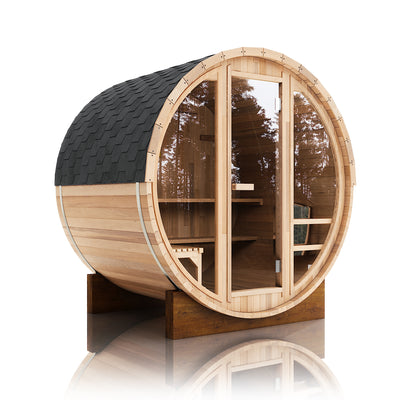
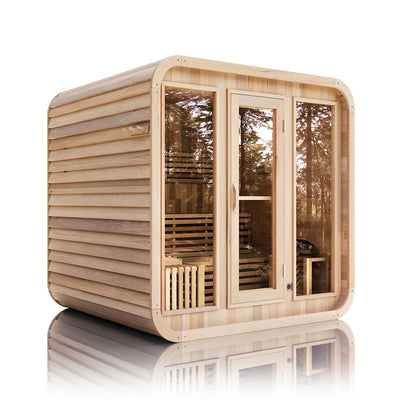
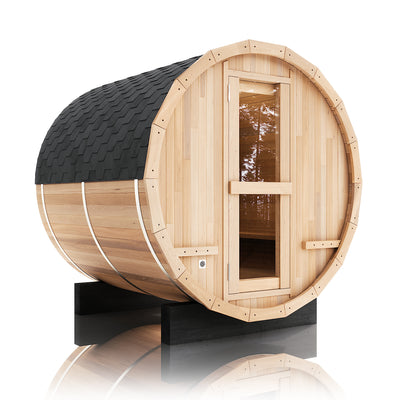
Start with regular user count, space, electrical capacity, drainage, climate, privacy, maintenance tolerance, and purpose. For the sauna, compare usable bench layout, interior volume, heater sizing, insulation, glass area, ventilation, weather protection, controls, and service access.
For the plunge, compare entry stability, depth, temperature range, chiller output in the local climate, filtration, sanitation, noise, cover, drainage, energy use, and replacement parts. Ask what must be done weekly, monthly, and seasonally.
Budget for foundation, delivery, electrical work, drainage, assembly, covers, filters, chemicals, water, energy, and professional service. A simpler system that is easy to clean and prepare often delivers more ownership value than impressive equipment that becomes inconvenient.
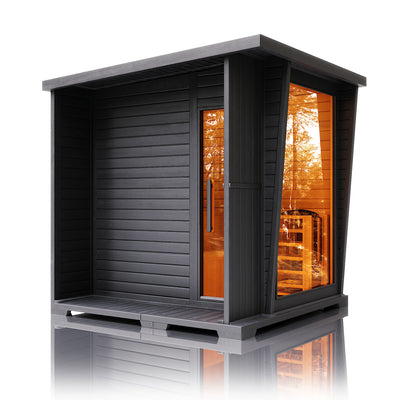
Rodeo Wellness shopping pathways: compare the sauna collection, review The Outlaw 4-6 person outdoor sauna, and evaluate The Cold Spring all-in-one cold plunge. Product specifications, electrical requirements, filled weight, installation conditions, and maintenance instructions should be verified on the current product page and owner documentation before purchase.
Home Sauna and Cold Plunge Ownership Checklist
A combined system succeeds when routine details are solved before delivery. The following audit turns research and safety principles into practical ownership decisions. Each point should be answered for the exact property, climate, users, and equipment rather than copied from a generic installation.
Purpose
Define whether the system is mainly for relaxation, social use, athletic recovery, or morning alertness. Purpose determines seating, water turnaround, noise tolerance, timing, and whether immediate post-training cold is desirable.
Users
List regular users and relevant mobility, supervision, and medical considerations. Nominal sauna capacity rarely equals comfortable capacity, and plunge entry must work for the least agile intended user.
Medical boundaries
Identify who needs clinician guidance before use. Keep emergency contacts and stop criteria clear; never let a retailer or influencer replace individualized advice.
Trial experience
Use reputable facilities before purchasing. Testing moderate heat and cold separately can reveal claustrophobia, dizziness, cold panic, or lack of interest before site work begins.
Foundation
Confirm level, drained, frost-appropriate support for both products. Include the plunge's filled weight and dynamic movement, not only its empty shipping weight.
Electrical service
Have a qualified professional calculate heater, chiller, pump, lighting, and control loads. Plan compliant protection and disconnects without extension cords or improvised circuit sharing.
Drainage
Map routine splash, filter cleaning, water changes, roof runoff, and emergency draining. Water must not undermine foundations, flood equipment, freeze on paths, or violate local rules.
Transition route
Measure the barefoot path and remove steps, sharp corners, loose gravel, and dark zones. Specify slip resistance for wet and freezing conditions, not only dry appearance.
Entry and exit
Choose stable steps, handholds, door swings, and cover handling. A user who becomes dizzy must be able to leave without climbing over an obstacle.
Water care
Write the testing, sanitation, filter, and change schedule before purchase. Confirm chemical storage, replacement supplies, and who is responsible when the water fails a test.
Sauna drying
Plan post-session ventilation, towel removal, floor drying, and exterior moisture control. Splash from the plunge should not become a chronic wetting source for wood or electrical components.
Climate
Check chiller performance, freezing protection, snow load, roof runoff, wind exposure, and summer solar gain. Nameplate capability may not reflect the hardest local conditions.
Privacy
Screen users without blocking ventilation, service access, supervision, or emergency response. Consider sightlines from the house and the safe use of lighting at night.
Noise
Locate pumps and chillers with neighbors and sleeping rooms in mind. Verify actual operating sound and vibration control instead of assuming a marketing label means silent.
Service clearance
Leave filters, stones, controllers, panels, drains, and mechanical equipment reachable. Decorative enclosures should open without dismantling the landscape.
Access control
Use covers, gates, locks, and household rules appropriate for children, pets, and guests. Water remains a hazard when the system is off.
Operating cost
Estimate energy, water, filters, sanitizer, routine parts, and professional maintenance under realistic local use. Compare standby operation with planned session frequency.
Evidence expectations
Write down the desired outcome and the evidence level supporting it. If the purchase depends on guaranteed disease prevention, detoxification, immunity, or weight loss, reconsider the premise.
Frequently Asked Questions
What are the main sauna and cold plunge benefits?
The clearest benefits are short-term thermal effects, relaxation or alertness, rapid cooling after heat, and possible reduction in perceived exercise soreness. Broader promises about detoxification, immunity, fat loss, disease prevention, or longevity are not established for the combined practice.
Does contrast therapy improve circulation?
Heat and cold alter circulation immediately, but change is not automatically lasting improvement. Sauna increases skin blood flow; cold constricts peripheral vessels and may raise blood pressure. Cardiovascular concerns require individualized guidance.
Which comes first?
Many routines use sauna before cold because immersion cools the body quickly. No sequence is universally best. The choice depends on health advice, intended relaxation or recovery, environment, and how the user responds.
How many rounds should I do?
Research does not establish one round count for everyone. Every round adds thermal load and transition risk. Begin conservatively and stop while breathing, balance, judgment, and coordination remain normal.
How cold should the plunge be?
Temperature must be considered with time, depth, experience, health, and climate. Water need not be near freezing to create a strong response. Start warmer and shorter and follow the equipment instructions.
How hot should the sauna be?
Stay within the manufacturer-rated range and use a bench and duration that remain tolerable. Humidity, ventilation, glass, heater output, and personal health alter the effective dose.
Is a cold shower equivalent?
No. Full immersion cools more surface continuously and may produce a stronger response. A cool shower can nevertheless be a practical, gentler transition after sauna.
Does it reduce muscle soreness?
Cold immersion can reduce perceived soreness after strenuous exercise, and contrast water therapy may help some recovery outcomes. Reduced soreness does not prove faster tissue repair or better long-term adaptation.
Can cold hurt muscle growth?
Repeated immediate post-resistance cold immersion may attenuate parts of hypertrophy or strength development. People prioritizing muscle growth can separate plunging from key lifting sessions.
Does contrast cause weight loss?
Sauna produces temporary water loss and thermal stress changes acute energy use. Neither is equivalent to sustained fat loss, which depends primarily on long-term behavior and medical factors.
Does sweating detoxify?
Sweat mainly regulates temperature. The liver and kidneys perform most detoxification. Claims about removing unspecified toxins are not a sound purchasing basis.
Does cold boost immunity?
Biological markers may change, but current evidence does not prove broad protection from infection. Hygiene, vaccination where appropriate, sleep, and medical care have clearer roles.
Can it improve sleep?
Some users relax after sauna, while cold can feel stimulating. Evidence is limited and individual timing matters. Contrast therapy should not replace evaluation of persistent insomnia.
Can I use it alone?
Solo use increases the consequence of fainting or water distress. Elevated-risk users should not be alone, and every setup needs accessible exits and someone aware of the session.
Should I submerge my head?
A conservative home practice keeps the head above water. Facial immersion, breath holding, and hyperventilation increase risk and are unnecessary for ordinary contrast use.
Can children use it?
Children require direct supervision, manufacturer compliance, and individualized medical guidance. The plunge needs access control because it remains a drowning hazard outside sessions.
Is it appropriate during pregnancy?
Pregnancy changes circulation and temperature regulation. A prenatal clinician should guide any heat, cold, or rapid alternation; generic online protocols are inadequate.
How often should plunge water be changed?
Follow the manufacturer based on volume, sanitation, filtration, testing, and user load. Appearance alone cannot establish microbiological safety.
Can plunge water go on sauna stones?
No. It may contain sanitizer and contaminants that should not be aerosolized. Use only water accepted by the heater and sauna manufacturer.
Is the combination worth owning?
It can be worthwhile when users enjoy both modalities and can maintain safe access, clean water, utilities, and drainage. It is less compelling when the purchase depends on guaranteed medical outcomes.
Who Benefits Most from a Home Contrast Therapy Setup
The same equipment can serve very different households, but the ownership plan should reflect the dominant use case. A person seeking a quiet evening ritual does not need the same temperature recovery, seating capacity, or maintenance schedule as a coach rotating several athletes through consecutive sessions. Defining the user profile helps separate useful specifications from expensive features that will rarely be used.
Couples and small households
For one or two regular users, dependable preparation and simple maintenance usually matter more than maximum capacity. A compact sauna can heat efficiently when correctly sized, while a smaller plunge may be easier to cover, sanitize, and refresh. The transition route should still provide adequate handholds and drainage. Couples should agree on supervision expectations, chemical-care responsibility, and rules for solo use rather than assuming the other person will always be present.
Different heat and cold tolerances are normal. Controls should allow each user to choose a moderate session without pressure to match a partner. A comfortable waiting or cooling area makes it possible to share the setting while using different exposure times. That flexibility is more valuable than designing every session around synchronized rounds.
Athletes and active households
Athletic owners should identify the exact recovery problem they want to solve. Rapid turnaround between games, subjective soreness after endurance work, and maximizing resistance-training adaptation are not the same objective. If muscle growth is a priority, routine immediate cold immersion after lifting may be counterproductive. Scheduling tools can help separate plunge use from key strength sessions rather than turning it into an automatic post-workout habit.
Frequent athletic use also raises maintenance demand. More users introduce sweat, skin products, and debris, and repeated openings increase heat and cooling loads. Specify filtration, sanitation, cover handling, bench protection, and towel management for peak use rather than an idealized occasional session. Recovery equipment should never be used to numb a suspected injury so training can continue without assessment.
Social and entertaining use
A social installation needs realistic capacity on both sides of the routine. A six-person sauna paired with a plunge that safely accommodates one person creates a queue, wet traffic, and pressure to shorten maintenance steps. Provide a dry waiting zone, hooks that do not obstruct ventilation, clear guest instructions, and lighting that remains safe after dark. Alcohol should not become part of the heat-and-water sequence.
Guests may have undisclosed medical conditions or limited experience. The host should communicate that participation is optional, that no one competes on time or temperature, and that head immersion and breath-holding are outside the house rules. Access controls remain important after the gathering because an uncovered plunge is still a water hazard.
Cold-climate owners
Winter can make the contrast feel especially appealing while adding ice, wind, snow, freeze protection, and emergency rewarming concerns. Drainage that performs in summer may create a sheet of ice in winter. Covers can become heavy with snow, steps may lose traction, and exposed plumbing may freeze. The equipment manufacturer and local installer should confirm operating limits, winterization, and what happens during a power outage.
The route should be short, illuminated, and protected enough that a user does not become stranded outdoors while wet. Keep robes, dry towels, footwear, and a warm indoor path readily available. Do not treat severe weather as a reason to intensify exposure. Weather expands the total cold dose beyond the water temperature shown on the controller.
Warm-climate owners
In hot climates, chiller output, shade, ventilation, and solar gain influence performance. A dark uncovered vessel in full sun creates a larger cooling load and can increase energy use. Mechanical equipment needs airflow even when screened for appearance and noise. The sauna exterior also needs weather detailing suitable for ultraviolet exposure, humidity, wind-driven rain, and local pests.
Warm outdoor air changes the post-plunge experience and may reduce the rewarming challenge, but it does not eliminate cold shock. Water sanitation can become harder under heavy use and heat. Keep the cover, circulation, chemical testing, and manufacturer service schedule consistent throughout the warm season.
Wellness-focused owners with no athletic goal
A non-athlete does not need to justify ownership through performance metrics. Relaxation, screen-free time, a consistent evening ritual, or enjoyment with a partner can be reasonable goals. The evidence-based approach is to describe those benefits honestly and avoid converting them into claims that the system treats disease. Satisfaction can be measured by frequency of use, ease of maintenance, comfort, and whether the ritual supports rather than disrupts sleep and daily life.
Moderate temperatures and fewer rounds may make this use case more sustainable. A comfortable bench, quiet chiller, attractive privacy screen, reliable lighting, and simple cleaning may have a greater effect on real use than extreme operating ranges. Design for the experience the household will repeat, not the specification that photographs most dramatically.
Maintaining a Sauna and Cold Plunge
A written schedule prevents the combined system from becoming difficult after the novelty fades. Before each use, check water clarity, measured chemistry where required, controls, covers, walking surfaces, and obvious leaks or damage. After use, remove wet textiles, dry splash, restore covers, and follow the sauna's ventilation routine. These brief habits reduce larger maintenance problems.
Weekly work depends on user load and manufacturer instructions, but it commonly includes water testing, filter inspection, surface cleaning, drainage review, and a check that vents and equipment openings remain clear. Monthly or seasonal work may include deeper plumbing sanitation, filter replacement, heater-stone inspection, wood and door review, roof and foundation inspection, freeze preparation, and testing safety devices through approved procedures.
Keep a simple log of water readings, filter changes, unusual odors, faults, and service. Patterns are easier to identify when recorded. Repeatedly correcting the same chemistry or moisture problem suggests an underlying cause such as inadequate circulation, excessive bather load, contaminated accessories, poor drainage, or insufficient drying. A log also helps a technician diagnose intermittent equipment behavior.
The schedule should name an owner for each task. Shared responsibility often becomes no responsibility, particularly for water chemistry and cover replacement. If the household will not perform the required testing and cleaning, budget for a professional service or choose a simpler cooling method. Safe ownership is a continuing process rather than a one-time installation decision.
Final Verdict: Is Contrast Therapy Worth It?
Sauna and cold plunge benefits are real at the level of acute physiology, subjective experience, and selected recovery outcomes. Heat raises skin temperature, sweating, skin blood flow, and heart rate. Cold produces vasoconstriction, breathing changes, and cardiovascular stress. Cold may reduce perceived soreness, while combined contrast may help some recovery measures. The protocol and person matter.
Evidence is less certain for immunity, detoxification, fat loss, disease prevention, mental-health treatment, or longevity. Sauna cohorts are observational, controlled passive-heating evidence is mixed, and combined research is not mature enough for universal prescriptions. A responsible owner can enjoy the ritual without converting every sensation into a medical promise.
The best home system supports moderate exposure, clean water, safe electrical work, drainage, dry walking surfaces, supervision, privacy, and easy maintenance. Those fundamentals create more dependable value than extreme temperatures or complicated round counts.
Our Recommendation
Choose a sauna-and-cold-plunge system when you genuinely enjoy both experiences and can support them with suitable space, utilities, drainage, water care, and safety controls. Buy for a repeatable wellness and recovery ritual—not guaranteed detoxification, immunity, weight loss, or disease prevention. Begin conservatively, keep the head above water, avoid competitive exposure, and seek medical guidance when health conditions or medication may affect tolerance.
For a Rodeo Wellness project, plan the sauna, plunge, foundation, electrical service, drainage, transition route, privacy, and service access as one coordinated environment. Match sauna capacity and heater output to the actual room, select a plunge that can maintain clean water and practical temperatures in the local climate, and preserve safe clearances. The strongest recommendation is a system owners can operate, clean, and enjoy consistently while respecting the limits of current research.
References and Further Reading



 OUR BEST SELLERS