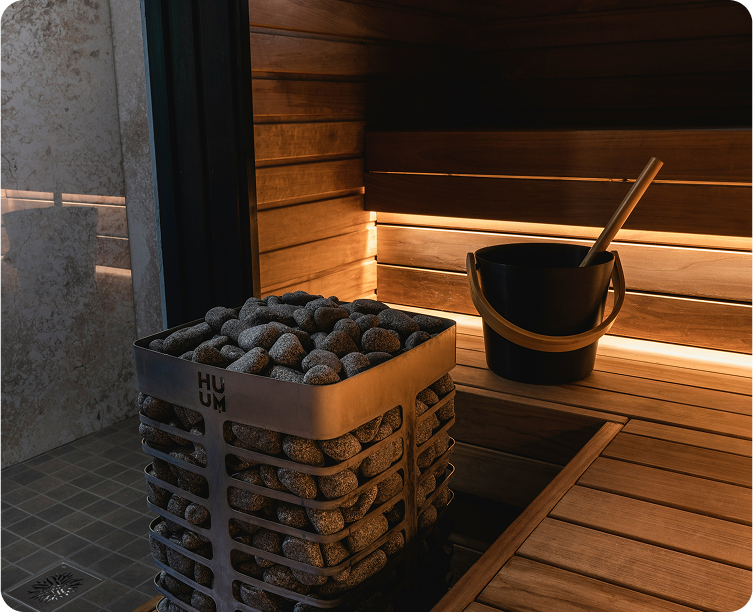
Best Sauna Heater: How To Choose The Right Heater For Your Outdoor Sauna
A sauna is only as good as the heater that powers it. While premium wood, beautiful craftsmanship, and thoughtful design all contribute to the overall experience, the heater ultimately determines how the sauna feels every time you step inside. It influences how quickly the cabin reaches temperature, how evenly heat is distributed, the quality of the steam produced by the sauna stones, and even how relaxing each session becomes.
For many first-time buyers, choosing a sauna heater can feel surprisingly complicated. Questions such as Should I choose a 6kW or 9kW heater?, Is a premium European heater worth the investment?, or Do I really need Wi-Fi controls? are incredibly common. Because the heater is one of the most important—and longest-lasting—components of an outdoor sauna, selecting the right one deserves careful consideration.
Fortunately, finding the best sauna heater isn't about purchasing the most expensive model available. Instead, it's about matching the heater to the size of your sauna, how frequently you plan to use it, your desired bathing experience, and the level of convenience you expect from modern sauna technology. A properly matched heater delivers faster heat-up times, more comfortable and consistent temperatures, better steam production, and greater energy efficiency throughout its lifespan.
It's also worth remembering that upgrading a heater later can be considerably more expensive than selecting the right option during the initial purchase. Electrical requirements, control systems, wiring, and installation all revolve around the chosen heater, making it one of the most important decisions you'll make when purchasing a traditional outdoor sauna.
Whether you're buying your very first backyard sauna or comparing premium heater upgrades, this guide explains everything you need to know. We'll compare different heater technologies, explain how to size a heater correctly, discuss the differences between 6kW and 9kW models, evaluate premium European heaters like the HUUM Drop series, and help you determine which option offers the best value for your specific needs.
Sauna Heater At A Glance
Although this guide explores sauna heaters in detail, most homeowners can narrow their decision by answering a few simple questions about the size of their sauna, the features they value most, and the overall experience they want to create.
The table below provides a quick overview of the most common recommendations.
|
If You Want...
|
Recommended Choice
|
| Best heater for a small outdoor sauna |
6kW electric heater |
| Faster heat-up times |
9kW electric heater |
| Premium design and aesthetics |
HUUM Drop Series |
| Smart controls and remote convenience |
UKU Wi-Fi Controller |
| Excellent value |
Toule 6kW Built-in Control |
| Luxury residential experience |
HUUM Drop 6kW |
| Large outdoor sauna or colder climates |
HUUM Drop 9kW |
While this summary provides a useful starting point, it's only part of the decision-making process. The best heater depends on several factors working together, including sauna volume, insulation quality, glass area, outdoor temperatures, and how you personally enjoy using your sauna.
Before Choosing A Sauna Heater, Consider These Factors
Rather than focusing solely on heater wattage or price, it's helpful to evaluate the complete ownership experience.
-
Sauna size matters first. Every heater is designed to efficiently heat a specific volume of space. Choosing a heater that's too small often leads to slow heat-up times and inconsistent temperatures.
-
Heating performance affects every sauna session. Faster recovery between steam pours, even temperature distribution, and reliable maximum temperatures all contribute to a more enjoyable experience.
-
Control systems influence convenience. Built-in controls offer simplicity, while modern Wi-Fi controllers provide scheduling, remote monitoring, and greater flexibility for everyday use.
-
Stone capacity changes the quality of the steam. Larger stone capacity generally creates softer, more consistent steam while improving heat retention throughout the session.
-
Long-term value is more important than purchase price alone. A premium heater may cost more initially but can deliver better efficiency, improved comfort, and greater satisfaction over many years of ownership.
Understanding these considerations makes it much easier to compare heaters objectively rather than simply choosing the model with the highest output or lowest price.
Why Your Sauna Heater Matters More Than You Think
When homeowners compare outdoor saunas, it's natural to focus on visible features such as wood species, panoramic glass, lighting, or overall design. While these elements certainly influence appearance, the heater determines something much more important—the actual sauna experience.
Imagine two outdoor saunas built with identical dimensions, the same premium Cedar interior, and similar craftsmanship. If one is equipped with a properly sized, high-quality heater while the other uses a lower-performance alternative, the experience inside those two saunas can feel completely different.
The better heater typically reaches operating temperature faster, maintains more stable heat throughout the session, recovers quickly after water is poured over the stones, and produces a smoother, more enjoyable steam. These differences become increasingly noticeable the more often the sauna is used.
The heater also influences energy efficiency. A properly matched heater doesn't simply consume more electricity because it has a higher power rating. Instead, it heats the sauna efficiently, cycles appropriately to maintain temperature, and avoids unnecessary strain caused by operating beyond its intended capacity.
Reliability is equally important. A quality heater is designed to perform consistently through thousands of heating cycles while maintaining stable temperatures and dependable operation year after year. Because the heater serves as the heart of the sauna, investing in the right model often has a greater impact on long-term satisfaction than almost any other upgrade.
Benefits Of Choosing A High-Quality Sauna Heater
Selecting a well-designed heater provides advantages that extend far beyond simply producing heat.
|
Benefit
|
Why It Improves The Sauna Experience
|
| Faster heat-up times |
Spend less time waiting and more time enjoying your sauna. |
| Consistent temperatures |
Creates a more comfortable and predictable bathing experience. |
| Better steam quality |
Larger stone capacity produces softer, longer-lasting steam. |
| Improved energy efficiency |
Properly sized heaters maintain temperature more effectively. |
| Greater long-term reliability |
Premium construction supports years of dependable operation. |
| Better user experience |
Smart controls and modern features simplify everyday use. |
These benefits explain why experienced sauna owners often place the heater at the top of their priority list when evaluating different sauna models.
Understanding The Different Types Of Sauna Heaters
Before comparing specific models, it's important to understand the three primary technologies used to heat modern saunas. Although they all generate warmth, they create distinctly different experiences and are designed for different types of users.
For most residential outdoor saunas, electric heaters remain the clear choice because they combine convenience, consistent performance, low maintenance, and straightforward operation. However, wood-burning heaters and infrared systems continue to appeal to certain homeowners depending on their preferences and installation environment.
Understanding how these technologies differ provides valuable context before comparing specific heater sizes or premium models later in this guide.
The Three Main Sauna Heating Systems
|
Heater Type
|
Best For
|
Steam
|
Maintenance
|
Convenience
|
| Electric Heater |
Most residential outdoor saunas |
Excellent |
Low |
Excellent |
| Wood-Burning Heater |
Off-grid cabins and traditional enthusiasts |
Excellent |
High |
Moderate |
| Infrared Heating Panels |
Indoor wellness rooms |
None |
Very Low |
Excellent |
Each system offers unique strengths, but they also create very different sauna experiences.
Electric Sauna Heaters
Electric heaters have become the industry standard for modern outdoor saunas, and for good reason. They provide dependable heating, simple operation, minimal maintenance, and outstanding consistency throughout every sauna session.
Unlike wood-burning heaters, electric models require no firewood, chimney maintenance, or ash removal. With the press of a button—or even remotely through a Wi-Fi controller on compatible models—the heater begins warming the sauna while automatically maintaining the desired temperature.
Premium electric heaters also allow manufacturers to integrate advanced features such as digital temperature controls, programmable timers, smartphone connectivity, and precise thermostat management that would be impossible with traditional wood-burning systems.
For homeowners seeking convenience without sacrificing the authentic Finnish sauna experience, electric heaters remain the preferred choice.
Advantages Of Electric Sauna Heaters
Electric heaters have become the preferred option for most residential installations because they offer an excellent balance of performance and convenience.
-
Simple operation. Starting the sauna requires little more than pressing a button or using a smartphone app on Wi-Fi-enabled models.
-
Consistent temperatures. Electronic controls maintain stable heat throughout every session.
-
Minimal maintenance. There are no ashes to remove, chimneys to clean, or firewood to manage.
-
Outstanding compatibility with modern outdoor saunas. Electric heaters integrate seamlessly with premium control systems and contemporary sauna designs.
These advantages explain why electric heaters now power the vast majority of premium outdoor residential saunas around the world.
Wood-Burning Sauna Heaters
Before electric heaters became widely available, nearly every traditional sauna relied on wood-burning heat. Today, these heaters remain popular among homeowners seeking an authentic off-grid experience or those building remote cabin saunas without access to electricity.
Rather than relying on electrical heating elements, wood-burning heaters generate warmth by burning firewood beneath a chamber filled with sauna stones. The stones gradually absorb heat before releasing it evenly throughout the sauna while producing excellent steam when water is added.
Many enthusiasts appreciate the crackling fire, natural aroma, and traditional atmosphere that wood-burning heaters create. However, they also require considerably more preparation, maintenance, and supervision than modern electric alternatives.
Homeowners should also consider installation requirements, including chimney systems, fire safety clearances, local building codes, and ongoing maintenance responsibilities.
For those who value convenience and everyday usability, electric heaters generally remain the more practical choice. Those seeking a more traditional, rustic sauna experience may still find wood-burning heaters especially rewarding.
Wood-Burning vs Electric vs Infrared Sauna Heaters
Choosing the best sauna heater begins with understanding the three primary heating technologies available today. Although all three produce heat, they create very different wellness experiences, require different levels of maintenance, and are designed for different types of users.
For homeowners purchasing a traditional outdoor sauna, electric heaters have become the clear industry standard. They combine convenience, consistent performance, and modern technology without sacrificing the authentic sauna experience. Wood-burning heaters continue to appeal to traditionalists, while infrared systems serve an entirely different category of wellness product.
Understanding these differences makes it much easier to narrow your options before comparing specific heater sizes or premium brands.
Electric Sauna Heaters
Electric sauna heaters have become the preferred choice for modern residential saunas because they deliver predictable, reliable performance with very little maintenance. Whether installed in a compact two-person sauna or a large family-sized outdoor model, electric heaters are designed to reach the desired temperature efficiently while maintaining consistent heat throughout the session.
Unlike traditional wood-burning systems, electric heaters don't require firewood, chimney cleaning, or continuous supervision. Modern models also integrate seamlessly with digital controllers, programmable timers, and Wi-Fi systems that allow users to prepare the sauna with minimal effort.
For homeowners who expect to use their sauna regularly, this convenience often becomes one of the heater's greatest advantages.
Why Electric Heaters Are So Popular
Several factors have made electric heaters the most common choice for premium outdoor saunas.
-
Simple operation. Starting the sauna requires little more than pressing a button or using a compatible smartphone app.
-
Consistent heating. Electronic controls maintain stable temperatures throughout the session.
-
Minimal maintenance. There are no ashes, chimneys, or combustion systems to maintain.
-
Excellent compatibility with modern saunas. Electric heaters work seamlessly with smart controls, lighting systems, and premium accessories.
-
Quiet operation. The only sound you'll typically hear is the gentle sizzling of water poured over the sauna stones.
For most residential buyers, these advantages make electric heaters the most practical and enjoyable long-term investment.
Wood-Burning Sauna Heaters
Wood-burning heaters represent the traditional roots of Finnish sauna culture and continue to be appreciated by homeowners seeking an authentic off-grid experience.
Rather than relying on electricity, these heaters burn firewood beneath a chamber filled with sauna stones. As the fire heats the stones, they gradually release warmth throughout the sauna while producing rich, satisfying steam whenever water is added.
Many sauna enthusiasts enjoy the ritual of preparing the fire, the natural aroma of burning wood, and the gentle crackling sounds that accompany each session. For cabins, lakeside retreats, or remote properties without convenient electrical service, wood-burning heaters remain an excellent option.
However, they also require considerably more preparation and maintenance than electric alternatives. Firewood must be stored, ashes removed, chimneys cleaned, and combustion systems inspected regularly. Heating times are generally longer, and maintaining consistent temperatures depends more heavily on the user's experience.
For homeowners seeking everyday convenience, electric heaters typically offer a simpler ownership experience while still providing authentic traditional sauna heat.
Advantages Of Wood-Burning Heaters
Although they require more attention, wood-burning heaters continue to attract dedicated sauna enthusiasts for several reasons.
-
Authentic traditional atmosphere. Many users appreciate the natural experience of heating a sauna with real fire.
-
Excellent steam production. Large stone capacity produces soft, enjoyable steam.
-
No reliance on electricity. Ideal for remote cabins or off-grid properties.
-
Unique sensory experience. Crackling wood and natural aromas create a distinctive environment.
For the right homeowner, these qualities outweigh the additional maintenance responsibilities.
Infrared Heating Systems
Although often grouped together with traditional saunas, infrared systems operate very differently.
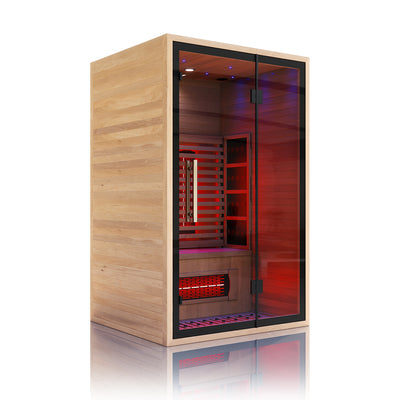
Instead of heating the air inside the room, infrared panels emit radiant energy that warms the body directly. This allows infrared cabins to operate at considerably lower temperatures than traditional Finnish saunas while still creating a warming sensation.
Because there are no sauna stones, infrared systems don't produce steam. The overall experience is generally gentler, with lower ambient temperatures and dry radiant heat.
Many people enjoy infrared cabins for shorter wellness sessions, particularly indoors where installation simplicity is a priority. However, those seeking the traditional high-temperature sauna experience usually prefer electric or wood-burning heaters.
It's important to recognize that infrared systems aren't necessarily better or worse—they simply provide a different type of heat designed for different user preferences.
Comparing The Three Heating Systems
Understanding the strengths of each heating technology makes it easier to identify which system best matches your lifestyle.
|
Feature
|
Electric Heater
|
Wood-Burning Heater
|
Infrared Panels
|
| Traditional sauna experience |
Excellent |
Excellent |
Limited |
| Steam (Löyly) |
Yes |
Yes |
No |
| Heat-up time |
Fast |
Moderate |
Very Fast |
| Temperature range |
High |
High |
Low to Moderate |
| Maintenance |
Low |
High |
Very Low |
| Ease of use |
Excellent |
Moderate |
Excellent |
| Smart controls available |
Yes |
No |
Some models |
| Best for outdoor saunas |
Excellent |
Excellent |
Less common |
Although each system serves a different purpose, electric heaters offer the best balance of performance, convenience, and long-term ownership for most residential outdoor saunas.
Traditional Sauna Heater vs Infrared
One of the biggest misconceptions among first-time buyers is assuming that traditional saunas and infrared cabins provide essentially the same experience. While both involve heat, they achieve it in fundamentally different ways.
Traditional sauna heaters warm the air inside the cabin to temperatures that often range between 170°F and 195°F, with some premium setups capable of approaching 200°F under ideal conditions. Heated sauna stones absorb this energy, creating an environment where water can be poured over the stones to generate the soft steam known as löyly, one of the defining characteristics of Finnish sauna bathing.
Infrared systems, by contrast, typically operate between 120°F and 150°F. Because they heat the body directly rather than the surrounding air, they don't require stones and cannot produce traditional steam.
Neither approach is inherently superior—they simply cater to different expectations.
Homeowners looking for the authentic outdoor sauna experience almost always gravitate toward traditional electric heaters because they deliver higher temperatures, richer steam, and the immersive environment that has defined sauna culture for generations.
Traditional vs Infrared Comparison
|
Category
|
Traditional Electric Sauna
|
Infrared Sauna
|
| Heating method |
Heats the air and sauna stones |
Heats the body directly |
| Steam |
Yes |
No |
| Typical temperature |
170–195°F |
120–150°F |
| Humidity |
Adjustable |
Dry heat only |
| Sauna stones |
Required |
Not used |
| Authentic Finnish experience |
Yes |
No |
| Outdoor installation |
Excellent |
Less common |
This comparison illustrates why buyers interested in a true outdoor sauna almost always choose traditional electric heaters.
How To Choose The Right Heater Size
Once you've decided on a traditional electric heater, the next step is selecting the correct size.
This is arguably the most important purchasing decision you'll make because even the highest-quality heater cannot perform well if it's improperly matched to the sauna.
Many first-time buyers assume that a larger heater is always better, but that's not necessarily true. Oversizing or undersizing a heater can both reduce efficiency while affecting the overall sauna experience.
Instead, heater selection should be based on several factors working together.
Factors That Determine Heater Size
Choosing the right heater involves much more than simply counting how many people will use the sauna.
Several variables influence the heating requirements of an outdoor sauna.
-
Interior volume. Larger saunas naturally require greater heating capacity.
-
Glass surfaces. Large panoramic windows increase heat loss compared to insulated walls.
-
Outdoor climate. Colder regions often benefit from higher-capacity heaters.
-
Insulation quality. Better insulation improves heating efficiency.
-
Desired heat-up time. Larger heaters generally reach operating temperature more quickly.
Considering these factors together ensures the heater delivers both efficiency and comfort.
HUUM Drop 9kW + UKU Wi-Fi Controller
The HUUM Drop 9kW builds upon everything that makes the 6kW model popular while adding the additional heating capacity required for larger outdoor saunas.
Its increased output allows the heater to warm larger interior volumes more efficiently while maintaining stable temperatures throughout longer sessions. Combined with its generous stone capacity, the result is an exceptionally comfortable sauna experience with abundant steam and excellent heat recovery.
For luxury residential projects, larger family saunas, or installations located in colder climates, the 9kW model often represents the premium choice.
The HUUM Drop 9kW is ideal for homeowners who want:
-
Maximum heating performance. Excellent for larger outdoor saunas.
-
Faster recovery after pouring water over the stones.
-
Outstanding steam production. Larger stone capacity creates softer heat.
-
Modern Wi-Fi convenience. Easily manage sauna settings through the UKU controller.
-
Luxury aesthetics. A heater that becomes a design feature as well as a heating system.
Although it carries a higher initial investment, many homeowners consider the additional performance worthwhile, particularly when paired with larger premium outdoor saunas.
Built-In Controls vs Wi-Fi Controllers
One of the most noticeable developments in modern sauna technology has been the evolution of control systems.
Traditional heaters relied entirely on built-in mechanical controls that required users to adjust temperature and timers directly at the heater. While these systems remain dependable and easy to use, many homeowners now appreciate the flexibility offered by dedicated digital controllers and Wi-Fi connectivity.
Neither approach is inherently better. Instead, each offers advantages depending on how you expect to use your sauna.
Comparing Control Systems
|
Feature
|
Built-In Controls
|
Wi-Fi Controller
|
| Ease of use |
Excellent |
Excellent |
| Temperature adjustment |
Manual |
Digital |
| Timer functions |
Basic |
Advanced |
| Smartphone integration |
No |
Yes |
| Premium user experience |
Good |
Excellent |
| Best for |
Simplicity |
Convenience |
Homeowners who value straightforward operation often appreciate the simplicity of built-in controls, while those looking for greater flexibility frequently prefer modern digital systems.
Sauna Stones Matter More Than Most Homeowners Realize
When homeowners compare sauna heaters, they often focus on wattage, heat-up time, or smart controls. While these factors are certainly important, one critical component is frequently overlooked—the sauna stones.
In a traditional Finnish sauna, the heater generates the heat, but the stones determine how that heat is experienced. They absorb thermal energy from the heating elements, store it efficiently, and release it gradually throughout the sauna session. More importantly, they're responsible for producing löyly, the soft steam created when water is poured over the stones.
The quality, quantity, and arrangement of the stones have a direct impact on comfort, humidity, temperature stability, and the overall sauna experience. Two heaters with identical power ratings can feel remarkably different simply because one holds more stones or distributes heat more effectively.
For this reason, experienced sauna enthusiasts often evaluate a heater by looking beyond its kilowatt rating. Stone capacity deserves just as much attention.
Why Sauna Stones Are So Important
Every sauna stone acts like a thermal battery.
As the heater warms the stones, they gradually store heat before releasing it evenly throughout the cabin. When water is poured onto the stones, a portion instantly evaporates into soft steam while the remaining moisture continues interacting with the hot stone surfaces, creating the distinctive sauna climate that traditional bathers expect.
Without properly heated stones, a sauna simply becomes a hot room.
With well-designed stone capacity, however, the environment feels smoother, more comfortable, and significantly more relaxing.
Benefits Of Larger Stone Capacity
Premium sauna heaters often distinguish themselves through the amount of stone they hold rather than simply their electrical output.
|
Benefit
|
Why It Matters
|
| Softer heat |
Stones release heat gradually, creating a more comfortable environment. |
| Better steam production |
More heated stones generate richer, longer-lasting löyly. |
| Improved heat stability |
Larger thermal mass helps maintain consistent temperatures. |
| Faster recovery |
The sauna returns to operating temperature more quickly after water is poured over the stones. |
| More authentic sauna experience |
Greater stone capacity closely resembles traditional Finnish sauna bathing. |
These benefits explain why many premium European heaters intentionally expose large quantities of sauna stones rather than concealing them inside a metal housing.
Stone Capacity Changes The Feel Of The Sauna
It's easy to assume that a hotter sauna automatically provides a better experience, but temperature alone tells only part of the story.
Imagine two outdoor saunas operating at exactly 190°F.
The first uses a compact heater with relatively few stones.
The second uses a premium heater designed with significantly greater stone capacity.
Although both saunas display the same temperature, the second often feels noticeably different. Heat is distributed more evenly, steam remains softer after water is poured onto the stones, and the overall environment feels less harsh despite producing the same thermometer reading.
This difference becomes especially noticeable during longer sauna sessions or when multiple people are using the sauna together.
Rather than cycling rapidly between bursts of intense heat and cooler recovery periods, larger stone capacity creates a smoother, more balanced experience from beginning to end.
Choosing High-Quality Sauna Stones
Not every stone is suitable for sauna use.
Sauna stones are specifically selected because they can withstand repeated heating and cooling cycles without deteriorating rapidly. Using ordinary landscape rocks or decorative stones may lead to cracking, poor heat retention, or premature failure.
High-quality sauna stones should provide several important characteristics.
-
Excellent heat retention. Dense stones store thermal energy efficiently and release it gradually.
-
Resistance to repeated heating cycles. Premium stones tolerate continual expansion and contraction without excessive cracking.
-
Consistent size. Uniform stones promote balanced airflow throughout the heater.
-
Clean surfaces. Proper sauna stones contain minimal loose debris that could accumulate inside the heater.
Investing in quality stones protects both the heater and the overall sauna experience.
Built-In Controls vs Wi-Fi Controllers
Modern sauna heaters are no longer limited to simple mechanical dials.
Today's premium electric heaters often incorporate sophisticated digital control systems that allow homeowners to manage temperature, operating schedules, lighting, and other settings with far greater precision. While traditional built-in controls continue to serve many homeowners exceptionally well, Wi-Fi-enabled systems have become increasingly popular among buyers seeking greater convenience and flexibility.
The choice ultimately comes down to lifestyle rather than performance. Both systems produce excellent sauna experiences—the difference lies in how you interact with the heater.
Built-In Controls
Built-in controls have powered traditional electric saunas for decades.
Integrated directly into the heater, these controls typically allow users to adjust operating temperature and session duration without requiring separate control panels or additional electronics.
Their greatest advantage is simplicity.
Because everything is contained within the heater itself, installation is straightforward and operation remains intuitive. Many homeowners appreciate this traditional approach because it minimizes complexity while still delivering dependable performance.
Built-in controls are ideal for homeowners who value:
-
Straightforward operation. Temperature adjustments are made directly on the heater.
-
Simple installation. Fewer external components reduce installation complexity.
-
Excellent reliability. Mechanical controls have a long history of dependable performance.
-
Outstanding value. Integrated systems often reduce overall equipment costs.
For homeowners who prefer simplicity over advanced technology, built-in controls remain an excellent choice.
Wi-Fi Sauna Controllers
As outdoor saunas become increasingly integrated into modern smart homes, digital Wi-Fi controllers have transformed the ownership experience.
Rather than manually adjusting settings at the heater, users can manage temperature, operating schedules, and various system functions through an elegant wall-mounted controller or compatible smartphone application, depending on the system and local regulations.
This added convenience allows homeowners to customize their sauna experience with greater precision while simplifying everyday operation.
It's important to note that available remote-control features vary depending on the controller, local electrical codes, and safety regulations. Homeowners should always follow the manufacturer's guidance regarding remote operation.
Benefits Of Wi-Fi Controllers
Modern control systems offer several advantages beyond simple temperature adjustment.
|
Feature
|
Homeowner Benefit
|
| Digital temperature control |
Greater precision than traditional mechanical controls. |
| Programmable schedules |
Simplifies regular sauna use. |
| Modern interface |
Easy-to-read digital displays improve usability. |
| Smartphone connectivity* |
Added convenience on compatible systems. |
| Software updates |
Some systems receive ongoing feature improvements. |
*Availability depends on the specific controller model and local installation requirements.
For homeowners who use their sauna frequently, these convenience features often become one of the most appreciated upgrades.
Features Worth Paying For In A Sauna Heater
Shopping for the best sauna heater often involves comparing long specification sheets filled with technical terminology. While manufacturers highlight dozens of features, only a handful consistently improve the everyday sauna experience.
Rather than focusing on marketing claims, homeowners should prioritize features that directly affect comfort, reliability, convenience, and long-term satisfaction.
The following upgrades generally provide meaningful value for residential outdoor saunas.
Features That Make A Difference
|
Feature
|
Why It's Worth Considering
|
| Proper heater sizing |
Ensures efficient heating and stable temperatures. |
| Large stone capacity |
Produces softer steam and more consistent heat. |
| Digital temperature control |
Improves precision and ease of operation. |
| Wi-Fi controller |
Adds convenience for frequent users. |
| Quality heating elements |
Supports long-term reliability. |
| Premium construction materials |
Improve durability in outdoor environments. |
| Safety protection systems |
Enhance operational safety. |
Although these features may increase the initial purchase price, they often contribute directly to a better ownership experience over many years.
Premium Features That Improve Everyday Use
Several upgrades stand out because they're noticed almost every time the sauna is used.
-
Large exposed stone capacity. More stones create softer heat while improving steam production.
-
Modern digital controls. Precise temperature management enhances consistency from one session to the next.
-
Smart controller compatibility. Convenient scheduling and monitoring simplify everyday use.
-
High-quality heating elements. Durable components contribute to dependable long-term performance.
-
Well-designed safety systems. Overheat protection and reliable controls provide additional peace of mind.
These features improve far more than specifications—they improve the overall experience of owning and using the sauna.
Features You Probably Don't Need
Not every advertised feature delivers meaningful everyday value.
As sauna technology has evolved, manufacturers have introduced increasingly long feature lists, some of which contribute more to marketing than to the actual sauna experience.
Understanding which features matter less can help buyers focus their budget where it has the greatest impact.
Consider Carefully Before Paying Extra For
-
Overly complicated smartphone applications with features you'll rarely use.
-
Excessive preset programs that duplicate simple manual adjustments.
-
Decorative displays that prioritize appearance over usability.
-
Marketing terminology without measurable performance benefits.
-
Accessories that don't improve heating quality or user comfort.
Rather than selecting a heater based on the longest feature list, homeowners are generally better served by investing in reliable engineering, quality stone capacity, and controls that genuinely simplify operation.
These core characteristics consistently provide greater long-term value than novelty features that may see little practical use.
Energy Efficiency: Does A Bigger Sauna Heater Use More Electricity?
One of the biggest concerns homeowners have when shopping for the best sauna heater is energy consumption. It's natural to assume that a larger heater will always result in dramatically higher electricity bills, but in practice, the answer is more nuanced.
A sauna heater's power rating indicates how much electricity it can consume while actively heating. However, the total operating cost depends on much more than wattage alone. Sauna size, insulation quality, outdoor temperature, session length, and usage frequency all influence how much energy the heater ultimately uses.
Perhaps most importantly, a properly sized heater often operates more efficiently than one that's either too small or unnecessarily oversized. A heater that is correctly matched to the sauna reaches operating temperature efficiently, cycles normally to maintain heat, and avoids prolonged periods of maximum output.
For this reason, selecting the right heater size is one of the most effective ways to balance both performance and operating costs.
What Affects Sauna Heater Energy Consumption?
Electricity usage varies from one sauna to another because every installation is different. Rather than focusing solely on the heater's kilowatt rating, homeowners should consider the complete heating environment.
Several factors have the greatest influence on overall efficiency.
|
Factor
|
Effect On Energy Consumption
|
| Heater size |
Larger heaters consume more power while actively heating but may reach temperature faster. |
| Sauna insulation |
Better insulation significantly reduces energy loss. |
| Glass surfaces |
Large windows increase heat loss compared to insulated walls. |
| Outdoor temperature |
Colder climates require more energy during heat-up. |
| Session length |
Longer sessions naturally consume more electricity. |
| Frequency of use |
More frequent operation increases monthly energy consumption. |
These variables explain why two homeowners using the same heater may experience different operating costs.
Approximate Power Consumption
Although actual operating costs vary by electricity rates and usage habits, understanding the relative energy consumption of common heater sizes can help buyers compare their options.
|
Heater Size
|
Power Consumption While Heating
|
| 4.5kW |
4.5 kWh per hour |
| 6kW |
6 kWh per hour |
| 9kW |
9 kWh per hour |
It's important to remember that heaters don't operate at full power continuously throughout an entire sauna session. Once the desired temperature is reached, the thermostat cycles the heating elements on and off as needed to maintain consistent heat.
As a result, real-world electricity usage is often lower than many first-time buyers expect.
Choosing Efficiency Over Wattage
Many homeowners assume selecting the smallest available heater automatically minimizes electricity costs.
In reality, an undersized heater often runs continuously while struggling to reach operating temperature, particularly during winter or inside larger outdoor saunas. This prolonged heating period can reduce efficiency while placing additional strain on the heater.
Conversely, a properly sized heater warms the sauna efficiently before cycling normally to maintain temperature.
The goal isn't to choose the smallest heater—it is to choose the right heater.
For most homeowners, proper sizing provides the best balance of comfort, performance, and long-term operating efficiency.
Sauna Heater Installation Requirements
Selecting the best sauna heater isn't only about performance. Installation requirements should also be considered before making a purchasing decision.
Modern electric sauna heaters are designed to be installed safely and reliably, but they require proper electrical service, appropriate clearances, and professional installation to ensure long-term performance.
Planning these requirements before purchasing the sauna helps avoid unnecessary delays during installation.
Typical Installation Considerations
Although requirements vary between manufacturers and heater sizes, most residential electric sauna heaters share several common installation needs.
|
Installation Requirement
|
Why It Matters
|
| Dedicated electrical circuit |
Prevents overloading household circuits. |
| Proper breaker sizing |
Ensures safe electrical operation. |
| Correct wire sizing |
Supports reliable heater performance. |
| Manufacturer clearances |
Protects surrounding wood surfaces. |
| Professional installation |
Helps ensure compliance with local electrical codes. |
Every heater manufacturer publishes detailed installation specifications that should always be followed during installation.
Professional Installation Is Strongly Recommended
Unlike many household appliances, sauna heaters operate at relatively high electrical loads while producing sustained temperatures approaching 200°F.
For this reason, installation should generally be performed by a licensed electrician familiar with local electrical requirements and the manufacturer's installation instructions.
Professional installation provides several important benefits.
-
Proper electrical connections help ensure safe operation.
-
Correct breaker and wire sizing support reliable performance.
-
Manufacturer clearances reduce unnecessary heat exposure to surrounding materials.
-
Local code compliance helps protect both homeowners and equipment.
Although professional installation represents an additional upfront investment, it contributes significantly to the long-term safety and reliability of the sauna.
Common Sauna Heater Buying Mistakes
Choosing the best sauna heater doesn't necessarily mean buying the most expensive model. More often, it means avoiding the mistakes that commonly lead to disappointing performance after installation.
Many of these mistakes are surprisingly easy to prevent with a little planning.
The Most Common Buying Mistakes
|
Mistake
|
Better Approach
|
| Choosing the heater based only on price |
Consider performance, reliability, and long-term value. |
| Buying a heater that's too small |
Match the heater to the sauna's volume and insulation. |
| Ignoring glass area |
Large windows increase heating requirements. |
| Overlooking control systems |
Consider whether built-in or Wi-Fi controls better suit your lifestyle. |
| Focusing only on wattage |
Evaluate stone capacity, efficiency, and overall design. |
| Choosing aesthetics over performance |
Prioritize heating quality first, then appearance. |
Avoiding these common mistakes makes it much easier to enjoy consistent performance for many years.
Don't Choose Based On Price Alone
Price naturally plays an important role in any purchasing decision, but it shouldn't become the only deciding factor.
A less expensive heater that struggles to heat the sauna efficiently may ultimately provide a less enjoyable ownership experience than a slightly more capable model that performs consistently every day.
Instead of asking, "What's the cheapest heater available?", homeowners should ask, "Which heater is best suited to my sauna?"
That small shift in perspective often leads to significantly greater long-term satisfaction.
Think Beyond Heat-Up Time
Many buyers compare heaters solely by how quickly they reach operating temperature.
While fast heat-up times are certainly convenient, they're only one part of the overall sauna experience.
Equally important considerations include:
-
Steam quality
-
Heat consistency
-
Stone capacity
-
Long-term reliability
-
Ease of operation
-
Overall comfort
A heater that produces beautiful, consistent heat for decades often provides greater value than one that simply heats the sauna a few minutes faster.
Frequently Asked Questions
Sauna Heater FAQs
|
Question
|
Quick Answer
|
| What is the best sauna heater? |
The best heater is one that's properly sized for your sauna and usage. |
| Is a 9kW heater better than a 6kW heater? |
Not necessarily. The correct choice depends on sauna size and heating requirements. |
| Are premium heaters worth the extra cost? |
Many homeowners appreciate the improved design, larger stone capacity, and smart controls. |
| Do Wi-Fi controllers improve performance? |
They improve convenience rather than heating capability. |
| How long do electric sauna heaters last? |
With proper maintenance, quality heaters can provide many years of dependable service. |
Below are answers to several of the questions homeowners ask most frequently.
What Is The Best Sauna Heater?
There isn't a single heater that's best for every situation.
The ideal choice depends on the size of the sauna, desired features, heating performance, and the overall experience you're hoping to create. A properly sized heater from a reputable manufacturer will almost always outperform a more expensive model that's poorly matched to the sauna.
Should I Choose A 6kW Or 9kW Heater?
Smaller and medium-sized outdoor saunas often perform exceptionally well with a 6kW heater, while larger cabins, extensive glass walls, or colder climates may benefit from the additional capacity of a 9kW model.
Proper sizing remains more important than simply choosing the larger option.
Are Wi-Fi Controllers Worth It?
For many homeowners, yes.
Digital Wi-Fi controllers simplify everyday operation through precise temperature adjustment, scheduling features, and modern interfaces. While they don't increase heating performance, they often improve the overall ownership experience.
Do Premium Heaters Produce Better Steam?
Often, yes.
Premium heaters frequently incorporate larger stone capacity, which contributes to softer, more consistent steam and better heat retention throughout the sauna session.
Can I Upgrade My Heater Later?
In many cases, yes.
However, upgrading may also require changes to electrical service, wiring, breakers, or control systems. Choosing the appropriate heater during the initial purchase is generally simpler and more cost-effective.
Key Takeaways
Selecting the best sauna heater involves balancing performance, efficiency, convenience, and long-term value rather than focusing on a single specification.
The following recommendations provide a helpful starting point for most homeowners.
|
Situation
|
Recommended Heater
|
| Small outdoor sauna |
6kW electric heater |
| Medium family sauna |
Premium 6kW electric heater |
| Large outdoor sauna |
9kW electric heater |
| Luxury residential installation |
Premium European heater with Wi-Fi controls |
| Fastest heat-up |
9kW heater |
| Best value |
Reliable 6kW electric heater |
| Premium steam quality |
Heater with larger stone capacity |
Regardless of the specific model you choose, several principles remain consistent.
-
Choose the correct heater size before comparing brands. Proper sizing has the greatest influence on performance.
-
Consider the complete sauna experience. Heat quality, steam production, and user convenience are just as important as heat-up time.
-
Don't overlook stone capacity. Larger stone volume often creates noticeably softer, more enjoyable steam.
-
Invest in quality where it matters. Reliable construction and thoughtful engineering usually provide greater long-term value than unnecessary features.
-
Think long term. A sauna heater is one of the most important components of your investment and should be selected with years of ownership in mind.
Final Verdict: The Best Sauna Heater Is The One That's Properly Matched To Your Sauna
Choosing the best sauna heater isn't about purchasing the highest-powered model or the one with the longest list of features. Instead, it's about selecting a heater that complements your sauna's size, construction, climate, and the way you intend to use it.
For many homeowners, a well-designed 6kW electric heater delivers outstanding everyday performance for small to medium outdoor saunas. It offers efficient operation, dependable heat, and an authentic traditional sauna experience without unnecessary complexity.
For larger outdoor saunas, colder climates, or homeowners seeking the highest level of comfort and performance, a 9kW heater provides additional heating capacity, faster recovery, and greater stone volume for richer steam and more consistent temperatures.
Beyond heater size, factors such as stone capacity, control systems, build quality, and overall engineering all contribute to the ownership experience. Premium heaters often justify their higher initial investment by delivering smoother heat, enhanced convenience, and years of reliable operation.
Ultimately, the right heater is the one that allows you to step into your sauna, relax immediately, and enjoy every session knowing your heating system was chosen not simply for its specifications—but because it was the perfect match for your outdoor sauna and your lifestyle.



 OUR BEST SELLERS