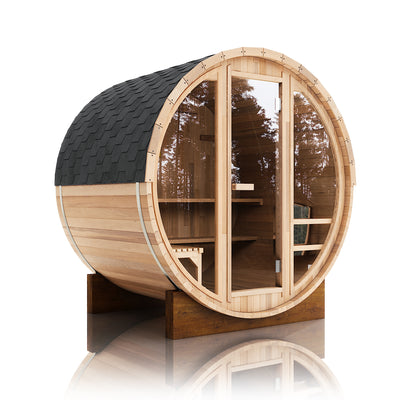
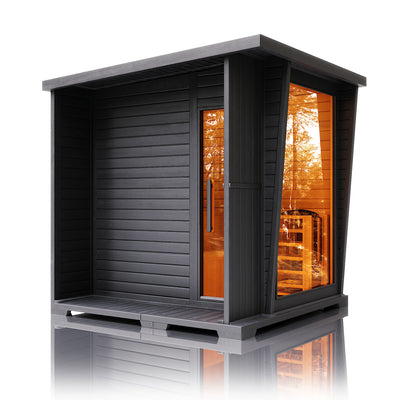
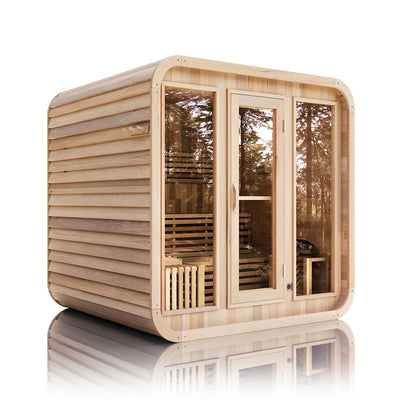
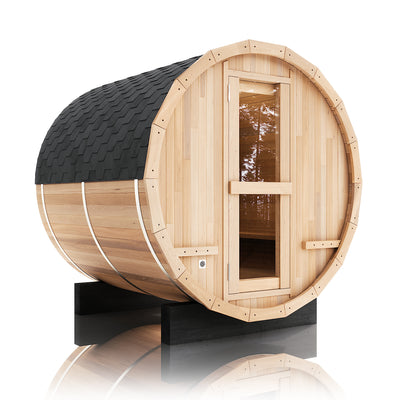
How long do outdoor saunas last? A well-designed, correctly installed, and consistently maintained outdoor sauna can commonly provide about 15 to 30 years of useful service, while premium structures with replaceable components and excellent water management may remain viable longer. A poorly sited kit with a weak roof, wet foundation, inadequate drainage, or neglected electrical equipment can develop major problems in fewer than 10 years. No single lifespan applies to every sauna because the shell, heater, controls, roof, glazing, benches, and finishes age at different rates.
The most important distinction is between the lifespan of the structure and the lifespan of individual components. Exterior cladding may only need cleaning and refinishing, benches may be sanded or replaced, heater stones are consumable, and heating elements or controls can be serviced long before the cabin reaches the end of its life. A repairable sauna can therefore remain useful through several component cycles instead of being discarded when the first part fails.
This guide explains what realistic lifespan ranges mean and how material quality, foundation design, drainage, ventilation, roofing, climate, use frequency, maintenance, and electrical care influence them. It also identifies early warning signs and the questions buyers should ask before purchase. The goal is not to promise a number, but to help homeowners select a system capable of reaching the upper end of a reasonable service-life range.
Quick Answer
For planning purposes, 15 to 30 years is a reasonable broad expectation for a quality outdoor sauna, not a warranty or guarantee. Lightly built or poorly protected units may require major structural work earlier. Carefully detailed cedar, thermally modified wood, or insulated framed saunas on dry foundations can last longer when owners renew roofs and finishes, replace worn benches, maintain ventilation, and service the heater and controls.
A buyer should budget for staged maintenance rather than expecting every part to last as long as the walls. Heater stones may need inspection and replacement on a recurring schedule set by the manufacturer and use level. Heating elements, contactors, sensors, lighting, and control panels are service items. Roof membranes and exterior finishes have their own cycles. The structure lasts longest when these smaller interventions happen before water or heat causes secondary damage.
|
Outdoor Sauna Element
|
Practical Planning Range
|
What Most Affects It
|
| Wood structure and shell |
Often 15-30 years; premium repairable systems may exceed this |
Species, grade, drying, roof, foundation, drainage, ventilation, exposure |
| Exterior finish |
Roughly 1-7 years between attention, highly product- and exposure-dependent |
UV, rain, surface texture, preparation, pigment, application quality |
| Roof covering or membrane |
Product-specific; often renewed before the cabin |
Slope, flashing, snow, sun, penetrations, installation, inspection |
| Electric heater |
Often serviceable for many years rather than replaced as one unit |
Sizing, stones, airflow, water quality, wiring, use frequency, element condition |
| Controls and sensors |
Variable electronic service life |
Moisture, temperature location, voltage quality, enclosure rating, support |
| Benches and contact surfaces |
Repairable and replaceable during cabin life |
Hygiene, drying, abrasion, fasteners, sanding allowance, wood grade |
Why Lifespan Estimates Vary
Outdoor sauna lifespan is difficult to reduce to one figure because products called outdoor saunas range from thin uninsulated barrels to solid-log cabins, panelized rooms, insulated framed buildings, and custom masonry-supported structures. Their weather barriers, roof assemblies, wood thicknesses, fasteners, heaters, and repair options differ substantially. A manufacturer's general statement may describe a best-case installation rather than the conditions on a specific property.
Exposure also changes from one wall to the next. A shaded lower wall may stay wet while the roof-facing wall dries quickly. A sprinkler can soak one corner every morning. Snow can pile against a rear wall, and wind-driven rain can enter a joint protected in ordinary weather. Service-life advice becomes more useful when it evaluates these local pathways instead of relying only on regional climate.
Maintenance changes the outcome further. Two identical saunas can age very differently when one owner clears roof debris, preserves drainage, dries the hot room, and responds to a small leak while the other waits for visible rot. The meaningful question is therefore not only how many years a sauna might last, but which design and ownership practices prevent small, repairable defects from becoming structural failures.
-
Construction system: Thin barrels, solid-log cabins, insulated panels, and custom framed saunas manage heat and moisture differently, so their likely service lives cannot be judged by the same headline number.
-
Site exposure: Shade, sprinklers, wind-driven rain, snow accumulation, and intense afternoon sun can cause one installation to age much faster than an identical sauna in a protected location.
-
Repairability: A structure with replaceable roof layers, benches, controls, and exterior boards can remain useful through several component cycles instead of reaching end of life when one part fails.
Useful Life Versus Cosmetic Life
Wood may look weathered long before it loses structural usefulness. Ultraviolet light can turn an unfinished exterior gray, finishes can fade, and small surface checks can appear without making the cabin unsafe. Cosmetic aging matters to ownership satisfaction, but it should not be confused automatically with decay. Conversely, a freshly coated surface can conceal persistent moisture or soft wood beneath it.
Functional life ends when the sauna can no longer heat, ventilate, drain, or protect occupants safely without repairs that exceed its value. That point depends on access to replacement profiles, electrical parts, roof components, and technical support. A modular cabin with replaceable boards and a supported heater may remain economical to repair after a visually pristine proprietary unit becomes difficult to service.
Buyers should decide which appearance they expect to preserve. Allowing cedar or thermally modified cladding to gray can reduce color-maintenance pressure, but inspections remain necessary. Owners who expect a showroom-brown exterior indefinitely need a compatible finish schedule and should treat refinishing labor as part of lifecycle cost.
Material Quality Sets the Starting Point
Wood species matters, but quality within the species can matter just as much. Clear western red cedar, knotty cedar, Nordic spruce, hemlock, pine, and thermally modified woods have different density, durability, resin, movement, and appearance. Lumber grade, growth-ring orientation, heartwood content, knots, machining, and initial moisture content influence whether boards remain tight and smooth through repeated seasonal cycling.
Western red cedar heartwood brings natural decay resistance and dimensional stability. Properly documented Thermo-D or equivalent thermally modified products can bring reduced moisture movement and improved biological durability for above-ground exposure. Spruce and hemlock can also perform well when protected by an effective roof, coating or cladding system, and drying design. None should remain in soil or standing water unless specifically treated and approved for that contact.
Factory preparation matters. Accurate tongue-and-groove profiles, sealed or treated end grain where required, compatible adhesives, correctly located fasteners, and protected storage before assembly all contribute to lifespan. Wet or sun-damaged components can begin moving before installation. Inspect deliveries promptly and document cracks, crushed profiles, staining, or warped panels before assembly.
Wood Thickness and Wall Construction
Thicker wood is not automatically more durable, but it can provide more material for weathering, refinishing, and joint engagement. Solid stave, log, insulated panel, and framed wall systems manage moisture differently. A thin solid wall may dry quickly but lose more heat; an insulated wall may perform efficiently yet require excellent vapor and rain control so hidden layers stay dry.
Barrel saunas depend on continuous stave contact and adjustable bands. Seasonal movement can create leaks or gaps if bands are ignored or staves were assembled at the wrong moisture condition. Cabin saunas may rely on interlocking logs, panels, or cladding over framing. Their longevity depends on corner joints, roof-to-wall transitions, openings, and the ability of concealed cavities to drain or dry.
Ask whether damaged lower boards, trim, benches, and roof pieces can be replaced without dismantling the entire structure. Repair-friendly design extends useful life even when individual boards do not last forever. Proprietary profiles should be supported by the manufacturer, and owners should retain spare finish information and assembly drawings.
The Foundation Is a Lifespan System
The foundation keeps the sauna level, supports its weight, controls ground moisture, and provides a durable connection to the site. Concrete slabs, piers, helical piles, blocks, and engineered decks can all work when they match local soil, frost, drainage, load, wind, and code requirements. An improvised foundation that settles unevenly can twist doors, open wall joints, stress glass, and create roof drainage problems.
Wood should be separated from soil and persistent splash. A slab needs the correct dimensions, elevation, flatness, and drainage relationship; a larger slab can collect water against the base if it has no slope or capillary break. Pier systems need adequate bearing and lateral stability. Deck installations require verified capacity for the sauna, occupants, heater, stones, snow, and dynamic use.
Foundation design is difficult to correct after assembly. Buyers should obtain the manufacturer's base drawing before site work, confirm utility routes, and use qualified local professionals where structural or code questions apply. Spending on an accurate dry base usually delivers more life than upgrading cosmetic accessories while accepting a marginal platform.
-
Stable support: The base must carry the combined weight of the cabin, occupants, heater, stones, glazing, and environmental loads without settling or twisting the structure.
-
Moisture separation: Wood components should remain above soil, standing water, and persistent splash so the lowest walls and floor framing can dry after rainfall.
-
Correct geometry: A level, correctly sized foundation protects door alignment, glass clearances, wall joints, barrel bands, and the roof's intended drainage direction.
-
Verified capacity: Decks, piers, slabs, and blocks should be assessed for local soil, frost, wind, snow, and code conditions rather than selected only for convenience.
Drainage Prevents Hidden Damage
Water must have a path away from the roof, walls, doorway, floor, and foundation. Effective drainage includes site grading, gutters or directed runoff where appropriate, splash control, floor details, clear gaps, and protection of end grain. A sauna positioned at the low point of a yard may receive water from an area much larger than its footprint.
Leaves, needles, soil, mulch, and snow can bridge intended clearances and keep lower boards wet. Plan enough access around the structure to inspect and clean it. Avoid placing planters or storage bins tightly against the walls. Redirect sprinklers. After heavy rain, look for puddling, water trails, staining beneath windows, and damp corners rather than assuming the roof handled everything.
Interior drainage varies by sauna style and local requirements. Some dry saunas rely on controlled water use and drying rather than a floor drain, while wash-down rooms need a properly trapped and sloped drain assembly. Follow the manufacturer's system. Drilling an unplanned hole through a floor can create a moisture, insect, frost, or warranty problem.
-
Roof runoff: Rainwater should discharge away from doors, wall joints, electrical penetrations, and the sauna base instead of creating a recurring wet line.
-
Ground grading: The surrounding surface should move water away from the foundation and must not allow mulch, soil, leaves, or snow to bridge the intended clearance.
-
Interior water control: Wash water and steam moisture need the manufacturer-approved drain or drying pathway; an improvised opening can introduce insects, frost, or concealed moisture.
-
Routine observation: Inspect the site during and immediately after heavy rain because puddles, splash patterns, and water trails are easier to diagnose while they are active.
Roof Design Often Decides the Outcome
The roof receives the most direct rain, snow, sunlight, debris, and falling branches. A high-quality wall cannot compensate for a failing roof. Slope, membrane selection, shingles or metal panels, underlayment, edge flashing, penetrations, ridge treatment, fasteners, and overhangs must work together. Flat-looking cube saunas deserve special scrutiny because a small drainage defect can hold water above finished interior surfaces.
Barrel saunas benefit from a dedicated rain jacket, shingles, or another approved roof in consistently wet climates. Curved staves alone may shed brief rain but joints, end walls, lower sides, and door details remain exposed. Cabin roofs should direct runoff away from doors and low walls. Snow-load suitability must be verified rather than inferred from photographs.
Inspect roofs at least seasonally and after severe weather. Remove debris without damaging the surface, check flashing and sealant, and look inside for discoloration after rain. Repair small punctures or lifted edges according to the roof manufacturer's method. Unapproved caulk smeared over a complex leak may trap water and make the later repair harder.
-
Membrane and covering condition: Look for punctures, lifted edges, cracked shingles, failed seams, surface bubbles, and areas where debris keeps the roof wet.
-
Flashing and penetrations: Chimneys, vents, wiring routes, skylights, and roof-to-wall transitions require intact details that send water over—not behind—the weather layer.
-
Drainage and snow: Confirm that the roof slope, outlets, gutters, and structural rating suit local rainfall, ice, and snow rather than relying on appearance alone.
-
Interior evidence: Ceiling discoloration, musty odors, swelling trim, or damp insulation can reveal a roof problem before the exterior defect becomes obvious.
Ventilation Protects Wood and People
Ventilation supplies fresh air, supports heater performance, balances comfort, and removes moisture after bathing. Harvia guidance for electrically heated rooms describes an intended air-change rate and specific supply and exhaust arrangements, but the correct layout depends on the heater, sensor, mechanical or gravity system, and manufacturer. A generic vent diagram should not override the exact manual.
Drying ventilation is as important to lifespan as bathing ventilation. After use, remove wet textiles and excess water, use residual heat as instructed, and open the designated drying vent or door arrangement. Cold outdoor air alone may not dry a wet room effectively in winter. The goal is to move moisture out without driving it into hidden cavities or confusing the heater sensor.
Blocked vents, permanently closed dampers, or landscaping placed against exterior outlets can leave benches and lower walls damp. Inspect screens for lint and insects. Do not relocate a vent casually, because airflow near a temperature sensor can alter heater control and safety behavior. Changes should follow the cabin and heater documentation.
Climate Changes the Maintenance Burden
Humid coastal climates encourage slower drying, surface growth, and corrosion. Hot sunny climates accelerate ultraviolet fading, coating erosion, and surface checking. Freeze-thaw regions add snow loads, ice, frost movement, and the risk that trapped water expands in joints. Desert climates reduce decay pressure but can produce severe moisture gradients between an intensely heated interior and a cool dry exterior.
A climate-appropriate sauna addresses the dominant exposure without ignoring the others. Wet regions need roof overhangs, drainage, airflow, and compatible metal hardware. Snow regions need structural ratings and accessible snow management. High-UV locations benefit from pigmented finishes or deliberate acceptance of weathering. Storm regions require anchorage and impact planning.
Microclimate is often more important than a citywide average. Trees provide shade but drop debris. Nearby walls reduce wind yet restrict drying. Pools add splash and chemical exposure. Coastal air can affect electrical and metal components. Observe the site in rain, winter, and afternoon sun before fixing the location.
Use Frequency and Operating Habits
Frequent use creates more heating cycles, water exposure, perspiration, and wear, but it can also encourage attentive ownership. A daily sauna that is dried and cleaned correctly may age better than a rarely used cabin left damp and unopened. Long periods of inactivity need a storage strategy, pest inspection, weather checks, and manufacturer-approved electrical isolation where appropriate.
Excessive water use can saturate benches, walls, and floors. Water should be poured on suitable hot stones as directed, not on electrical controls, sensors, wall cladding, or cold heater elements. Occupants should use towels on benches and avoid leaning wet equipment against walls. Fragrance products can stain wood or damage heater components if misused.
Overheating is not a substitute for drying. Operate within the heater and cabin limits. Repeatedly defeating timers, sensors, high-limit controls, or ventilation can shorten component life and create a safety hazard. A properly sized heater warms the room without needing chronic operation at the edge of its capability.
Heater Sizing and Longevity
An undersized electric heater may run for long periods, struggle in cold weather, and expose elements and controls to unnecessary duty. An oversized heater can create rapid cycling or uncomfortable heat gradients if the room and controls are not designed for it. Heater selection should use calculated sauna volume, with adjustments for glass, stone, masonry, uninsulated surfaces, and outdoor starting temperature.
Wood-burning heaters need correct chimney design, clearances, combustion air, hearth protection, and regular inspection. Creosote, corrosion, cracked components, and chimney damage can endanger the structure long before the wood shell wears out. Installation and service should follow local code and the appliance manual, using qualified professionals where required.
For either heat source, preserve the protective airflow around the heater. Do not crowd it with decorative screens or stored items. Maintain required clearances after bench adjustments. A replacement heater may have different sensor positions, electrical loads, and clearances, so it should not be treated as a dimensionally interchangeable appliance.
Electrical Care Is Part of Structural Care
Outdoor sauna electrical systems face heat, humidity, condensation, cold, insects, ultraviolet exposure, and possible corrosion. The heater circuit, disconnect, control panel, sensors, lighting, junctions, and cable types must suit the location and applicable electrical rules. Permanent heater installation should be completed and documented by a qualified electrician rather than improvised with extension cords or indoor-rated accessories.
Owners should keep control enclosures dry, maintain clearances, and report nuisance trips, burning smells, discoloration, buzzing, damaged cables, loose fixtures, or unstable temperature control promptly. Resetting a protective device repeatedly without diagnosing the cause can turn a service issue into a larger failure. Electrical panels should remain accessible and labeled.
Cold-weather compatibility also matters. Current Harvia guidance notes that certain mechanically controlled heaters may not operate as expected when an unheated outdoor sauna falls below specified temperatures. Buyers should confirm the exact heater's ambient limits, enclosure requirements, controller location, and winter procedure before purchase.
Heater Stones Are Consumable Components
Sauna stones do not last indefinitely. Repeated heating can crack, crumble, or settle them, restricting airflow and increasing element temperature. The inspection and replacement interval depends on stone type, heater design, and use frequency. Follow the heater manual rather than adopting a universal annual rule.
When the heater is cool and safely isolated as instructed, inspect for fragments and repack with the approved stone size and method. Do not wedge stones tightly around elements or substitute decorative landscaping rock. Incorrect stones can fracture, store heat poorly, release unsuitable material, or block airflow.
Stone care protects more than the heater. Efficient airflow reduces excessive element stress and helps heat the cabin predictably. It also gives owners an opportunity to inspect visible elements, guards, and nearby wood for discoloration or clearance problems. Record the service date and stone product for future maintenance.
Controls Sensors and Wi Fi Systems
Modern controls improve scheduling and convenience but add electronics, network dependencies, relays, sensors, and software-supported components. Their service life may be shorter than the wood cabin. This does not make them poor investments; it means the sauna should allow control and sensor replacement without opening structural walls or discarding the heater.
Controller location is critical. Some components belong outside the hot room or in defined temperature and moisture conditions. Sensors must be positioned exactly as instructed and kept away from airflow that produces false readings. Wi-Fi signal quality, router changes, app support, and safe remote-start requirements should be understood before installation.
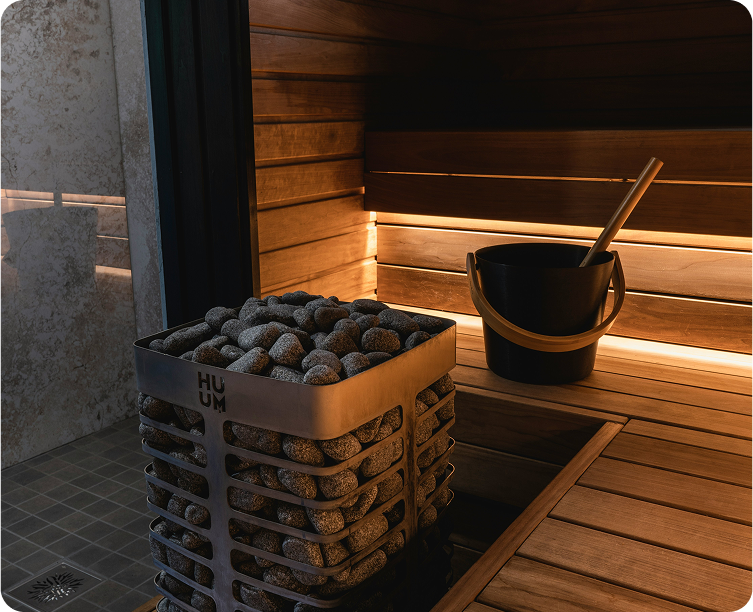
Rodeo Wellness offers HUUM DROP 6 kW and 9 kW heater upgrades with a Wi-Fi UKU controller on applicable configurations. Buyers should confirm compatibility, calculated room volume, glass adjustment, power supply, electrician scope, controller environment, safety interlocks, warranty, and replacement support for the exact package.
Interior Wood Care
After bathing, remove bench covers and buckets, wipe visible water, and dry the room using the manufacturer's procedure. Harvia recommends residual heater use and sufficient ventilation in its maintenance guidance. The precise duration and damper positions should match the installed system, especially in cold weather.
Routine cleaning should use moderate water and a suitable mild detergent rather than saturating the wood. Avoid pressure washing, harsh chlorine chemistry, household furniture polish, and unapproved film-forming finishes. Oils, honey, fragrances, and plant material can stain if left on surfaces. Test any care product in an inconspicuous area.
Light sanding can refresh some bench surfaces, but it should follow manufacturer guidance. Sand with the grain, control dust, protect electrical components, and avoid thinning profiles or exposing fasteners. Persistent blackening, odor, or softness requires moisture diagnosis, not cosmetic sanding alone.
Exterior Finish Care
Exterior coatings protect appearance and can reduce short-term moisture uptake, but every finish weathers. Service intervals depend on product type, pigment, preparation, surface texture, orientation, sun, rain, and climate. Real Cedar guidance notes that all exterior finishes require cleaning and maintenance and that water-repellent treatments may have relatively short service lives depending on exposure.
Inspect before the finish fails widely. Fading alone may be cosmetic; peeling, blistering, lap marks, dark moisture staining, or exposed end grain call for attention. Use a finish compatible with the existing system and the sauna manufacturer. Applying a hard transparent varnish intended for furniture can trap moisture or fail outdoors.
Color preservation is a choice, not the same as structural preservation. Owners who accept natural gray still need to keep walls clean, dry, and free of growth. Owners who maintain brown or red color should budget recurring labor. Photograph each elevation after treatment so later changes are easier to identify.
Benches Floors Doors and Glass
Benches experience abrasion, perspiration, cleaning, and concentrated body loads. Replaceable slats, concealed fasteners, rounded edges, and adequate support make them serviceable. Small stains or surface roughness do not end the cabin's life. Loose joints, cracked supports, protruding hardware, or soft wood should be corrected before use.
Floors need a clear cleaning and drying strategy. Removable duckboards can allow access beneath them, but debris and moisture should not accumulate unseen. Door thresholds are vulnerable to splash and runoff. Doors must remain aligned so seals and latches function without forcing glass or hinges.
Tempered glass is durable but not immune to impact, edge damage, foundation movement, or incorrect hardware. Never drill or modify tempered panels. Inspect chips, hinge movement, fastener tension, and clearances according to the product manual. A settling base that changes the door opening should be corrected rather than hidden by repeated hinge adjustment.
Annual Inspection Priorities
At least once a year, and more often in severe exposure, inspect the foundation, base, walls, roof, flashing, doors, windows, vents, benches, heater, stones, controls, lights, and visible wiring. Perform an additional check after storms, unusual snow, flooding, pest activity, or long inactivity. Create dated photographs from the same angles.
Look for movement rather than only damage: widening joints, rubbing doors, loosening barrel bands, lifted shingles, cracked sealant, displaced flashing, water trails, and fasteners backing out. Smell can reveal dampness or overheating before a defect is obvious. Compare suspicious areas with dry protected surfaces.
Do not probe electrical equipment or climb an unsafe roof. Use qualified contractors for structural, roofing, chimney, and electrical questions. Maintenance records support warranty claims and help a future buyer understand what has been replaced.
-
Structure and base: Check settlement, wood-to-ground clearance, lower-wall softness, widening joints, loose bands, rubbing doors, and changes around glass openings.
-
Weather protection: Review the roof, flashing, finish, end grain, sealant, drainage routes, splash zones, and every wall orientation for exposure-specific deterioration.
-
Interior surfaces: Examine benches, supports, floors, fasteners, guards, vents, and high-contact areas for cracks, roughness, stains, trapped debris, or persistent dampness.
-
Heating equipment: Inspect approved stones, visible elements, guards, sensor condition, control operation, error history, and required clearances according to the heater manual.
-
Documentation: Photograph each elevation and important component from consistent angles so gradual movement, fading, corrosion, or moisture patterns are easier to recognize.
Early Warning Signs of Moisture Failure
Darkening that persists after drying, musty odor, soft fibers, peeling finish, swollen joints, algae, fungal growth, or recurring condensation can indicate moisture that is not escaping. Identify the source: roof leak, splashback, foundation contact, plumbing, interior wash water, blocked ventilation, or condensation around glass.
Surface cleaning without source correction rarely solves the problem. A lower wall that remains wet may need grading or roof changes; a ceiling stain may need flashing repair; wet benches may need drying ventilation and habit changes. Concealed cavities sometimes require professional investigation.
Act early. Replacing trim, one sill, or several bench boards is manageable. Waiting until framing, insulation, wiring, or glass supports are affected can make repair uneconomic. Photograph the condition before alteration and contact the manufacturer when warranty coverage may apply.
Early Warning Signs of Electrical Failure
Repeated breaker or residual-current-device trips, uneven heating, slow warm-up, failed elements, unstable readings, control resets, error codes, buzzing contactors, hot odors, discoloration, condensation inside enclosures, or damaged cable jackets deserve prompt attention. Stop using the sauna when the manual or electrician identifies a safety concern.
Do not bypass a sensor, high-limit device, door interlock, timer, or protective disconnect. These devices may be inconvenient during a fault because they are preventing unsafe operation. Record the exact model, error, ambient conditions, and sequence of events for the service technician.
Replacement parts should match approved specifications. Heater elements may be serviceable individually, but diagnosis, isolation testing, terminal torque, and enclosure sealing require competence. A supported heater platform extends sauna life because parts can be renewed without changing the entire room.
-
Repeated protective trips: Breaker, high-limit, or residual-current-device activation requires diagnosis; repeatedly resetting protection without finding the cause can create a serious hazard.
-
Unstable heating: Unusually slow warm-up, uneven elements, fluctuating temperatures, sensor errors, or unexpected shutdowns can indicate airflow, stone, control, or electrical problems.
-
Heat or moisture damage: Burning odors, buzzing, discoloration, corrosion, condensation inside enclosures, or damaged cable jackets require prompt professional attention.
-
Control and connection faults: Intermittent Wi-Fi does not always indicate heater failure, but recurring controller resets or failed safety communication should be assessed using the exact system documentation.
-
Unsafe modifications: Bypassed sensors, improvised extension cords, unapproved replacement parts, and altered clearances can shorten equipment life while invalidating essential safety protections.
When Repair Makes Sense
Repair is usually attractive when damage is localized, the foundation is stable, the roof can be restored, and replacement profiles or components are available. Benches, trim, door hardware, heater elements, stones, controls, exterior boards, and roof coverings are normal candidates. A repair can also improve the original weakness through better flashing or drainage.
Obtain a scope that separates cosmetic work from water-source correction and structural replacement. Recoating over rot or replacing an interior board beneath an active leak wastes money. Verify that repairs maintain heater clearances, vapor control, fire protection, and glass support.
Preserve documentation. Use photographs, moisture readings where professionally appropriate, invoices, and part numbers. A clear repair history is evidence of stewardship rather than a defect, particularly when wear components were replaced proactively.
When Replacement Is More Rational
Replacement may be more sensible when settlement has distorted the entire structure, decay is widespread through inaccessible framing, roof and wall systems have failed together, proprietary parts are unavailable, or electrical and fire-safety upgrades would require extensive reconstruction. Mold or contamination may also demand specialist assessment.
Compare total cost, not only the first repair estimate. Include dismantling, disposal, foundation correction, utility work, permits, downtime, and the risk of hidden damage. A new sauna should correct the site or design issue that shortened the old one's life; placing the replacement on the same wet base repeats the problem.
Salvage may be possible for benches, doors, stones approved for reuse, or undamaged lumber, but safety and compatibility must be verified. Tempered glass, electrical equipment, chimneys, and structural members should not be reused casually.
Questions to Ask Before Buying
Ask for the complete material schedule, wall and roof assembly, foundation drawing, snow and wind requirements, exterior finish specification, drainage instructions, ventilation diagram, heater sizing calculation, electrical scope, and warranty exclusions. Confirm whether the sauna is genuinely rated for outdoor use in the intended climate.
Ask which parts are expected to wear, how they are replaced, and how long the manufacturer plans to support profiles, heaters, sensors, controllers, doors, and roof components. Determine who provides local service and who is responsible for site work. A warranty is only useful when installation conditions and claim procedures are clear.
Request maintenance instructions before purchase and estimate the annual labor. If the seller cannot explain roof inspection, drying, finish care, stone service, and winter operation, the ownership cost is not being presented fully.
-
How is water managed? Request the foundation drawing, roof assembly, flashing details, drainage plan, ground-clearance requirements, and exterior finish instructions for the exact model.
-
What is actually covered? Obtain a component-by-component material schedule and warranty language for checking, movement, water ingress, finish failure, heater parts, controls, and normal weathering.
-
What will require replacement? Ask about roof coverings, heater stones, elements, sensors, controllers, lighting, benches, seals, and exterior profiles, including availability and expected service procedures.
-
Who performs the work? Clarify responsibility for foundation preparation, assembly, roofing, electrical or chimney installation, commissioning, inspections, and warranty service.
-
How should it be maintained? Review after-use drying, cleaning, refinishing, seasonal inspection, cold-weather operation, and storage requirements before committing to the purchase.
Planning a Lifecycle Budget
A realistic budget includes site preparation, delivery, assembly, electrical or chimney work, roofing, finishes, cleaning supplies, stone replacement, inspections, and future electronic or heating components. These costs occur at different times, which makes a reserve more useful than assuming the purchase price covers decades of ownership.
Prioritize interventions that prevent secondary damage. Roof and drainage work usually outrank cosmetic staining. Electrical diagnosis outranks repeated resets. Foundation correction outranks door trimming when settlement is the real cause. Spending in this order protects both safety and remaining asset value.
Usage value matters too. An efficient, comfortable sauna used several times a week may justify more maintenance than a cheaper unit that rarely reaches a satisfying temperature. Compare lifetime experience, repairability, and support rather than headline price alone.
How Design Extends Service Life
Durable design makes water paths visible and serviceable. Roof edges project beyond vulnerable joints, lower walls stay above splash, end grain is protected, vents remain accessible, and benches lift or remove for cleaning. Electrical enclosures and controls sit in approved environments. Inspection does not require dismantling finished surfaces.
Replaceable layers are valuable. A roof covering can be renewed before the structural deck deteriorates; exterior cladding can be changed without disturbing the vapor layer; bench slats can be removed without replacing frames. Mechanical connections and documented profiles support repair.
Simple details often outperform visual complexity outdoors. Large panoramic glass, hidden gutters, flush roofs, and intricate lighting can work, but each adds interfaces that need engineering and access. Buyers should ask how water exits each detail and how a failed component is replaced.
Barrel Sauna Lifespan Factors
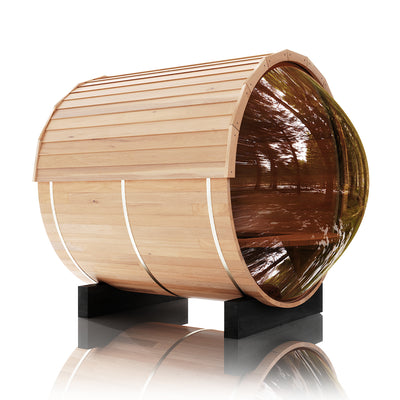
Barrels expose curved staves and end-wall joints while relying on bands for compression. Their longevity depends on dry accurately machined wood, correct assembly, seasonal band inspection, roof protection, and drainage beneath the lowest staves. An unsupported claim that the curved shape makes a separate roof unnecessary should be tested against local rainfall and snow.
Small gaps may change with weather, but persistent leakage, daylight, loose doors, or displaced staves require action. Overtightening bands can damage profiles; adjustments should follow the manufacturer. End walls and lower sides often deserve more attention than the crown.
Barrels are relatively simple and can be repairable when matching staves and bands are available. Their compact heated volume may reduce warm-up burden, but limited wall thickness and large glass ends can challenge cold-climate performance. Heater sizing remains part of longevity because chronic overwork stresses components.
Cabin Cube and Pod Lifespan Factors
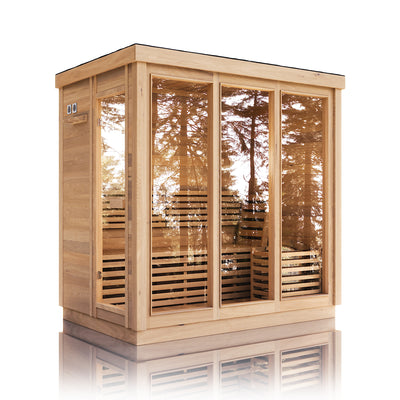
Cabins and cubes can use insulated walls, rain screens, replaceable cladding, and conventional roof systems, supporting long life when details are competent. Low-slope roofs, parapets, large windows, and concealed drainage need careful documentation. Water trapped behind a modern facade can remain invisible until damage is advanced.
Pod shapes shed some water but create curved roof-to-wall transitions and custom profiles. Confirm membrane continuity and replacement access. Cabin corners, window sills, thresholds, and service penetrations are common inspection points. Large glass areas increase heater load and condensation potential.
A conventional-looking cabin is not automatically better than a barrel; it simply offers different control layers. Compare the actual assembly, not the silhouette.
A Practical Maintenance Calendar
After each session, remove wet items, wipe standing water, and dry the room as instructed. Monthly or at an interval suited to use, inspect benches, vents, heater guards, and visible stones. Seasonally, clear exterior debris, check drainage and foundation clearance, observe finishes, and look for roof or wall movement.
Annually, conduct a complete documented inspection and arrange qualified chimney or electrical service where required. Follow product-specific stone, finish, roof, and controller intervals. Before winter, verify snow procedures and cold-weather heater compatibility. After winter, check frost movement, flashing, and lower-wall moisture.
The calendar should respond to condition rather than replacing judgment. Severe storms, unusual smells, electrical faults, leaks, or movement trigger immediate checks. Keep manuals and service contacts accessible.
The Bottom Line on Lifespan
The longest-lived outdoor saunas are not necessarily the most expensive or the thickest. They combine suitable material with a dry stable foundation, deliberate drainage, a defensible roof, effective ventilation, correct heater sizing, serviceable electrical systems, and owners who notice changes early.
Expect components to age at different rates and choose a product that supports renewal. A roof replacement, set of heating elements, control upgrade, or bench refurbishment can be evidence of a durable repairable asset rather than failure.
A seller who provides exact manuals, parts, maintenance requirements, and local service gives a more credible lifespan proposition than one offering an unsupported number.
Frequently Asked Questions
How Long Do Outdoor Saunas Last on Average
A quality outdoor sauna commonly provides roughly 15 to 30 years of useful service, with longer performance possible for premium repairable structures. This is a planning range, not a guarantee. Poor drainage, roof leaks, settlement, trapped moisture, or neglected electrical faults can shorten service substantially.
Can an Outdoor Sauna Last 30 Years
Yes. Reaching 30 years is plausible when the foundation remains stable, the roof and drainage keep the shell dry, ventilation dries the interior, suitable materials are used, and owners renew wear components before secondary damage occurs.
Which Sauna Material Lasts Longest Outdoors
There is no universal winner. Western red cedar heartwood and documented durability-grade thermally modified wood are strong above-ground choices. Properly protected spruce, hemlock, or other systems can also last. Grade, roof, base, drainage, and maintenance often decide the outcome.
Do Barrel Saunas Last as Long as Cabin Saunas
They can, but their risk profile differs. Barrel staves and bands need inspection, and a protective roof is valuable in wet climates. Cabins allow layered weather assemblies but add corners, roof transitions, and possible hidden cavities. Compare actual construction and repairability.
Does an Outdoor Sauna Need a Concrete Slab
Not always. Engineered piers, helical piles, blocks, or a verified deck may work. The correct base depends on product loads, soil, frost, wind, drainage, and local rules. It must be level, stable, and keep wood away from persistent moisture.
Does an Outdoor Sauna Need a Separate Roof
Many designs benefit from a dedicated roof or rain jacket, especially in wet or snowy climates. Follow the manufacturer's outdoor specification. Curved barrel staves alone do not eliminate exposure at joints, end walls, and lower sides.
How Often Should an Outdoor Sauna Be Stained
Use the finish maker's and sauna manufacturer's condition-based guidance. Exposure, pigment, preparation, surface texture, and climate create large variation. Inspect at least seasonally and refinish before widespread failure rather than relying on one universal interval.
Can I Leave Cedar Unfinished
Often, when the manufacturer permits natural weathering and the structure drains and dries. Cedar will typically gray in sunlight and may weather unevenly. Unfinished does not mean inspection-free.
How Do I Prevent Mold in an Outdoor Sauna
Control moisture at its source: dry the room after use, maintain ventilation, remove wet textiles, keep the roof and base dry, clean appropriately, and correct leaks or condensation. Do not merely bleach recurring growth without solving why surfaces stay damp.
How Long Does an Electric Sauna Heater Last
There is no reliable universal number. Heater life depends on sizing, usage, stone airflow, water quality, electrical installation, ambient conditions, and service. Elements, stones, sensors, contactors, and controls may be replaced separately.
How Often Should Sauna Stones Be Replaced
Follow the heater manual and inspect according to use. Replace crumbled, cracked, or unsuitable stones and repack correctly. Frequent commercial-style use can demand more attention than occasional household use.
Can Winter Damage an Outdoor Sauna
Yes. Snow load, ice, frost movement, trapped water, condensation, and heater ambient limits can cause problems. Use an outdoor-rated system for the climate, keep drainage clear, follow snow procedures, and verify winter heater requirements.
Should I Keep an Outdoor Sauna Heated All Winter
Only if the exact sauna and heater instructions call for background heat or permit that operating strategy. Continuous heating adds energy and may not correct water entry. Some controls have cold ambient limitations, so obtain model-specific guidance.
What Is the Most Important Maintenance Task
Keeping water out and helping the sauna dry are the highest priorities. Roof, drainage, foundation clearance, ventilation, and after-use drying protect multiple components simultaneously.
What Are the First Signs an Outdoor Sauna Is Failing
Persistent damp odor, soft wood, recurring stains, peeling finishes, widening joints, roof leaks, settlement, rubbing glass doors, repeated electrical trips, unstable temperatures, and corrosion are early warnings. Diagnose the source promptly.
Is It Worth Repairing an Old Outdoor Sauna
Often, if damage is localized, the foundation and main structure are sound, and replacement parts are available. Widespread concealed decay, major settlement, unsupported proprietary systems, or combined roof and electrical failure can make replacement more rational.
Does Wi Fi Reduce Heater Life
Wi-Fi itself does not inherently shorten heater life, but connected systems add controls, sensors, relays, and software dependencies. Correct installation environment, safety interlocks, surge protection where appropriate, firmware support, and replacement availability matter.
How Can I Maximize Resale Value
Keep manuals, permits, electrician and installer invoices, warranty records, finish details, and dated maintenance photographs. Address leaks and faults early. Buyers value safe documented utility work and a dry stable structure more than a recent cosmetic coating.
Editorial Review and Primary Sources
This article was reviewed against current manufacturer and wood-industry guidance on September 15, 2026. Product designs, electrical requirements, ambient limits, finish systems, and maintenance instructions change. Always use the manuals and local requirements for the exact sauna and heater.
Harvia sauna ventilation guidance
Harvia sauna maintenance guidance
Harvia cold-condition heater guidance
Real Cedar exterior finishing choices
Real Cedar siding care and maintenance
SaunaFin outdoor cabin construction reference
Internal Linking Note
Link this guide to outdoor sauna maintenance, foundations, heater sizing, electric versus wood-burning heaters, Wi-Fi heaters, cedar versus hemlock, Thermowood versus cedar, and barrel versus cube comparisons. Keep this page focused on lifespan and lifecycle ownership to avoid competing with material-specific guides.
Final Thoughts
The answer to how long do outdoor saunas last is best expressed as a range supported by conditions. About 15 to 30 years is a useful planning benchmark for a quality structure, while excellent design, repairability, and maintenance can extend service beyond it. Serious water-management or electrical defects can produce expensive failures much earlier.
Material quality creates the starting point, but foundation, drainage, roof, ventilation, climate adaptation, and installation determine whether the material stays within a safe moisture and temperature environment. Smaller components should be expected to need service during the cabin's life. Replacing stones, elements, controls, finishes, roof layers, or benches can preserve rather than diminish long-term value.
Owners maximize lifespan by drying the sauna after use, inspecting it in every season, protecting the base and roof, keeping drainage clear, and treating electrical or moisture warnings as diagnostic problems. Buyers maximize it by choosing a documented system with realistic instructions, replaceable parts, qualified installation, and support that will still matter years after delivery.
Our Recommendation
Choose an outdoor sauna based on its water-management and serviceability plan before selecting decorative options. Require a foundation drawing, outdoor-rated roof, drainage strategy, ventilation layout, component material schedule, heater calculation, electrical scope, maintenance manual, warranty terms, and replacement-parts pathway. A credible product should explain how it stays dry and how it can be repaired.
For homeowners targeting the upper end of a 15-to-30-year range, prioritize a stable raised base, durable above-ground wood or a protected cladding system, generous roof protection, compatible hardware, after-use drying, and professional electrical or chimney work. Budget for recurring finish, roof, heater-stone, and control maintenance rather than treating them as surprises.
Rodeo Wellness buyers considering HUUM DROP 6 kW or 9 kW upgrades with the Wi-Fi UKU controller should confirm room-volume calculations, glass adjustments, supply requirements, controller and sensor placement, cold-weather conditions, safety functions, and local electrician responsibility for the exact sauna. The best long-term purchase is the configuration whose structure and heating system can both be inspected, supported, and renewed.


 OUR BEST SELLERS