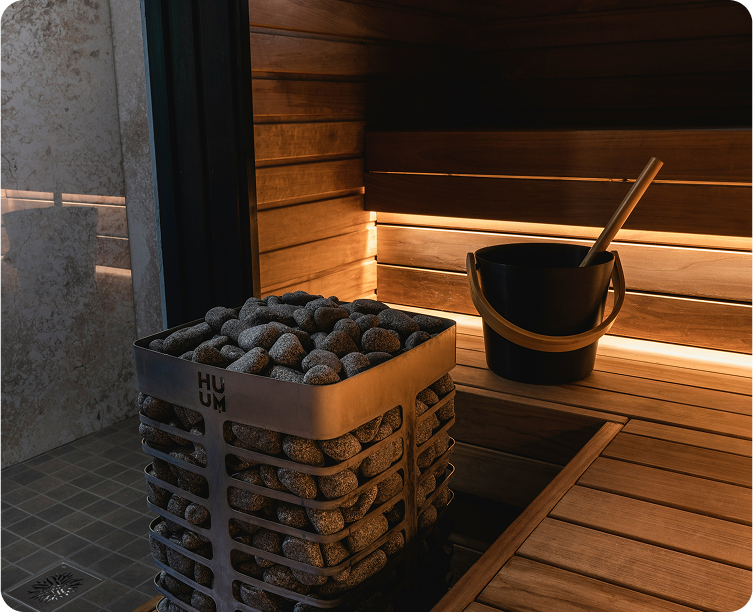
The electric vs wood burning sauna decision is ultimately a choice between convenience and ritual. An electric heater offers predictable controls, cleaner daily operation, easier scheduling, and broad compatibility with residential cabins. A wood-burning stove offers a hands-on fire, a distinctive atmosphere, independence from a high-capacity electrical circuit, and an experience many traditionalists consider inseparable from outdoor sauna bathing.
Neither option is universally cheaper, faster, hotter, or more authentic in every project. Room volume, glazing, insulation, stone mass, heater sizing, ventilation, climate, fuel quality, chimney design, electrical distance, local rules, and user habits all influence the outcome. A correctly sized electric heater can produce excellent steam from stones, while a poorly operated wood stove can smoke, overheat, or warm the room unevenly.
This guide compares warm-up time, installation, operating experience, temperature control, maintenance, ventilation, cost, safety, emissions, and ideal use cases. It is designed to help buyers select the heater before committing to a sauna shell, foundation, roof, wiring route, or chimney package that limits the final choice.
Quick Verdict
Choose electric if you want the simplest everyday routine, repeatable temperature, timer or compatible smart controls, minimal fuel handling, and a heater that can be started without building and supervising a fire. Choose wood-burning if the fire-tending ritual, flame, sound, aroma, off-grid capability, and traditional outdoor setting matter more than automatic control and lower routine maintenance.
For most residential homeowners, a properly sized electric heater is the better overall choice because convenience increases actual sauna use. Wood-burning is the better specialist choice for detached outdoor saunas, rural or lake properties, locations with abundant dry firewood, and owners who genuinely want to manage combustion, ash, chimney care, and longer preparation.
|
Decision Factor
|
Electric Heater
|
Wood-Burning Stove
|
| Daily operation |
Set controls and allow the room to heat |
Build, manage, and monitor a fire |
| Temperature control |
More repeatable, with thermostat and timer options |
Manual response through fuel load, draft, and air control |
| Installation focus |
Dedicated circuit, controls, sensor, clearances |
Chimney, hearth, shielding, combustion air, clearances |
| Warm-up experience |
Predictable when sized correctly |
Variable; depends on wood, draft, technique, and stove |
| Maintenance |
Stones, elements, controls, connections |
Ash, firebox, stones, chimney, soot, fuel storage |
| Best fit |
Frequent home use and convenience |
Detached outdoor retreat and fire-centered ritual |
How We Evaluated Sauna Heaters
This is a research-based commercial comparison prepared for Rodeo Wellness readers. It does not claim physical testing of every heater. The analysis uses current manufacturer manuals and product information, published ventilation and chimney guidance, and practical residential installation factors that affect the complete ownership experience.
We weighted heater-room compatibility, warm-up predictability, installation complexity, control, ventilation, safety clearances, maintenance, fuel or electrical logistics, climate, and frequency of use. Exact requirements vary by heater and jurisdiction. Buyers should obtain current manuals and consult qualified electrical, chimney, fire, and building professionals before ordering or constructing the room.
Rodeo Wellness sells sauna packages that commonly use electric heaters and is included in the recommendation. Readers should account for that commercial relationship. The conclusion remains conditional: a wood stove is not downgraded merely because it requires more work, and electric is not preferred when the site lacks feasible service or the owner's primary goal is a traditional fire-based ritual.
How Electric Sauna Heaters Work
An electric sauna heater uses resistance elements to heat a basket or compartment of sauna stones and the surrounding air. A thermostat and temperature sensor regulate operation within the approved range. Depending on the model, controls may be built into the heater, mounted externally, or connected to a compatible digital and remote-control system.
The stones are an active part of the experience. They store heat and convert small amounts of water into steam when the heater and manual permit it. Electric does not mean infrared: a traditional electric stone heater warms the room and supports classic dry or steam sessions, while infrared emitters operate differently and are outside the main comparison in this guide.
Residential electric heaters are commonly matched to a specified room-volume range. Glass, masonry, log walls, insulation, ceiling height, and ventilation may change the effective volume used for sizing. The exact output and supply requirements must be confirmed before the circuit is designed.
How Wood-Burning Sauna Stoves Work
A wood-burning sauna stove heats through controlled combustion in a firebox. Hot gases transfer energy through the stove and stone mass before exiting through an approved flue and chimney. Users regulate the session by selecting dry fuel, arranging the fire, adding wood, and adjusting air or draft according to the stove instructions.
Wood stoves can deliver powerful heat and generous steam, particularly when a large stone mass is fully warmed. The experience includes visible fire on glass-door models, the sound of combustion, the smell associated with wood and outdoor air, and a slower transition into the session. These qualities are meaningful to enthusiasts but require attention that cannot be automated away.
A wood stove is part of a combustion and venting system, not a standalone appliance. Stove output, chimney, connector pipe, ceiling and roof penetrations, clearances, floor protection, shielding, combustion air, rain cap, and local approval must work together. Components should be approved for the exact application rather than assembled from assumptions.
Warm-Up Time
Electric warm-up is generally more predictable. Once the heater is correctly sized and the door remains closed, the user can learn a repeatable interval for a given climate and target. Digital controls may show temperature, schedule operation where permitted, and reduce the need to check the room repeatedly. Large glass areas and very cold starts can still extend the process.
Wood-burning warm-up varies more because fuel moisture, species, split size, draft, chimney temperature, stove loading, outdoor weather, stone mass, and user technique change the fire. An experienced owner with dry wood may heat a well-matched cabin efficiently, while damp fuel or weak draft can lengthen the process and increase smoke.
Published warm-up promises should be treated cautiously. Some electric systems heat quickly but have a smaller stone mass; some wood stoves deliver high output but require time for the stones and benches to become evenly warm. Compare the complete room and desired steam quality, not only the first moment the air thermometer reaches a number.
Which Is Better for Spontaneous Sessions
Electric is usually better for spontaneous weekday use because starting it requires little physical preparation. The user can finish another task while the cabin warms, subject to all safety and remote-start requirements. Wood is better when preparation itself is welcome and the owner has dry fuel, kindling, and time to supervise the stove.
Installation Complexity
Electric installation centers on the dedicated supply, controller, sensor, heater mounting, stone loading, ventilation, and safety clearances. Many residential traditional heaters use 220-240V hardwired service, but breaker, conductor, control wiring, disconnect, and panel capacity vary. A licensed electrician should work from the exact manual and local requirements.
Wood installation centers on fire safety and exhaust. The project can require a listed chimney system, roof or wall penetration, floor or ember protection, shields, minimum distances to combustible benches and walls, outside clearances, and appropriate combustion air. Permitting and inspection may be more involved, and some urban or fire-prone areas restrict solid-fuel appliances.
The shell should be selected with the heater in mind. A cabin designed only for electric use may lack space for a stove's larger clearances and chimney path. Adding wood heat later can consume bench area, conflict with roof framing, and require structural changes. Conversely, an electric circuit may be expensive to retrofit across a finished yard.
Electric Installation Questions
Ask about voltage, phase, amperage, breaker size, conductor temperature rating, controller, sensor, lighting circuit, disconnect, maximum cable length, panel capacity, trenching, inspections, and whether remote operation requires extra safety devices. Confirm who commissions the system and how warranty registration works.
Wood Installation Questions
Ask about the approved stove-room range, chimney family, connector lengths, roof pitch, penetration kit, spark and rain protection, hearth, wall shields, clearance reductions, combustion air, cleanout access, local burn restrictions, and who accepts responsibility for the complete installation. A stove and generic pipe are not a finished plan.
Space and Safety Clearances
Electric wall-mounted heaters can preserve floor area in compact cabins, although guards and required distances still consume space. Floor-standing pillar heaters may use more room but provide a large exposed stone surface. Each model has non-negotiable clearances to walls, benches, ceilings, rails, controls, and sensors.
Wood stoves generally require more planning space around the hot body, loading door, connector, and chimney. Harvia's published M3 SL specifications, for example, list model-specific front, side, rear, and ceiling distances. Those figures illustrate why buyers must use the exact manual: outputs and protective systems differ, and a higher-output stove may need a larger room.
Protective shields can sometimes reduce clearances when they are approved and installed exactly as specified. They do not create unlimited freedom. Measure the usable benches and entry path after the heater, guard, hearth, and loading space are drawn to scale. A nominal four-person cabin can lose substantial capacity to a wood system.
Temperature Control
Electric heaters provide the most repeatable control. A thermostat cycles the elements, and modern control panels may offer time, temperature, lighting, and compatible remote functions. The temperature sensor must be installed in the specified location so supply air, doors, or glass do not produce inaccurate readings.
Wood heat is controlled indirectly. The user manages the size and timing of fuel loads, draft, air supply, and door openings. The stove continues to release stored heat after the fire declines, so response is slower than changing an electric setting. Skilled users learn the stove, chimney, and room, but the learning curve is real.
Repeatability is not the same as superior steam. Both heater types can provide satisfying steam when stones are appropriate, correctly placed, and fully heated. Wood can feel alive and variable; electric can feel consistent and easy to tune. Buyer preference should decide whether variability is a feature or a burden.
Operating Experience
Electric operation removes most visible work. The user starts the heater, waits, bathes, and shuts it down according to instructions. There is no firewood to split or carry, no ash after each series of burns, and no combustion to monitor. This makes electric attractive for frequent solo sessions, busy households, rental properties with controlled policies, and accessible installations.
Wood operation begins well before bathing. The owner selects dry fuel, opens the draft as directed, lights the fire, watches for stable combustion, adds wood, and monitors conditions. Afterward, the system cools, ash is managed, and the next load is prepared. For some buyers, this sequence is the point; for others, it is the reason the sauna is used less often.
Sound and atmosphere differ. Electric heaters are quiet apart from control clicks and the movement of air and water on stones. Wood brings flame, crackle, radiant intensity near the stove, and the sensory transition of building a fire. Smoke should remain in the venting system; persistent smoke in the room indicates an operating or installation problem, not authenticity.
Steam and Heat Quality
Both systems can produce traditional steam when water is applied to properly heated stones in the manner allowed by the manufacturer. Stone quantity, surface temperature, water amount, room ventilation, bench height, and heater geometry shape the result. Fuel type alone does not guarantee soft or harsh steam.
Large stone masses tend to release heat more gradually and can produce a softer-feeling steam, although they may take longer to warm. Smaller exposed elements and limited stones can respond quickly but may cool more noticeably after repeated water. Compare stone capacity and heater design alongside rated output.
Wood stoves can deliver strong radiant heat near the firebox, so seat position matters. Electric pillar heaters also radiate intensely through exposed stones. Guards, clearances, and bench planning should create safe movement and allow users to select comfortable zones. A well-designed room matters as much as the heater badge.
Ventilation
Ventilation is essential for fresh air, combustion where applicable, heater performance, temperature distribution, and drying. Electric and wood systems use different airflow strategies. The correct inlet and outlet positions depend on whether ventilation is mechanical or gravity-driven and on the heater and sensor instructions.
Harvia's current guidance for an electrically heated sauna distinguishes mechanical supply in the upper area from gravity supply below or beside the heater, with the exhaust placed according to the system. It also warns that supply air must not cool a separate temperature sensor. These details should be established before walls and benches are fixed.
For wood-burning heaters, Harvia describes gravity supply close to the floor near the stove, with the outlet far from the stove and near the roof, primarily to remove humidity after bathing. Its mechanical example places supply approximately 500 millimeters above the stove and exhaust near the floor. Exact manuals and local requirements control the final design.
Combustion Air
A wood stove consumes air and depends on reliable draft. A tightly built sauna without an appropriate air plan can perform poorly or draw smoke during loading. Combustion air should be designed with the stove and chimney, not added by randomly opening a gap. Electric heaters do not consume oxygen through combustion, but occupants still need properly designed fresh air.
Chimney Requirements
A wood stove requires an approved pathway for hot flue gases. Chimney height, diameter, insulation, joints, roof penetration, clearances, support, rain cap, and termination position influence safety and draft. The system must suit the stove, building, roof, climate, and jurisdiction.
Harvia's current WHP1500 guidance states that this particular steel chimney is intended only for standalone outdoor sauna buildings rather than residential or vacation-home fireplaces. It also directs buyers to verify local suitability and safety distances. That limitation demonstrates why a component's marketing name cannot substitute for its scope of approval.
Chimneys need inspection and cleaning. Creosote, soot, corrosion, moisture, bird or insect debris, and damaged seals can affect performance. The required frequency depends on use, fuel, system, and local rules. Use a qualified chimney professional where required and keep installation and service records.
Electrical Requirements
Electric heaters can avoid combustion infrastructure but may require substantial electrical capacity. A small residential heater can still need a dedicated high-amperage circuit, and larger cabins or glass-heavy rooms may require higher output. Long trench runs, panel upgrades, and control wiring can make installation expensive even when daily operation is simple.
Do not estimate the circuit from a similar-looking heater. Use the final model, output, voltage, controller, and manual. Ask a licensed electrician to evaluate load calculations, breaker spaces, conductor sizing, temperature ratings, disconnects, grounding, exterior or underground methods, permits, and inspections.
Wood-burning systems may still need electricity for lighting, controls, or accessories, but the heat source itself does not rely on grid power. This can be valuable at remote cabins. Off-grid does not mean infrastructure-free: chimney, fire protection, dry fuel storage, and safe nighttime access remain essential.
Maintenance
Electric maintenance focuses on stones, elements, sensor and control function, fasteners, guards, and electrical condition. Stones can crack and settle, potentially exposing elements or restricting airflow. They should be inspected and rearranged or replaced according to the heater manual. Electrical repairs belong to qualified technicians.
Wood maintenance includes all stone and room care plus ash removal, firebox inspection, grate and door care, chimney cleaning, soot management, and fuel storage. Ash must be handled in a suitable noncombustible container and stored safely because embers can remain active. Manufacturer and local fire guidance should determine the routine.
Both rooms require cleaning and thorough drying. Sweep debris, use towels to protect benches, keep vents clear, inspect wood near the heater, and address unusual discoloration or odor. The absence of ash does not make an electric sauna maintenance-free, and the presence of soot should not be accepted inside the hot room.
|
Maintenance Task
|
Electric
|
Wood-Burning
|
| Sauna stones |
Inspect, rearrange, and replace as directed |
Inspect, rearrange, and replace as directed |
| Heat source |
Elements, sensor, controls, connections |
Firebox, grate, door, seals, ash |
| Venting |
Keep sauna vents clear |
Sauna vents plus flue and chimney service |
| Fuel or supply |
Electrical inspection when needed |
Source, split, season, store, and carry dry wood |
| Routine cleanup |
Low debris at heater |
Ash and occasional soot-related work |
Operating Costs
Electric cost is relatively easy to estimate. Multiply heater kilowatts by hours of full-power-equivalent operation and the local electricity rate, then allow for thermostat cycling and warm-up conditions. The installed cost may include a panel upgrade or long feeder, while the ongoing cost is visible on the utility bill.
Wood cost depends on whether fuel is purchased, gathered, processed, and stored. Free logs are not free heat when cutting, splitting, seasoning, transport, tools, storage, and labor are considered. Purchased kiln-dried bundles can be expensive per session, while a rural owner with seasoned firewood may have favorable cash cost.
Do not compare energy prices without including behavior. Electric convenience may encourage more sessions and therefore more total consumption. Wood may be inexpensive but time-intensive. Chimney service, ash tools, storage, electrical repairs, replacement elements, and control electronics belong in long-term ownership estimates.
Upfront Project Cost
An electric package includes the heater, stones, controls where separate, sensor, guard, dedicated circuit, possible trenching, disconnect, permits, and electrician labor. A simple route from an adequate panel can be economical. A long outdoor run or service upgrade can exceed the heater price.
A wood package includes the stove, stones, connector pipe, listed chimney, roof or wall penetration components, shielding, hearth, guards, permits, installation labor, inspection, ash tools, and fuel storage. The chimney and fire-protection work often make the initial project more expensive than buyers expect.
Request complete, written installed estimates for both options before selecting the shell. Include any loss of seating caused by clearances, roof modifications, delivery, and future service access. A heater that appears cheaper can require the more expensive room and site plan.
Emissions and Neighborhood Considerations
Electric heaters produce no combustion emissions at the sauna. Their broader environmental impact depends on the electricity source, heater efficiency, room design, and usage. They avoid local smoke, sparks, and wood delivery, which makes them easier to accommodate in dense neighborhoods.
Wood stoves release combustion products and require responsible fuel and operation. Dry, appropriate firewood and a correctly designed stove and chimney support cleaner combustion. Burning wet, treated, painted, glued, or unsuitable material is unsafe and can increase pollution or damage.
Neighbors, prevailing wind, valleys, burn bans, wildfire conditions, and local air-quality rules matter. Even a permitted stove can create conflict if smoke repeatedly reaches nearby homes. Evaluate the real setting before treating wood heat as a purely private choice.
Reliability and Power Outages
A basic electric heater has relatively few moving parts, but it depends on grid service, breakers, elements, sensors, and controls. Digital systems add convenience and components. Quality installation, appropriate surge protection where recommended, dry controls, and available replacement parts support long-term reliability.
A wood stove can heat without grid power, making it attractive for remote or outage-prone properties. It still depends on dry fuel, sound chimney draft, intact firebox components, and safe access. Extreme weather can obstruct the path or chimney and may make firewood handling harder.
Redundancy should not become unsafe improvisation. Installing both heater types in one room requires explicit manufacturer and code approval. Harvia notes that combined installations must meet the safety distances of both appliances, with separation rules between them. Most homeowners should choose one properly designed system.
Remote and Smart Controls
Compatible electric systems may support digital panels, delayed starts, or app control. These features can reduce waiting, but remote operation has safety conditions because the room must be clear and ready. Door sensors, approved controls, and manufacturer procedures should never be bypassed.
Wood heat cannot be safely reduced to a remote ignition convenience. A fire requires direct preparation and supervision. Smart temperature monitoring may provide information, but it does not replace the operator, draft assessment, or physical inspection of the stove and chimney.
Buy smart features for a real routine, not novelty. A simple built-in dial can be reliable and intuitive. A connected controller is valuable when it is supported, secure, serviceable, and used according to instructions. Confirm subscription, connectivity, warranty, and replacement availability before paying a premium.
Indoor vs Outdoor Suitability
Electric heaters are broadly suited to indoor and outdoor sauna rooms designed for them. They avoid a chimney through the home and integrate more easily with bathrooms, gyms, basements, and primary suites. Indoor ventilation and moisture assemblies still require careful design.
Wood-burning stoves are most compelling in detached outdoor saunas where the chimney and fire clearances can be planned from the beginning. Using solid fuel in or near a residence can face more complex code, insurance, smoke, and chimney requirements. Product approvals may limit particular chimney kits to standalone outdoor buildings.
Outdoor location does not automatically authorize wood heat. Property setbacks, roof construction, wildfire rules, nearby combustibles, trees, neighbors, and local permits still apply. Electric may be the only practical choice in many suburban or urban settings.
Climate and Seasonal Use
Cold weather increases heat demand for both systems. Electric offers repeatable starting and can be scheduled where approved, while wood provides strong output and independence from electrical load. Glass area, insulation, air leakage, wind, and room mass affect warm-up more than fuel labels alone.
In humid or coastal climates, electrical components, chimney metal, fasteners, and exterior penetrations require appropriate protection and inspection. Wood fuel must remain dry and ventilated. Salt exposure can accelerate corrosion, while persistent damp can make fires smoky and difficult to start.
Wildfire regions may impose seasonal restrictions or make wood-burning inappropriate during high-risk periods. Snow regions require chimney-height, roof-load, access, and ice planning. Discuss the exact installation with local professionals who understand both the climate and current rules.
Safety and Insurance
Both heater types can cause fire or injury when installed incorrectly. Electric systems require correct wiring, clearances, guards, sensors, and stone loading. Wood systems add open combustion, hot flue surfaces, sparks, ash, fuel, and chimney deposits. Neither should be installed from generic diagrams.
Tell the insurer about the planned sauna and heat source before construction. Documentation may be required for the heater, chimney, permits, inspection, electrical work, clearances, and detached structure. A compliant installation is easier to insure and explain during resale than an undocumented DIY conversion.
Users should keep combustible items away from the heater, never dry clothing over it, follow water-use instructions, supervise children, avoid alcohol, and leave when uncomfortable. Smoke and carbon monoxide alarms should be placed as required for the property, but alarms do not replace correct combustion and venting.
Which Heater Is Better for Different Buyers
Frequent Weekday Users
Electric is usually better because the routine is fast and repeatable. A user can start the heater, shower or finish a workout, and enter when ready. Minimal cleanup makes short sessions more realistic.
Traditionalists and Fire Enthusiasts
Wood-burning is better when tending the fire is part of the desired ritual. The owner should enjoy fuel preparation, supervision, ash care, and learning draft rather than merely tolerating them.
Urban and Suburban Homeowners
Electric is generally easier to permit and operate without local smoke. Panel capacity and trenching can still be significant, but the project avoids a solid-fuel chimney and firewood storage.
Remote Cabins and Off-Grid Properties
Wood-burning can be ideal where dry fuel is available and high-capacity electrical service is absent. The chimney, clearances, wildfire conditions, and safe fuel supply require equal attention.
Rental and Hospitality Properties
Electric offers more controlled operation, though owner policies, supervision, remote-start safeguards, commercial rules, and maintenance must be designed carefully. Wood can introduce training and liability challenges for unfamiliar guests.
Large Social Saunas
Either can work when sized correctly. Electric provides recovery and control with less attention during hosting. Wood can create atmosphere and high output but requires a responsible operator throughout the session.
How to Size the Heater
Start with finished interior volume, then apply the manufacturer's adjustments for glass, masonry, log walls, insulation, and other heat-storing or non-insulated surfaces. Stay within the approved room range. A heater selected only from the number of seats can be too small or too large.
For wood stoves, compare the room-volume range and chimney requirements together. Harvia currently rates the M3 SL at 16.5 kW for a recommended room volume of 6 to 13 cubic meters, while larger models cover different ranges. These are product-specific values, not universal conversions to electric heater behavior.
For electric heaters, confirm supply voltage and control compatibility at the same time as output. Large glass fronts may move the calculated room into a higher range and change the circuit. Obtain written confirmation of the final heater-room pairing before ordering equipment or wiring.
Complete Buying Checklist
A heater purchase should end with a coordinated room, site, and service plan. Gather the current manual, dimensional drawing, room calculation, glazing area, bench plan, ventilation design, clearances, foundation information, and local requirements before comparing quotations.
-
Room Match: Verify finished volume, insulation, glass, log surfaces, ceiling, and approved output range.
-
Installation Scope: Price the full electrical route or chimney, penetration, shielding, and hearth system.
-
Daily Routine: Decide whether the household wants push-button readiness or hands-on fire management.
-
Maintenance: Account for stones and drying in both, plus elements or controls for electric and ash or chimney care for wood.
-
Site Rules: Confirm permits, insurance, smoke restrictions, wildfire rules, setbacks, and professional requirements.
-
Serviceability: Check warranties, replacement elements or stove parts, chimney access, and local technician availability.
Do not finalize the cabin until the heater layout is drawn inside it. Confirm that benches remain comfortable, the door path is clear, guards fit, vents work, and maintenance access is realistic. The usable room after installation is the product you are buying.
Common Buying Mistakes
Choosing Fuel Before Checking the Property
A preference for wood can be defeated by local restrictions or an impractical chimney. A preference for electric can be defeated by panel limitations or expensive trenching. Verify feasibility first.
Comparing Heater Price Alone
Include the dedicated circuit and controls for electric, and the complete chimney, shields, hearth, permits, and fuel storage for wood. Installed cost determines value.
Assuming Wood Is Always Hotter
Both can produce high traditional sauna temperatures when matched to the room. Output, stone mass, ventilation, insulation, and bench height determine the experience.
Assuming Electric Produces Dry Heat Only
Traditional electric stone heaters can accept water when the manual permits it, producing steam. They are different from infrared emitters.
Ignoring Clearance Loss
Wood stoves can consume more floor and bench space through the appliance, hearth, loading area, guard, and chimney. Draw the final interior before accepting the capacity label.
Using Wet Firewood
Damp fuel can cause difficult starts, smoke, poor heat, and more deposits. Use only suitable dry wood and follow stove instructions.
Treating Remote Start as Unrestricted
Electric remote operation requires approved controls and safety conditions. The room must be ready, and manufacturer procedures must be followed every time.
Frequently Asked Questions
Is Electric or Wood-Burning Better for a Sauna
Electric is better for most homeowners because it is convenient, controllable, and easier to use frequently. Wood-burning is better for detached outdoor saunas where fire ritual, off-grid use, and traditional atmosphere are priorities.
Which Heats a Sauna Faster
Electric is generally more predictable, while wood can be powerful but varies with fuel, draft, technique, and chimney conditions. Exact warm-up depends on room size, insulation, glass, heater output, stones, and climate.
Can an Electric Sauna Make Steam
Yes. A traditional electric heater with sauna stones can produce steam when water is applied as permitted by the manufacturer. It should not be confused with an infrared cabin.
Does a Wood Sauna Need Electricity
The stove itself may not, but lighting, controls, or accessories can. A wood sauna still requires a compliant chimney, combustion air, clearances, fire protection, and safe access.
Does an Electric Sauna Need 240V
Many residential traditional heaters require dedicated 220-240V hardwired service, but exact voltage and amperage vary. Use the final heater manual and a licensed electrician.
Does a Wood-Burning Sauna Need a Chimney
Yes. It needs an approved flue and chimney system matched to the stove and building, with correct penetrations, supports, clearances, and termination.
Which Costs Less to Operate
It depends on local electricity rates, fuel source, usage, and labor. Electricity is easier to calculate. Wood may have low cash cost for owners with seasoned supply but still requires processing, storage, cleaning, and chimney service.
Which Is Easier to Maintain
Electric is easier because it avoids ash, firebox, and chimney maintenance. Both require stone inspection, interior cleaning, ventilation, and drying.
Is Wood Heat Allowed in Every Outdoor Sauna
No. The cabin, stove, chimney, site, local code, insurer, and fire restrictions must allow it. Some sauna models are designed only for electric heat.
Can I Convert Electric to Wood Later
Sometimes, but the change may require a new room layout, chimney, roof penetration, hearth, shields, clearances, permits, and loss of seating. Plan the desired fuel before buying the shell.
Can I Install Both Heater Types
Only when the room, manufacturers, and local authorities explicitly permit it and all combined clearances are met. Most residential buyers should use one correctly designed heater.
Which Is Better in Cold Weather
Both can work well. Electric offers predictable control; wood can provide strong output. Correct room sizing, insulation, glazing allowance, ventilation, and safe access matter more than fuel alone.
Which Is Better Off Grid
Wood-burning is generally better because it does not need a high-capacity electrical supply for heat. The property still needs safe chimney installation, dry fuel, lighting, and fire management.
Is Wood-Burning More Authentic
It is the traditional fire-based experience and offers a distinctive ritual. Traditional electric stone heaters also provide legitimate sauna heat and steam, with greater convenience and control.
What Wood Should I Burn
Use only suitable, dry, untreated firewood specified by the stove manufacturer. Never burn painted, treated, glued, trash, or other prohibited materials.
How Often Should a Chimney Be Cleaned
Frequency depends on use, fuel, chimney, local rules, and inspection findings. Follow manufacturer and local fire guidance and use a qualified professional where required.
Editorial Review and Primary Sources
This article was reviewed against current manufacturer information on September 9, 2026. Heater specifications, controls, approvals, prices, and local requirements can change. Confirm the exact heater, room calculation, installation documents, and professional scope before publication or purchase.
Harvia heater category and control information
Harvia sauna ventilation guidance
Harvia M3 SL wood stove specifications
Harvia WHP1500 chimney guidance
Rodeo Wellness outdoor sauna collection
Internal Linking Note
Link this guide to sauna heater sizing, outdoor electrical planning, ventilation, foundations, barrel versus cube design, indoor versus outdoor placement, and capacity guides. Keep this page focused on fuel and heater ownership so it supports rather than competes with product-specific sauna roundups.
Final Thoughts
The electric vs wood burning sauna decision should be made before the room is finalized. Electric prioritizes repeatability, clean operation, and frequent use. Wood prioritizes fire, independence, and a slower traditional ritual. Both can provide excellent heat and steam when the heater, stones, ventilation, benches, and room are designed together.
Compare complete installed systems rather than appliance prices. Electric requires adequate service, controls, sensors, and professional wiring. Wood requires a compatible stove, chimney, penetrations, hearth, shields, clearances, dry fuel, and ongoing combustion maintenance. Local rules and insurance can decide the choice before preference does.
For a confident purchase, calculate the room, obtain both manuals and site quotes, draw the final clearances, and be honest about the weekly routine. The heater that is easiest for the household to operate safely and consistently will usually deliver the greatest long-term value.
Our Recommendation
For most homeowners, we recommend an electric sauna heater. It provides the best balance of dependable warm-up, precise control, lower daily maintenance, cleaner operation, and compatibility with frequent home use. A properly sized stone heater still delivers the traditional high-temperature air and steam that buyers expect from a classic sauna.
Rodeo Wellness outdoor saunas commonly pair with established electric heater configurations, making them a strong starting point for buyers who want a coordinated cabin and straightforward operating routine. Confirm the exact heater output, electrical requirement, controller, glass allowance, and professional installation plan for the selected model before ordering.
Choose wood-burning when the sauna is detached, the chimney and local rules are workable, dry firewood is readily available, and tending a fire is central to the desired experience. Wood is not the convenience choice, but for the right rural, lake, or off-grid property, its atmosphere and independence can justify the additional installation and maintenance.



 OUR BEST SELLERS