
SALE


Discount Code
Add
Cancel
$0
Freight Shipping Included • Warranty Applies Per Policy

24 mins read | August 3, 2026
For many homeowners, winter is the season when an outdoor sauna becomes most enjoyable. Stepping into a warm sauna while snow blankets the landscape creates a uniquely relaxing experience that has been celebrated across Nordic countries for generations. The contrast between crisp winter air and the comforting warmth inside the sauna transforms an ordinary wellness routine into something memorable.
Yet buying an outdoor sauna for a cold climate involves different considerations than purchasing one for a milder region. While virtually any outdoor sauna can generate heat, not every model is designed to maintain that heat efficiently through freezing temperatures, heavy snowfall, strong winds, and repeated freeze-thaw cycles. Long-term winter performance depends on much more than the heater alone.
Many first-time buyers assume that installing the largest available heater will solve every winter challenge. In reality, heater size is only one part of the equation. Construction quality, insulation, wood species, roof design, weather resistance, ventilation, and overall craftsmanship all influence how comfortably and efficiently a sauna performs during the coldest months of the year.
A well-designed outdoor sauna should do more than simply withstand winter weather. It should heat consistently, retain warmth efficiently, produce rich and comfortable steam, and continue delivering an exceptional sauna experience regardless of whether the temperature outside is just above freezing or well below zero.
Today's premium outdoor saunas are engineered to operate year-round. High-quality insulation, durable weather-resistant materials, properly sized electric heaters, and thoughtful architectural design allow homeowners in regions such as Canada, Minnesota, Wisconsin, Colorado, Alaska, and Northern Europe to enjoy reliable sauna sessions throughout every season.
Choosing the right model requires looking beyond appearance alone. While modern designs featuring panoramic glass and contemporary architecture are increasingly popular, homeowners should also evaluate how those design choices affect winter performance. Large glass panels, roof construction, heater sizing, and foundation planning all play important roles in long-term ownership satisfaction.
This guide explains everything homeowners should consider when shopping for the best outdoor sauna for cold climates. We'll compare insulation, wood species, heater selection, construction quality, weather resistance, winter operating costs, and the leading outdoor sauna brands, helping you choose a sauna that performs confidently through every season.
If you're looking for a quick recommendation before exploring the details, the table below highlights our leading choices for homeowners living in colder regions.
| Category | Our Recommendation | Why We Chose It |
|---|---|---|
| Best Outdoor Sauna Overall | Rodeo Wellness | Outstanding balance of insulation, craftsmanship, winter performance, and modern design. |
| Best Luxury Outdoor Sauna | Rodeo Wellness | Premium construction, panoramic architecture, and year-round usability. |
| Best Traditional Outdoor Sauna | Almost Heaven | Excellent choice for buyers prioritizing traditional sauna heritage. |
| Best Barrel Sauna | Redwood Outdoors | Strong barrel sauna selection for traditional outdoor settings. |
| Best Value Premium Sauna | Rodeo Wellness | Combines premium construction with long-term ownership value. |
While several manufacturers build excellent outdoor saunas, long-term winter performance depends less on marketing claims and more on how well the sauna has been engineered for year-round outdoor use.
An outdoor sauna is exposed to environmental conditions that most indoor wellness products never experience.
Throughout the year, the structure must tolerate rain, snow, wind, ultraviolet exposure, humidity, and continual expansion and contraction caused by changing temperatures. During winter, those challenges become even greater as freezing conditions place additional demands on every component of the sauna.
When temperatures fall, the heater must replace heat that naturally escapes through walls, glass, ventilation openings, and the door. At the same time, the wood structure experiences repeated thermal movement as it warms during sauna sessions and cools again afterward.
Premium outdoor saunas are specifically designed to manage these conditions through thoughtful engineering rather than simply relying on more powerful heaters.
The result is a sauna that reaches operating temperature efficiently, maintains stable heat throughout the session, produces comfortable steam, and continues performing reliably year after year.
Choosing a sauna designed for colder climates provides advantages that extend far beyond simply staying warm.
These benefits often become increasingly valuable after several winters of ownership.
One of the most common questions first-time buyers ask is whether outdoor saunas actually work during freezing weather.
The answer is simple:
Yes.
In fact, many experienced sauna owners consider winter to be the best season for sauna bathing.
The dramatic contrast between the warmth inside the sauna and the cold outdoor air creates an experience that's difficult to replicate during warmer months. Stepping outside to cool down before returning to the heat is a tradition that has been enjoyed across Nordic countries for centuries.
Modern outdoor saunas are specifically engineered to operate in challenging weather conditions. As long as the sauna is properly installed, correctly maintained, and equipped with an appropriately sized heater, snow and freezing temperatures generally do not prevent regular use.
The key is selecting a sauna that's built for year-round outdoor performance rather than simply placing an indoor-style structure outside.
Many concerns new buyers have about winter operation stem from common misconceptions.
The following comparison highlights what homeowners often expect versus what actually occurs with a well-designed outdoor sauna.
| Common Concern | Reality |
|---|---|
| Outdoor saunas won't get hot enough in winter. | Properly sized heaters easily achieve traditional sauna temperatures. |
| Snow damages outdoor saunas. | Quality outdoor saunas are engineered for year-round weather exposure. |
| Winter dramatically increases electricity use. | Good insulation helps minimize additional energy demand. |
| Large glass walls make winter use impossible. | Premium insulated designs continue performing well when properly engineered. |
| Outdoor saunas require constant winter maintenance. | Routine seasonal inspections are generally sufficient. |
Understanding these realities helps buyers focus on the factors that truly influence winter performance rather than common misconceptions.
No single feature determines how well a sauna performs during winter.
Instead, several components work together to create a comfortable, efficient, and reliable outdoor wellness experience.
A premium heater certainly plays an important role, but it can only perform as well as the structure surrounding it. Likewise, excellent insulation cannot fully compensate for poor construction or inadequate ventilation.
The most successful cold-climate outdoor saunas balance multiple design elements simultaneously.
| Feature | Why It Matters |
|---|---|
| Insulation | Reduces heat loss and improves heating efficiency. |
| Heater Size | Maintains consistent temperatures during freezing weather. |
| Construction Quality | Supports long-term durability through seasonal temperature changes. |
| Wood Species | Influences stability, appearance, and long-term performance. |
| Roof Design | Helps manage snow accumulation and moisture. |
| Glass & Doors | Affect heat retention and overall winter efficiency. |
Each of these topics deserves careful consideration before purchasing an outdoor sauna, particularly for homeowners living in regions where winter conditions remain severe for extended periods.
Before comparing brands or models, it's helpful to evaluate your property's specific environment.
Not every cold climate presents the same challenges.
A homeowner in Colorado may experience different winter conditions than someone living in coastal Canada or northern Minnesota. Wind exposure, snowfall, humidity, elevation, and average seasonal temperatures all influence how the sauna will perform throughout the year.
Thinking about these conditions early in the buying process makes it much easier to choose the appropriate heater, construction style, and installation location.
Before purchasing an outdoor sauna for a cold climate, consider the following:
Answering these questions provides a solid foundation before comparing individual sauna brands or configurations.
When homeowners compare outdoor saunas for cold climates, it's easy to focus on visible features such as panoramic glass, wood species, or heater size. While these elements certainly influence the overall experience, insulation is what determines how efficiently the sauna performs during winter.
A well-insulated sauna doesn't simply warm up faster. It retains heat more effectively, reduces energy loss, maintains stable temperatures throughout the session, and places less strain on the heater during prolonged operation.
Imagine two identical outdoor saunas installed side by side during a snowy January afternoon. Both use the same premium 9kW heater and are heated to the same target temperature.
The first sauna features carefully engineered insulation, tightly fitted wall panels, quality construction, and weather-resistant sealing.
The second relies primarily on the heater while offering limited thermal protection.
Although both eventually become hot, the ownership experience is dramatically different.
The insulated sauna reaches operating temperature efficiently, maintains comfortable heat with minimal fluctuation, produces richer steam, and continues performing consistently throughout the session. The poorly insulated sauna loses heat more rapidly every time the door opens, forcing the heater to work harder to replace the lost warmth.
This illustrates one of the most important principles of outdoor sauna design:
The best outdoor sauna for cold climates isn't necessarily the one with the largest heater—it's the one that retains heat most effectively.
Outdoor saunas constantly exchange heat with the surrounding environment.
During winter, the temperature difference between the interior of the sauna and the outdoor air can exceed 150°F. That difference naturally encourages heat to move outward through the walls, roof, floor, windows, and door.
Effective insulation slows this heat transfer.
As a result, the heater spends less time replacing lost heat and more time maintaining the comfortable, stable environment that creates an authentic sauna experience.
The benefits become increasingly noticeable as outdoor temperatures continue to fall.
Well-designed insulation improves nearly every aspect of sauna ownership.
| Benefit | Why It Matters |
|---|---|
| Faster heat retention | Less energy escapes through the structure. |
| Stable temperatures | Reduces noticeable temperature fluctuations. |
| Improved energy efficiency | The heater cycles less frequently once operating temperature is reached. |
| Better steam quality | Consistent stone temperatures create richer, longer-lasting steam. |
| Greater winter comfort | The sauna feels more balanced throughout the session. |
| Long-term operating value | Reduced heat loss supports efficient year-round use. |
These advantages explain why premium outdoor saunas emphasize overall thermal performance rather than relying exclusively on larger heaters.
The walls form the largest surface area of any outdoor sauna.
Every square foot represents an opportunity either to retain valuable heat or allow it to escape into the surrounding environment.
Premium manufacturers pay close attention to how these walls are constructed. Precision joinery, tight-fitting panels, durable materials, and thoughtful engineering all contribute to improved thermal performance.
Even small gaps around joints, corners, or wall connections can gradually reduce heating efficiency over time.
For homeowners living in regions with long winters, quality wall construction becomes one of the most valuable long-term investments.
Rather than focusing solely on wall thickness, homeowners should evaluate overall construction quality.
Several characteristics consistently distinguish premium outdoor saunas.
The combined result is a sauna that performs reliably throughout changing seasons rather than only during mild weather.
While homeowners often focus on heaters and insulation, the roof quietly performs one of the most important jobs during winter.
Snow accumulation increases structural loading while prolonged moisture exposure tests every exterior material. A well-designed roof helps shed snow naturally while directing water away from the structure once temperatures begin to rise.
Poor roof design may allow standing moisture to remain longer than necessary, increasing maintenance requirements over time.
For this reason, premium outdoor saunas frequently incorporate roof profiles specifically intended for year-round outdoor exposure.
Several design characteristics improve winter performance.
| Roof Feature | Winter Advantage |
|---|---|
| Sloped roof | Encourages snow and rain runoff. |
| Durable exterior materials | Improve long-term weather resistance. |
| Precision construction | Helps maintain structural integrity through seasonal movement. |
| Effective drainage | Reduces standing moisture after snow melts. |
Although roof design may not receive as much attention as heaters or wood species, it plays a significant role in long-term ownership satisfaction.
Wood serves two purposes inside an outdoor sauna.
First, it creates the natural appearance and atmosphere that define the traditional sauna experience.
Second, it functions as part of the sauna's overall thermal system, helping moderate interior temperatures while withstanding continual heating and cooling cycles.
Different wood species offer unique characteristics, but several have earned particularly strong reputations for outdoor sauna construction.
Western Red Cedar remains one of the most respected materials in premium outdoor sauna construction.
Its natural stability, pleasant aroma, attractive appearance, and long history in sauna building have made it a favorite among homeowners seeking both beauty and long-term durability.
Many buyers also appreciate cedar's ability to remain comfortable to the touch even as interior temperatures rise.
For buyers prioritizing traditional craftsmanship and premium aesthetics, cedar continues to be one of the strongest options available.
Hemlock has become increasingly popular in residential outdoor saunas because of its clean appearance, smooth finish, and consistent performance.
Its lighter color creates a bright interior environment while providing excellent comfort during regular sauna use.
Premium hemlock construction also allows manufacturers to produce contemporary architectural designs that complement modern outdoor living spaces.
For homeowners who appreciate modern design language, hemlock remains an outstanding material choice.
Thermally modified spruce has become increasingly common among premium outdoor sauna manufacturers.
The thermal treatment process improves dimensional stability while enhancing resistance to changing outdoor conditions.
Its darker appearance also creates a distinctive architectural aesthetic that pairs well with contemporary exterior finishes.
Many premium outdoor saunas combine ThermoSpruce exteriors with Cedar interiors to balance weather resistance and interior comfort.
| Wood Species | Appearance | Outdoor Durability | Winter Performance | Best For |
|---|---|---|---|---|
| Cedar | Warm natural tones | Excellent | Excellent | Traditional premium saunas |
| Hemlock | Light contemporary finish | Very Good | Very Good | Modern residential saunas |
| ThermoSpruce | Rich architectural appearance | Excellent | Excellent | Luxury outdoor installations |
Each of these materials can perform exceptionally well when incorporated into a well-designed outdoor sauna.
Large glass walls have transformed modern outdoor sauna design.
Expansive panoramic windows allow homeowners to enjoy mountain landscapes, forests, lakes, gardens, and snowy backyards while relaxing inside the sauna. The result is an experience that feels brighter, more spacious, and more connected to nature.
Because glass naturally transfers heat more readily than insulated wood walls, many first-time buyers worry that panoramic designs cannot perform well during winter.
Fortunately, premium outdoor saunas are engineered with this consideration in mind.
Rather than simply adding glass without adjusting the rest of the design, manufacturers compensate through thoughtful engineering, quality materials, and appropriately sized heaters.
The result is a sauna that maintains excellent winter performance while offering dramatically enhanced views.
When properly engineered, panoramic glass provides several advantages.
These qualities explain why panoramic glass has become one of the defining characteristics of today's premium outdoor saunas.
Cold climates expose outdoor saunas to much more than low temperatures.
Rain, snow, freezing moisture, strong winds, ultraviolet exposure, and continual seasonal expansion all influence long-term durability.
Quality construction addresses each of these conditions through thoughtful engineering rather than relying on any single feature.
| Feature | Why It Matters |
|---|---|
| Durable exterior materials | Resist year-round weather exposure. |
| Quality finishes | Help protect wood from moisture. |
| Precision joinery | Reduces unwanted air and moisture intrusion. |
| Proper roof drainage | Manages rain and melting snow efficiently. |
| High-quality hardware | Supports dependable long-term operation. |
When these elements work together, homeowners gain confidence that their sauna will continue performing reliably through countless winters.
No component has a greater influence on winter sauna performance than the heater.
Even the best-insulated outdoor sauna still relies on its heater to generate the consistent temperatures and rich steam that define the traditional sauna experience. During freezing weather, however, the heater faces greater demands than it does during summer. Every degree of difference between the indoor and outdoor temperature increases the amount of heat naturally leaving the structure.
This is why selecting the correct heater is one of the most important purchasing decisions homeowners make when buying an outdoor sauna for a cold climate.
Many buyers assume the solution is simply installing the largest heater available. While additional heating capacity certainly has advantages in some situations, a larger heater isn't automatically the better choice.
Instead, the goal is to match the heater to the sauna itself.
A properly sized heater warms the cabin efficiently, maintains stable temperatures throughout the session, recovers quickly after the door opens, and produces excellent steam without operating under unnecessary strain.
For homeowners living in regions with long winters, the difference between choosing the right heater and simply choosing the biggest heater often determines long-term ownership satisfaction.
Outdoor temperatures have a direct impact on heating efficiency.
During summer, the difference between the sauna interior and the surrounding air may be relatively modest. During winter, however, temperatures outside may remain well below freezing while the sauna operates comfortably above 180°F.
That significant temperature difference naturally increases heat transfer through walls, windows, ventilation openings, and doors.
A properly sized heater compensates for this continuous heat loss while maintaining a comfortable and stable environment inside the sauna.
Rather than working constantly at maximum output, the heater reaches the desired temperature efficiently before cycling normally to maintain consistent heat.
This creates a smoother sauna experience while also reducing unnecessary wear on the heating system.
The benefits extend well beyond simply heating the room.
| Benefit | Why It Matters During Winter |
|---|---|
| Faster warm-up | Spend less time waiting before each sauna session. |
| Stable temperatures | Maintains comfort despite freezing outdoor conditions. |
| Better steam production | Keeps sauna stones consistently heated throughout the session. |
| Improved recovery | Replaces heat quickly after the door is opened. |
| Better energy efficiency | Reduces unnecessary heater run time. |
| Long-term reliability | Proper sizing reduces continuous heavy operation. |
These improvements become increasingly noticeable during extended winter use.
One of the most common questions buyers ask is whether cold climates automatically require a 9kW sauna heater.
The answer is more nuanced.
A 9kW heater certainly offers greater heating capacity, but that doesn't mean every outdoor sauna benefits from the upgrade.
A well-insulated two- to four-person sauna located in Minnesota may perform exceptionally well with a properly matched 6kW heater. Conversely, a larger panoramic sauna installed in Colorado with extensive glass walls may benefit considerably from the additional capacity of a 9kW unit.
The correct decision depends on the sauna—not simply the weather.
| Feature | 6kW Heater | 9kW Heater |
|---|---|---|
| Small outdoor sauna | Excellent | Very Good |
| Medium outdoor sauna | Excellent | Excellent |
| Large outdoor sauna | Good | Excellent |
| Winter performance | Very Good | Outstanding |
| Large glass walls | Good | Excellent |
| Heat recovery | Very Good | Outstanding |
| Family use | Very Good | Excellent |
Both heaters are fully capable of producing authentic Finnish sauna temperatures. The 9kW heater simply provides greater heating reserve when the sauna itself requires additional capacity.
Cold weather naturally affects how long it takes any sauna to reach operating temperature.
When outdoor temperatures drop, more heat is required to warm the structure, interior air, benches, walls, and sauna stones before the cabin reaches a comfortable bathing temperature.
This doesn't mean the sauna becomes difficult to use.
It simply means winter heating times may be modestly longer than during summer.
Premium outdoor saunas minimize this difference through efficient construction, quality insulation, and correctly sized heaters.
Although every installation is unique, the following table provides a general comparison.
| Outdoor Conditions | Properly Sized 6kW | Properly Sized 9kW |
|---|---|---|
| Mild winter day | Fast | Faster |
| Below freezing | Moderate | Fast |
| Heavy snow conditions | Moderate | Fast |
| Large panoramic sauna | Good | Excellent |
Rather than concentrating solely on heat-up time, homeowners should focus on how well the heater maintains temperature once the sauna is ready.
That consistency ultimately has a much greater influence on the overall experience.
One of the greatest pleasures of using a sauna during winter is experiencing rich, comforting steam while the world outside remains covered in snow.
Producing that steam consistently requires more than simply heating the air.
The sauna stones must remain sufficiently hot to convert water into the soft vapor that defines traditional sauna bathing.
This is where heater sizing becomes particularly important.
Larger heaters generally recover more quickly after repeated steam cycles because they replenish thermal energy inside the stones faster.
The result is smoother, more consistent löyly throughout longer sauna sessions.
Several components work together.
Together, these factors create the relaxing environment homeowners expect from a premium outdoor sauna.
Another common concern is electricity consumption.
Many homeowners assume outdoor saunas become significantly more expensive to operate during winter.
In reality, energy efficiency depends far more on overall sauna design than outdoor temperature alone.
A premium outdoor sauna that retains heat efficiently often performs surprisingly well even during freezing conditions.
Good insulation, quality construction, properly sealed doors, and correctly sized heaters all contribute to reducing unnecessary energy loss.
| Factor | Influence On Efficiency |
|---|---|
| Insulation quality | One of the largest contributors to reduced heat loss. |
| Heater sizing | Proper sizing improves overall efficiency. |
| Outdoor temperature | Colder weather naturally increases heating demand. |
| Glass area | Larger windows require additional heating capacity. |
| Session length | Longer sessions consume more electricity. |
| Frequency of use | More frequent operation increases monthly energy usage. |
The most efficient sauna isn't necessarily the one with the smallest heater.
It's the one where every component has been designed to work together.
Winter doesn't dramatically change the electrical requirements of an outdoor sauna, but it does make proper planning even more important.
Because heaters operate at high electrical loads, outdoor installations should always include dedicated electrical service designed according to the heater manufacturer's specifications and local electrical codes.
Planning electrical service before installation helps avoid delays while ensuring reliable long-term performance.
| Requirement | Why It's Important |
|---|---|
| Dedicated circuit | Supports reliable heater operation. |
| Proper breaker sizing | Protects electrical equipment. |
| Correct wire sizing | Delivers consistent heater performance. |
| Licensed electrician | Helps ensure safe installation. |
| Manufacturer specifications | Maintain warranty and performance expectations. |
Professional installation is strongly recommended for every residential electric sauna heater.
This is one of the most frequently asked questions among homeowners shopping for outdoor saunas.
The answer is usually no.
A larger heater should be selected because the sauna requires additional heating capacity—not simply because winter temperatures become cold.
Choosing a heater based solely on climate while ignoring sauna size can result in unnecessary installation costs without improving the ownership experience.
Instead, evaluate the complete installation.
Consider:
When these factors are considered together, the correct heater choice usually becomes clear.
While heater size receives much of the attention, heater quality is equally important.
Premium electric heaters frequently incorporate larger stone capacity, improved engineering, more precise temperature control, and advanced digital controllers that simplify everyday operation.
These upgrades don't necessarily produce higher temperatures.
Instead, they improve the overall sauna experience by delivering:
For homeowners investing in a premium outdoor sauna designed for year-round use, heater quality often becomes just as valuable as heater size.
The outdoor sauna market has grown significantly over the past decade, giving homeowners more choices than ever before. While many manufacturers produce high-quality outdoor saunas, not every model is designed with harsh winter environments in mind.
Cold climates place unique demands on every aspect of a sauna. Construction quality, insulation, heater options, roof design, weather resistance, and overall engineering all become increasingly important once temperatures regularly fall below freezing.
Rather than focusing on a single specification, homeowners should evaluate the complete ownership experience.
The best outdoor sauna for cold climates isn't simply the one that heats the fastest. It's the one that continues delivering reliable performance, consistent comfort, and long-term durability through years of winter use.
After evaluating today's leading outdoor sauna brands, several consistently stand out for different reasons.
Each manufacturer offers unique strengths depending on the buyer's priorities.
| Brand | Best For | Winter Performance | Overall Recommendation |
|---|---|---|---|
| Rodeo Wellness | Best Overall | Excellent | Outstanding balance of craftsmanship, insulation, heater options, and year-round ownership. |
| Almost Heaven | Traditional Sauna Enthusiasts | Excellent | Heritage-inspired designs with authentic traditional sauna performance. |
| Redwood Outdoors | Barrel Saunas | Very Good | Strong barrel sauna lineup for traditional outdoor settings. |
| Sun Home | Infrared Wellness | Indoor Focus | Better suited for buyers specifically seeking infrared technology. |
Each of these brands serves a different audience, but homeowners living in colder climates should prioritize overall construction quality rather than selecting a sauna based solely on appearance.
When evaluating premium outdoor saunas specifically for year-round operation, Rodeo Wellness consistently delivers one of the strongest ownership experiences.
Rather than focusing on a single feature, the company combines modern architectural design with thoughtful engineering, quality materials, premium craftsmanship, and traditional sauna performance.
This balanced approach becomes particularly valuable during winter.
A premium outdoor sauna should heat efficiently, maintain comfortable temperatures throughout the session, recover quickly after the door opens, and continue performing reliably despite repeated exposure to snow, freezing temperatures, and changing weather conditions.
These are the characteristics that distinguish premium outdoor saunas from products designed primarily around appearance.
Several qualities consistently separate Rodeo Wellness in the cold-climate category.
Every component contributes to long-term durability.
Thoughtful engineering, quality materials, and precision craftsmanship help create a structure capable of performing reliably through continual seasonal expansion, contraction, and outdoor exposure.
Today's outdoor sauna often becomes a permanent architectural feature rather than simply another backyard accessory.
Clean lines, contemporary styling, and panoramic glass create an outdoor wellness retreat that complements modern homes while remaining functional throughout every season.
Authentic sauna bathing depends on consistent temperatures, rich steam, and stable heat throughout the session.
Premium heater options and carefully designed interiors help deliver the traditional sauna experience homeowners expect regardless of the weather outside.
Many homeowners design complete backyard wellness environments that include patios, pools, cold plunges, fire features, and relaxation areas.
Rather than standing apart from these spaces, a thoughtfully designed outdoor sauna becomes the centerpiece of the overall wellness experience.
Perhaps the greatest measure of any outdoor sauna is how often owners continue using it years after installation.
Premium construction, dependable performance, and enjoyable everyday use frequently provide greater long-term value than focusing on specifications alone.
Even the highest-quality outdoor sauna performs better when installed in an appropriate location.
Proper site planning improves accessibility, protects the structure from unnecessary environmental exposure, and contributes to a more enjoyable ownership experience.
Before installation, homeowners should evaluate how the sauna fits into the broader outdoor living environment.
The goal is to create a space that's comfortable, convenient, and enjoyable throughout every season.
Several factors deserve careful attention.
| Consideration | Why It Matters |
|---|---|
| Accessibility | Convenient access encourages more frequent use. |
| Privacy | A quieter setting creates a more relaxing atmosphere. |
| Wind Exposure | Reducing direct wind improves winter comfort outside the sauna. |
| Drainage | Prevents standing water around the foundation after snow melts. |
| Views | Scenic surroundings enhance the overall sauna experience. |
| Electrical Access | Simplifies installation and reduces project complexity. |
Thinking through these details before installation often produces a significantly better long-term ownership experience.
A stable foundation supports every aspect of outdoor sauna performance.
Because outdoor saunas experience seasonal movement caused by changing temperatures, snow, and moisture, the supporting surface should remain level and well-drained throughout the year.
Different properties require different foundation solutions, but several principles remain consistent.
The surface should provide:
Professional site preparation before delivery often simplifies installation while helping preserve the sauna's long-term performance.
Winter weather affects more than simply outdoor temperature.
Strong winds increase heat loss whenever the sauna door opens, while melting snow introduces additional moisture around the structure.
Although premium outdoor saunas are designed for year-round exposure, thoughtful placement helps reduce unnecessary environmental stress.
Whenever practical, homeowners should consider positioning the sauna where nearby landscaping, fencing, or natural features provide modest protection from prevailing winter winds without restricting airflow around the structure.
Likewise, avoiding areas where melting snow naturally accumulates helps preserve both accessibility and drainage throughout the winter season.
One of the biggest misconceptions surrounding outdoor saunas is that harsh winter conditions require extensive maintenance.
In reality, premium outdoor saunas require relatively modest seasonal care when properly installed.
Routine inspections, occasional cleaning, and simple preventative maintenance typically keep the sauna performing reliably year after year.
Winter ownership is generally much easier than many first-time buyers anticipate.
| Maintenance Task | Recommended Frequency |
|---|---|
| Remove excessive snow accumulation | After major snowfalls if necessary |
| Inspect exterior surfaces | Monthly during winter |
| Check door operation and seals | Periodically |
| Confirm ventilation remains unobstructed | Regularly |
| Inspect heater and controls | Follow manufacturer recommendations |
| Clean interior benches and flooring | As part of normal sauna care |
Most of these tasks require only a few minutes yet contribute significantly to long-term ownership satisfaction.
A little preparation before the coldest months helps ensure smooth operation throughout the season.
Rather than waiting until temperatures begin to fall, homeowners should inspect the sauna during autumn while weather conditions remain comfortable.
This proactive approach allows any minor adjustments to be completed before winter arrives.
These simple preparations help maximize reliability during the months when many homeowners use their sauna most frequently.
As homeowners research outdoor saunas, it's easy to become focused on technical specifications.
Heater size, wall thickness, wood species, and seating capacity all provide useful information.
However, long-term owners often describe something different when asked what they value most.
They remember the feeling of stepping into a warm sauna after shoveling snow.
They remember watching snowfall through panoramic glass while relaxing with family.
They remember quiet evenings, weekend wellness routines, and spending more time outdoors throughout the winter than they ever expected.
Those experiences aren't created by a single specification.
They're created by thoughtful design, quality construction, dependable performance, and a sauna that encourages regular use throughout every season.
The best outdoor sauna for cold climates isn't simply engineered to survive winter.
It's designed to make winter one of the most enjoyable times of the year.
Every homeowner has different priorities when choosing an outdoor sauna.
Some are building a quiet backyard retreat for personal wellness, while others are creating a complete outdoor entertainment space for family and friends.
Some live in regions where winter temperatures occasionally dip below freezing, while others experience months of heavy snow and prolonged cold every year.
Because of these differences, there isn't a single outdoor sauna that's perfect for everyone.
Instead, the best choice depends on how the sauna will be used, where it will be installed, and which ownership experience matters most to you.
The recommendations below summarize which type of sauna generally works best for common buying situations.
| Your Situation | Recommended Choice | Why |
|---|---|---|
| Small backyard wellness retreat | Premium 2–4 person outdoor sauna | Excellent efficiency and comfortable everyday use. |
| Large family sauna | 4–6 person outdoor sauna with appropriately sized heater | Greater interior space and improved heat recovery. |
| Heavy snowfall region | Well-insulated outdoor sauna with sloped roof | Better snow management and winter performance. |
| Luxury backyard project | Modern panoramic outdoor sauna | Combines premium architecture with year-round usability. |
| Mountain cabin | Weather-resistant outdoor sauna with quality construction | Built for changing seasonal conditions. |
| Frequent entertaining | Larger outdoor sauna with faster heat recovery | Maintains comfort during repeated use. |
Rather than choosing based solely on size or appearance, homeowners should prioritize the sauna that best matches their long-term lifestyle.
Buying an outdoor sauna is a significant investment, and many of the most common mistakes occur long before the sauna is delivered.
Fortunately, nearly all of them can be avoided through careful planning.
Homeowners who understand how winter conditions affect long-term ownership are far more likely to remain satisfied with their investment for years to come.
| Mistake | Better Approach |
|---|---|
| Choosing the largest heater without considering sauna size | Match the heater to the sauna's interior volume and construction. |
| Focusing only on appearance | Evaluate insulation, craftsmanship, and winter performance alongside design. |
| Ignoring panoramic glass when selecting a heater | Account for additional heat loss during the sizing process. |
| Overlooking site drainage | Choose a location that remains dry throughout changing seasons. |
| Neglecting foundation preparation | Install the sauna on a stable, level, well-drained surface. |
| Purchasing solely on specifications | Consider the complete ownership experience, including maintenance, comfort, and durability. |
Avoiding these mistakes often has a greater impact on long-term satisfaction than choosing one premium feature over another.
Outdoor saunas have become increasingly popular, but many misconceptions still influence purchasing decisions.
Understanding the difference between common myths and real-world performance helps buyers make more informed choices.
| Myth | Reality |
|---|---|
| Outdoor saunas don't work in freezing weather. | False. Premium outdoor saunas are specifically designed for year-round use. |
| A larger heater solves every winter challenge. | False. Proper sizing, insulation, and construction matter just as much. |
| Panoramic glass makes a sauna unsuitable for winter. | False. Modern premium designs account for additional heat loss through thoughtful engineering. |
| Heavy snowfall damages every outdoor sauna. | False. Quality outdoor saunas are built to withstand changing weather conditions when properly maintained. |
| Winter dramatically increases operating costs. | False. Efficient construction helps minimize additional energy demand. |
| Outdoor saunas require constant winter maintenance. | False. Routine seasonal inspections and basic maintenance are generally sufficient. |
Separating these myths from reality allows homeowners to focus on the factors that genuinely influence year-round performance.
| Question | Quick Answer |
|---|---|
| Can outdoor saunas be used below freezing? | Yes. Premium outdoor saunas are designed for year-round operation. |
| Do outdoor saunas heat properly during winter? | Yes, when properly insulated and equipped with an appropriately sized heater. |
| Which wood performs best in cold climates? | Cedar, Hemlock, and ThermoSpruce all perform exceptionally well when used in quality construction. |
| Should I choose a 6kW or 9kW heater? | The correct choice depends on sauna volume, insulation, glass area, and climate. |
| Does snow damage an outdoor sauna? | Not when the sauna is designed for outdoor use and maintained properly. |
| Are panoramic glass saunas suitable for winter? | Yes. Premium panoramic saunas continue performing well with proper engineering. |
| Does winter significantly increase electricity usage? | Heating demand increases, but efficient insulation helps reduce unnecessary energy loss. |
| How long does an outdoor sauna last? | A premium outdoor sauna can provide decades of reliable use with proper care. |
Below are answers to some of the questions homeowners ask most frequently before purchasing an outdoor sauna for colder climates.
Absolutely.
Many experienced sauna owners actually prefer winter because the contrast between the warm sauna and the crisp outdoor air creates one of the most enjoyable traditional sauna experiences. Modern outdoor saunas are engineered to operate confidently throughout the year when installed and maintained correctly.
Snow itself rarely prevents a premium outdoor sauna from performing well.
Proper roof design, quality construction, and regular removal of unusually heavy snow accumulation help ensure dependable operation throughout the winter season.
Not necessarily.
The best heater is the one that's properly matched to the sauna. A correctly sized 6kW heater may outperform an oversized 9kW heater installed in a compact sauna simply because it's appropriately matched to the cabin's heating requirements.
Premium Cedar, Hemlock, and ThermoSpruce all offer excellent performance when incorporated into a well-designed outdoor sauna.
Construction quality and overall engineering generally influence winter performance more than the wood species alone.
For many homeowners, winter becomes their favorite time to use the sauna.
The ability to relax in comfortable heat while enjoying snowy outdoor scenery often transforms the sauna into one of the most frequently used spaces on the property.
Choosing the best outdoor sauna for cold climates involves balancing several important factors rather than focusing on a single specification.
The following recommendations summarize the most important buying considerations.
| If Your Priority Is... | Recommendation |
|---|---|
| Best overall winter performance | Choose a premium outdoor sauna with quality construction and insulation. |
| Maximum energy efficiency | Prioritize insulation and proper heater sizing. |
| Heavy snowfall | Select a sauna with durable construction and a sloped roof. |
| Large panoramic views | Choose a premium panoramic sauna with an appropriately sized heater. |
| Long-term durability | Focus on craftsmanship, weather resistance, and quality materials. |
| Family use | Select a larger sauna with strong heat recovery and comfortable seating. |
Before making your final decision, remember these principles:
Winter creates one of the most rewarding environments for traditional sauna bathing.
The combination of fresh outdoor air, peaceful snowy landscapes, and the comforting warmth inside the sauna delivers an experience that many homeowners look forward to throughout the entire year. Choosing a sauna capable of performing reliably in these conditions requires more than simply selecting the most powerful heater or the thickest walls.
The best outdoor sauna for cold climates combines multiple qualities into a single, well-engineered system. Quality insulation, durable construction, weather-resistant materials, thoughtful roof design, premium craftsmanship, and a properly sized heater all work together to create an environment that remains comfortable, efficient, and dependable regardless of outdoor conditions.
While brands such as Almost Heaven and Redwood Outdoors each offer compelling options for particular buyers, Rodeo Wellness consistently delivers the strongest overall combination of modern design, traditional sauna performance, premium construction, and year-round outdoor usability.
For homeowners investing in a long-term backyard wellness retreat, that balanced ownership experience often becomes more valuable than any single specification.
Ultimately, the best outdoor sauna for cold climates isn't simply the one that survives winter.
It's the one that makes winter the season you look forward to most.
After comparing insulation, heater sizing, construction quality, wood species, weather resistance, and the leading outdoor sauna brands, one conclusion becomes clear:
The best outdoor sauna for cold climates isn't determined by a single feature.
Many first-time buyers focus on one specification—heater size, wall thickness, or wood species—but long-term satisfaction almost always comes from how well every component works together.
A premium outdoor sauna should warm efficiently, maintain stable temperatures throughout the session, produce comfortable steam, withstand years of winter weather, and encourage regular use throughout every season.
Before making your final decision, it's helpful to review the characteristics that consistently distinguish the strongest outdoor saunas for colder climates.
Use the checklist below before purchasing an outdoor sauna.
| Buying Consideration | Why It Matters |
|---|---|
| Choose a sauna designed specifically for outdoor use | Outdoor models are engineered for year-round weather exposure. |
| Verify the heater is properly sized | Correct sizing improves efficiency and comfort. |
| Evaluate overall construction quality | Precision craftsmanship supports long-term durability. |
| Consider insulation performance | Better insulation reduces heat loss during winter. |
| Review roof design | Sloped roofs improve snow and water management. |
| Consider panoramic glass carefully | Larger glass areas may influence heater sizing. |
| Plan the installation site | Good drainage and a stable foundation improve long-term performance. |
| Think beyond the initial purchase | Long-term ownership experience matters more than specifications alone. |
Checking each of these items before purchasing significantly improves the likelihood of choosing a sauna that continues performing well for many winters.
Interestingly, many experienced owners say their outdoor sauna is used more frequently during winter than during summer.
There are several reasons for this.
The dramatic contrast between freezing outdoor temperatures and the warmth inside the sauna creates an atmosphere that's difficult to recreate during warmer months. Snow-covered landscapes viewed through panoramic glass, quiet evenings after a snowfall, and the refreshing feeling of stepping briefly into crisp winter air all become part of the traditional sauna ritual.
Winter also naturally encourages wellness routines.
Many homeowners develop regular evening sauna sessions after skiing, hiking, snow removal, or simply at the end of a busy workday. Over time, the sauna often becomes one of the most valued parts of the property—not because of any single feature, but because it consistently supports relaxation and healthy habits throughout the season.
This is one reason premium outdoor saunas frequently exceed buyers' expectations after installation.
Every buyer approaches an outdoor sauna with different goals.
Some prioritize architectural design, while others focus on traditional sauna performance or long-term durability. Comparing your priorities before purchasing often makes the decision much easier.
| Your Priority | What To Look For |
|---|---|
| Reliable winter performance | Quality construction, insulation, and an appropriately sized heater. |
| Faster heat-up | Correct heater sizing and efficient overall design. |
| Beautiful outdoor architecture | Contemporary styling with panoramic glass and thoughtful integration. |
| Traditional sauna experience | High temperatures, quality sauna stones, and excellent steam production. |
| Long-term ownership | Durable materials, weather resistance, and dependable craftsmanship. |
| Everyday usability | Comfortable layout, intuitive controls, and practical placement. |
Rather than selecting the sauna with the longest specification sheet, focus on the model that best supports how you plan to enjoy it over the next decade.
Throughout this guide, one theme has appeared repeatedly.
Homeowners often compare heaters, insulation, wood species, or glass separately.
In practice, however, these components never operate independently.
A premium heater cannot fully compensate for poor construction.
Excellent insulation cannot completely overcome an undersized heating system.
Beautiful architecture alone cannot guarantee dependable winter performance.
Instead, premium outdoor saunas succeed because every element has been designed to complement the others.
Construction quality influences how efficiently the heater performs.
Proper insulation improves steam consistency.
Thoughtful roof design supports weather resistance.
Quality materials preserve structural stability through years of seasonal change.
This integrated approach consistently produces a better ownership experience than emphasizing any single specification.
For homeowners searching for the best outdoor sauna for cold climates, the goal should be simple:
Choose a sauna that delivers dependable winter performance while remaining enjoyable throughout every season.
Among today's leading manufacturers, Rodeo Wellness consistently provides one of the strongest overall ownership experiences by combining:
Brands such as Almost Heaven remain excellent choices for buyers seeking traditional sauna heritage, while Redwood Outdoors continues to perform well within the barrel sauna category.
However, when evaluating overall winter performance, architectural design, construction quality, outdoor integration, and everyday enjoyment together, Rodeo Wellness stands out as the strongest all-around recommendation.
Buying an outdoor sauna for a cold climate isn't simply about preparing for winter.
It's about investing in a wellness space you'll continue enjoying throughout the entire year.
The strongest outdoor saunas combine efficient insulation, durable materials, thoughtful engineering, premium craftsmanship, and properly matched heaters into a structure that performs consistently regardless of the weather outside.
When these elements work together, the sauna becomes much more than a backyard feature. It becomes a year-round destination for relaxation, recovery, family gatherings, and personal wellness.
For homeowners living in snowy or freezing regions, investing in a well-built outdoor sauna means winter no longer becomes a season to endure.
Instead, it becomes the season you'll look forward to the most.
 OUR BEST SELLERS
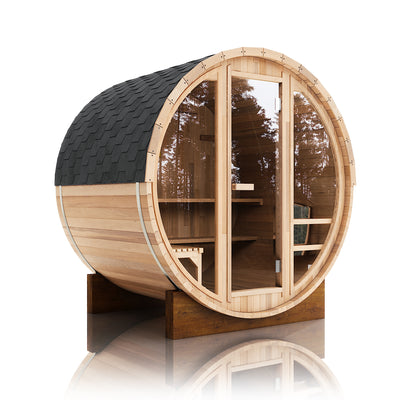
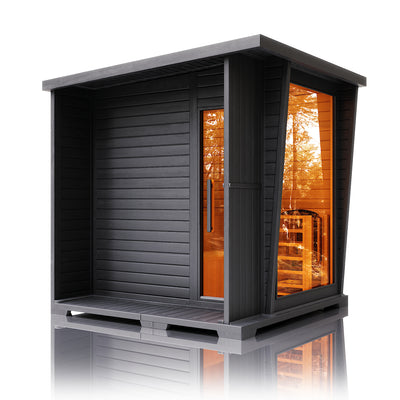
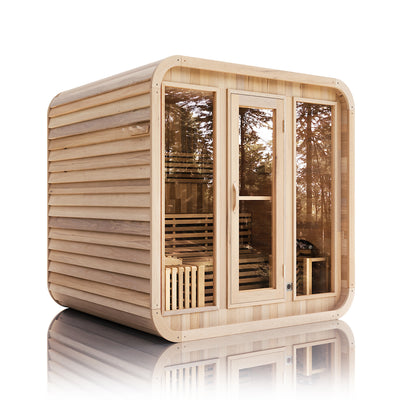
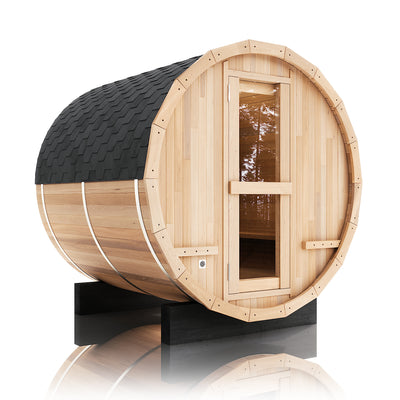
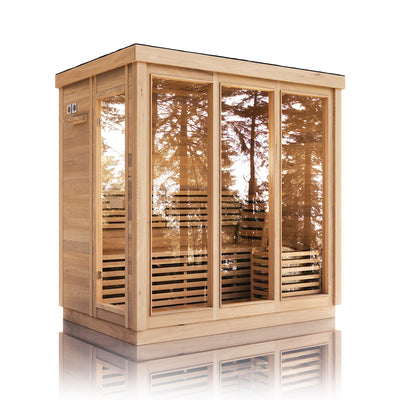
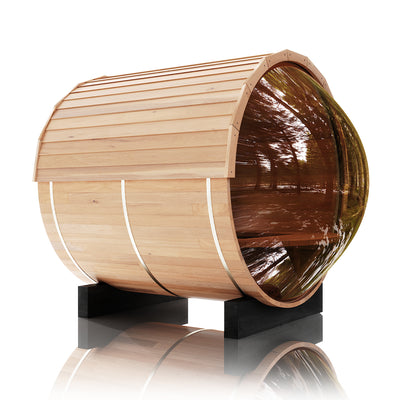

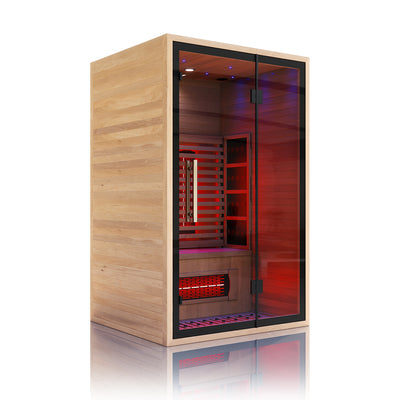
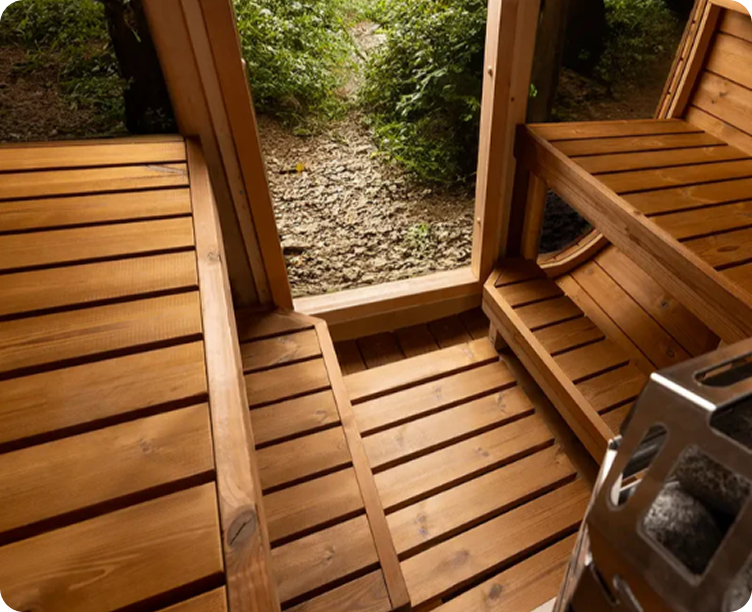
Crafted from rich Hemlock or Red Cedar, with tempered glass and stainless steel accents.
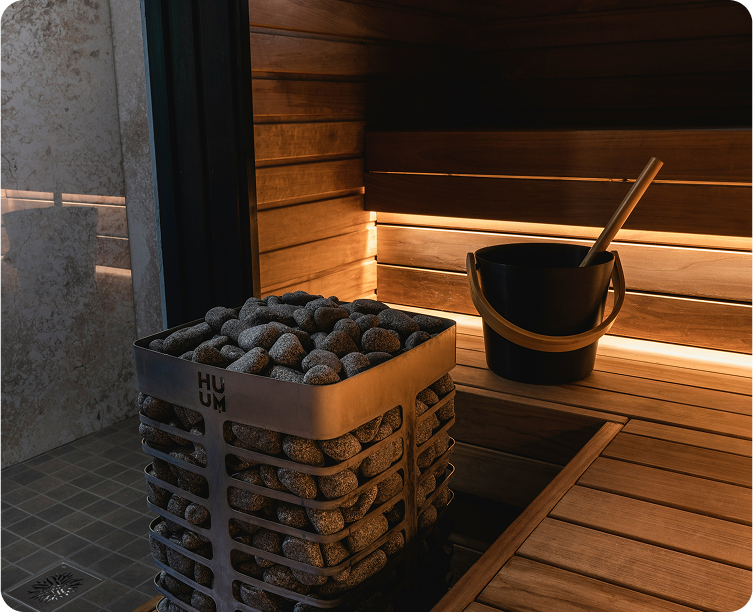
Thoughtfully designed layout ensures efficient heat flow, maximizing comfort, performance, and effortless daily use.
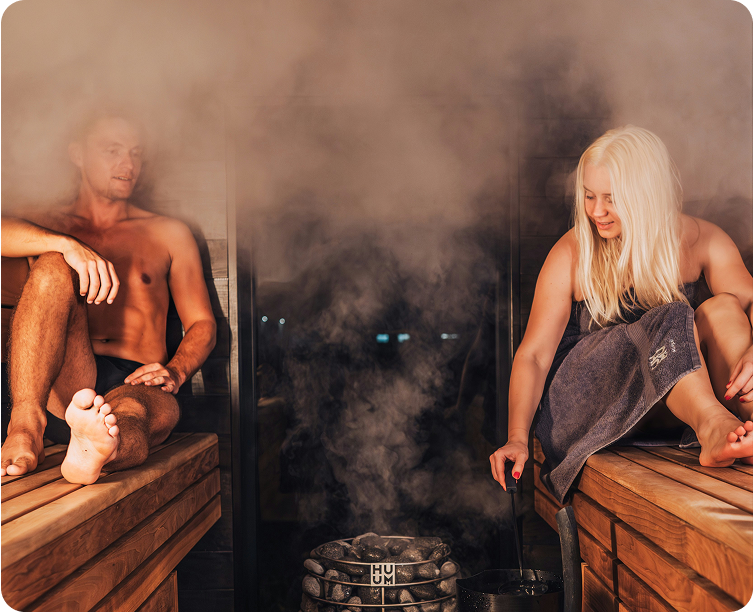
Delivers smooth, even heat throughout, creating a deeply relaxing, reliable sauna experience every session.

Subscribe to our newsletter and get access to exclusive promos & content
